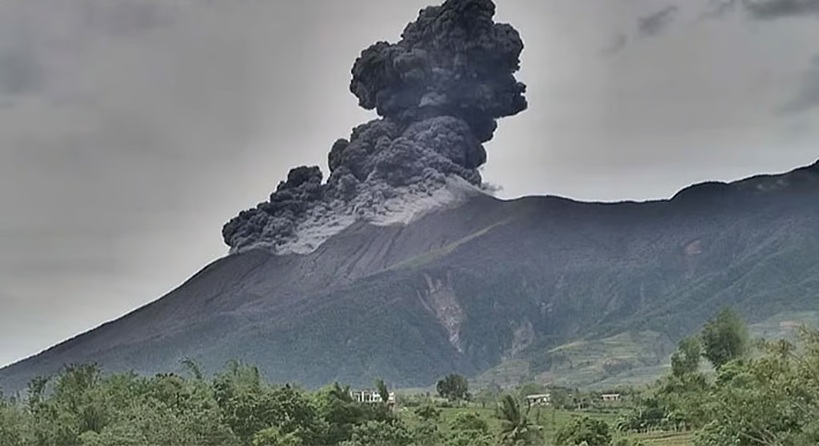
On the morning of July 9, 2026, residents across Cebu woke to an unexpected visitor—volcanic ash from Kanlaon Volcano. The moderately explosive eruption, which began at approximately 5:51 AM and ended around 7:36 AM, sent a dark gray plume soaring 2 to 3 kilometers above the crater before prevailing winds carried it eastward toward western and central Cebu.
This isn’t just another weather event. Volcanic ash is made of tiny, abrasive fragments of pulverized rock and glass that can cause severe respiratory irritation, reduce visibility on roads, and contaminate water sources. Here’s everything you need to know right now.
What Happened
The Philippine Institute of Volcanology and Seismology (PHIVOLCS) recorded the eruption as a “moderately explosive” event lasting approximately three minutes. The agency has maintained Kanlaon under Alert Level 2, which indicates increased unrest and the possibility of further sudden explosive eruptions.
Entry into the volcano’s 4-kilometer Permanent Danger Zone remains strictly prohibited due to the continuing threat of ballistic projectiles, rockfalls, pyroclastic density currents, and other volcanic hazards.
Where Ashfall Has Been Confirmed
The Cebu Provincial Government has confirmed ashfall in multiple areas, including:
- Toledo City – directly facing Negros Island, among the hardest hit
- Pinamungajan
- Aloguinsan
Ashfall has also been reported in Cebu City proper, according to the Cebu City Disaster Risk Reduction and Management Council, and the Mactan-Cebu International Airport (MCIA) detected ash on its runways.
Class and Work Suspensions: What You Need to Know
Local governments moved quickly to protect residents. Here’s the current status as of July 9:
Toledo City
Mayor Marjorie Perales ordered the suspension of classes at all levels in both public and private schools, and halted work in all local government offices until further notice. Essential and emergency government services will continue under a skeleton workforce.
Cebu City
Mayor Nestor Archival has suspended classes at all levels in both public and private schools until further notice as a precaution against the ashfall.
Talisay City
Mayor Samsam Gullas suspended face-to-face classes in all public schools for the rest of the day. Morning students were sent home, and afternoon classes were canceled. Private schools and Talisay City College may decide independently.
Other Affected LGUs
As of noon, at least 20 local government units in Cebu had suspended classes due to poor air quality, including:
- Mandaue City
- Lapu-Lapu City
- Minglanilla
- Consolacion
- Balamban
- Cordova
- Liloan
- Asturias
- Naga
- Carcar
- Tuburan
- Barili
- Tabuelan
- Santa Fe
- San Fernando
Airport Impact
The Mactan-Cebu International Airport detected volcanic ash on its premises, including runways. Ground crews have begun runway clearing operations while conducting comprehensive safety inspections. Several domestic flights have been canceled.
Traveler alert: Passengers are strongly encouraged to verify flight status directly with their airlines before heading to the airport.
How to Protect Yourself During Ashfall
The Cebu City Disaster Risk Reduction and Management Office (CCDRRMO) and the Environmental Management Bureau-Central Visayas (EMB-7) have issued clear safety guidelines:
Wear proper protection
- Use an N95 or KN95 face mask when going outdoors. If unavailable, cover your nose and mouth with a damp cloth
- Wear eyeglasses instead of contact lenses to protect your eyes from irritation
- Consider wearing goggles for additional eye protection
Stay indoors
- Limit outdoor activities, especially for children, senior citizens, pregnant women, and individuals with respiratory conditions like asthma or COPD
- Keep doors and windows closed to prevent ash from entering your home
Protect food and water
- Keep drinking water containers and food supplies tightly covered
- Wash fruits and vegetables thoroughly before consumption
Drive safely
- Volcanic ash can reduce visibility and make roads slippery
- Slow down and keep headlights on while traveling
Shelter pets
- Bring animals indoors and ensure their food and water are protected from ash contamination
Health Risks to Watch For
The Department of Health has warned that volcanic ash can cause:
- Respiratory irritation – especially for those with asthma, COPD, or other pre-existing conditions
- Eye irritation – redness, itching, and pain
- Skin irritation – rashes from prolonged ash exposure
- Water contamination – increased risk of waterborne diseases
If you or a family member experience difficulty breathing, persistent coughing, or severe eye irritation, seek medical attention immediately.
What’s Next
PHIVOLCS continues to monitor Kanlaon’s seismic activity, sulfur dioxide emissions, and ground deformation 24/7. The agency has intensified monitoring to detect new volcanic activity and ensure timely warnings.
The Environmental Management Bureau has begun real-time air quality monitoring in Talisay City and Toledo City and is coordinating with its counterpart in the Negros Island Region.
Important Reminders
- Rely only on official advisories from PHIVOLCS, PAGASA, EMB-7, and your local government unit
- Avoid spreading unverified information that may cause unnecessary alarm
- Monitor official channels for updates as the situation continues to develop
This is a developing story. Stay safe, stay informed, and look out for one another.
🏠 Property Care: Protecting Your Home from Volcanic Ash Damage
Volcanic ash isn’t just a health hazard—it’s highly abrasive, electrically conductive when wet, and surprisingly heavy. Here’s how to protect three critical parts of your Cebu property.
☀️ How to Clean Volcanic Ash Off Solar Panels
Ash blocks sunlight from reaching photovoltaic cells, causing significant power loss. In some cases, thick layers that harden can cause a complete drop in output. The jagged, abrasive particles can also scratch panel surfaces if cleaned improperly.
Proper cleaning method:
- Wear full PPE – N95 mask, goggles, helmet, rubber shoes, and a safety line if working on the roof.
- Remove bulk debris first – Gently sweep off loose ash with a soft-bristled brush or walis tambo.
- Rinse, then wash – After sweeping, rinse with water, then wash panels using a soft brush or squeegee with mild dish soap and one tablespoon of baking soda per bucket of water to neutralize ash acidity.
- Final rinse – Rinse thoroughly with clean water.
⚠️ Never dry-wipe panels with visible dust—this turns cloth into sandpaper and scratches the glass. Also, do not use high-pressure water on the panels themselves, as it can damage the modules.
Pro tip: Clean your roof gutters first before cleaning the panels to prevent ash from washing into downspouts and causing clogs.
🏗️ Why You Must Wash Ash Off Concrete Roofing Immediately
Volcanic ash is deceptively heavy. A dry layer just 4 inches (10 cm) thick can weigh roughly 40 to 70 kilograms per square meter. When wet—from rain or morning dew—that weight can nearly double, reaching up to 100 to 125 kilograms per square meter. Concrete roofs, while strong, are not designed to carry this kind of concentrated load.
A roof collapse doesn’t happen instantly—it’s the result of accumulated stress. Engineering studies show that purlin failure typically occurs at loads of 3 to 5 kN/m² (about 300 to 500 kg/m²). Wet ash accelerates this risk dramatically.
What to do:
- Remove ash from roofs as soon as it’s safe, ideally before it exceeds 4 to 6 inches (100 to 150 mm) in thickness.
- If ash is wet, start removal from the eaves (edges) where moisture and weight concentrate.
- Do not climb onto the roof if it’s slippery—use a long-handled broom or rake from a ladder.
- Never wash ash into gutters or downspouts—it will harden and clog drainage systems.
❄️ Checking Condominium Air Conditioning Units After Ashfall
Air conditioning units are especially vulnerable because they pull air (and ash) through their systems. Ash can clog filters, reduce airflow, cause overheating, and even damage compressors.
During heavy ashfall: Refrain from using your AC unit altogether. Continued use during heavy ashfall will clog the outdoor condenser coil, leading to compressor overheating and system failure.
After ashfall subsides:
- Turn off the unit and disconnect power before cleaning.
- Vacuum, don’t wipe – Use a vacuum cleaner to remove ash from access panels, filters, evaporator coils, pipes, and fans.
- Clean the outdoor unit – For split-type ACs, gently splash water on the exterior—but avoid wetting coils and circuit boards, as this can cause electrical faults.
- Replace filters – After an ashfall event, filters may need replacement, not just cleaning. Frequency of replacement could be as high as every 30 minutes during active ashfall.
- Seal your rooms – Ash will re-enter through gaps in windows and doors. Use duct tape to seal openings and prevent your AC from recirculating ash-filled air.
💡 For condominium residents: If you’re unsure about cleaning the outdoor unit (especially on high floors), schedule a professional inspection and cleaning before using your AC again. Many building administrators are coordinating with service teams for bulk inspections.
📸 Document Damage for Insurance
If you notice any property damage—cracked roof tiles, scratched solar panels, or AC malfunction—take photos and notes immediately for insurance purposes.
Stay safe, Cebu. Clean smart, not hard.
Navigating home care during ashfall highlights the importance of choosing resilient, well-maintained properties. If you are exploring secure, professionally managed homes or condos in Cebu, feel free to browse our verified Cebu Property Listings
or read our Ultimate Cebu Real Estate Guide. Stay safe indoors!
Leave a Reply