
KEY TAKEAWAYS
- Iconic Cebu project completed: Topped off the fifth and final tower of Marco Polo Residences Cebu in May 2026, capping a nearly two‑decade expansion in the province.
- Strong parent‑company backing: Federal Land is a wholly owned subsidiary of GT Capital Holdings, one of the Philippines’ largest conglomerates (Metrobank, Toyota, AXA). GT Capital’s consolidated net income soared 17% to ₱33.68 billion in 2025.
- Federal Land’s own profit fell 30% to ₱522.3 million in 2025, pressured by the broader residential slowdown. The company delivered five towers in Manila and its suburbs.
- Significant legal and customer‑complaint red flags: A Court of Appeals ruling found Federal Land guilty of false advertising and ordered a ₱16.3 million refund for a defective Marco Polo Residences unit. A recent buyer complaint details an eight‑year battle over title delays, changed floor plans, and undisclosed rental restrictions.
- Premium branded residences: Marco Polo Residences offers hotel‑inspired amenities and privileges from the adjacent Marco Polo Plaza Cebu, but at a substantial price premium and with below‑average rental yields after fees.
- Best suited for: Long‑term lifestyle buyers who value the branded hospitality experience and can accept the developer’s mixed track record; risk‑averse investors or short‑term yield seekers should look elsewhere.
Company Background & Financial Health
Federal Land, Inc. was founded in 1972 and is the property development arm of GT Capital Holdings, a conglomerate that includes Metropolitan Bank & Trust Co. (Metrobank), Toyota Motor Philippines, and AXA Philippines. For over 50 years, it has developed residential condominiums, office buildings, retail centers, mixed‑use townships, and master‑planned communities across Metro Manila and key provincial centers, including Cebu.
Because Federal Land is privately held, detailed financial statements are not always public. However, the company reports its results to the Philippine Stock Exchange through its parent.
Federal Land 2025 Financials
- Net income: ₱522.3 million, down 30% from the previous year
- The company completed and turned over five towers in Manila, Pasig, Marikina, Pasay, and Taguig during the year
- 2026 capital expenditure budget: ₱3 billion to ₱3.6 billion, allocated to estate development costs, leasing, and head‑office capital expenditures
GT Capital Holdings 2025 Performance
- Consolidated net income: ₱33.68 billion, up 17% year‑on‑year
- Core net income: ₱30.47 billion, an 8% rise
- The group plans total capital expenditures of ₱24 billion to ₱29.6 billion for 2026
What this means for buyers: GT Capital’s financial strength provides a strong safety net for Federal Land. Even if the property unit faces headwinds, the parent has deep resources to complete projects. However, Federal Land’s own 30% profit decline in 2025 and the company’s statement that it “might defer some commercial and residential project launches and adjust operating and capital expenditures to preserve cash” are cautionary signals.
Federal Land in Cebu: Projects Overview
Federal Land’s Cebu footprint is centered on the Marco Polo Residences Cebu estate in Nivel Hills, Barangay Lahug, Cebu City.
Marco Polo Residences Cebu
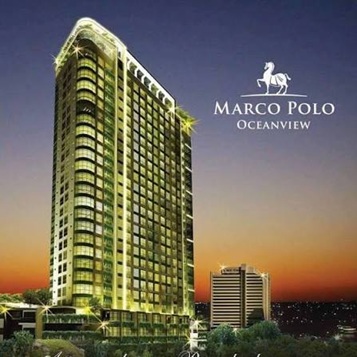
This is a five‑tower residential condominium development located approximately 600 feet above sea level within the Marco Polo complex, adjacent to the Marco Polo Plaza Cebu hotel. The development offers cooler temperatures, panoramic views of Cebu City, and hotel‑inspired amenities.
Tower 1 – Plaza, Tower 2 – Grand, Tower 3 – View, Tower 4 – Ocean View, and Tower 5 – Parkplace.
Completion Timeline of the Five Towers
- Tower 1 (Plaza) and Tower 2 (Grand) were delivered between 2012 and 2016
- Tower 3 (View) was completed later
- Tower 4 (Ocean View) was turned over in October 2023
- Tower 5 (Parkplace) – reached topping‑off in May 2026 and is expected to be completed by July 2026
Federal Land has described the topping‑off of Parkplace as “the culmination of a nearly two‑decade expansion of the company’s hospitality and residential footprint in Cebu”.
Other Potential Developments
Federal Land has a joint venture (FNG) that develops properties in Cavite, Pasay, Mandaluyong, and Cebu. However, no other major Cebu project has been publicly confirmed beyond the Marco Polo Residences estate.
Reputation: What Buyers Are Saying
While Federal Land is backed by a major conglomerate, actual buyer experiences reveal several persistent issues.
1. Court‑Ordered ₱16.3 Million Refund for Defective Condo Unit
In a landmark ruling, the Court of Appeals found Federal Land guilty of false advertising and ordered the company to refund a couple ₱16.3 million for a defective condominium unit at Marco Polo Residences in Cebu City.
The Human Settlements Adjudication Commission (HSAC) ruled that Federal Land committed “patent irregularities, bad faith, and unsound real estate business practice” when it turned over the unit. The couple discovered that their actual kitchen was “a far cry from the model kitchen at the [developer’s] showroom.” Multiple defects included only one working ceiling light in a bathroom, unsuitable drainage for appliances, few electrical outlets, poor plumbing, and missing TV points, sockets, and a glass shower divider.
The court also found that Federal Land failed to disclose plans to build three more condominium buildings that blocked the unit’s scenic views, and that the developer violated the law with a delayed turnover of the condo title. The Court of Appeals upheld the HSAC ruling, stating that “respondents relied on these advertisements in deciding to purchase a condominium unit from petitioner. Since the former reneged on its representations, then there was a clear violation of its warranties and representations.”
2. Eight‑Year Title Delay and Changed Floor Plan
A detailed buyer complaint posted on Expat.com in May 2026 describes a pre‑selling purchase at Marco Polo Residences Ocean View, Tower 4, in 2015. The unit was promised for turnover in 2020 but was handed over in October 2023 – three years late. While the buyer acknowledged COVID‑related delays, they discovered that a utility area shown in the original floor plan had been eliminated, with the space apparently reassigned to a neighboring unit. No explanation was provided.
As of 2026 – eight years after the initial purchase – the buyer still does not have the Condominium Certificate of Title (CCT). The complaint also notes that Federal Land changed the contract from an installment plan to full cash payment without consent, sent demand letters threatening cancellation, and later lost the signed contract entirely.
3. Undisclosed Rental Restrictions
The same buyer reported that the condominium association passed a resolution in 2019 – shortly after they signed – setting a minimum rental period of three months. By the time of turnover in 2023, the minimum had become six months, and shortly thereafter, one year. The buyer was never informed of these restrictions at the time of purchase, despite mentioning their intent to rent out the unit. This materially affects the investment case for those planning to use the unit for short‑term rental income.
4. Employment Reviews
Employee feedback on Indeed (89 reviews) paints a mixed picture. Positive reviews mention “co‑workers are fun to be with, salary is okay, and benefits are great.” Negative reviews cite a “heavy workload and highly competitive environment” and difficulty maintaining work‑life balance. One former employee noted, “Found it difficult to find work‑life balance in this company and this is the reason why I chose to leave.”
High employee turnover can affect project management consistency and customer service quality, but does not directly impact structural integrity.
Investment Verdict: Is Federal Land a Trusted Developer in 2026?
✅ Yes, If You Are:
- A long‑term lifestyle buyer who places high value on the branded hospitality experience of Marco Polo Residences and the privileges that come with being adjacent to a five‑star hotel. The development offers genuine lifestyle benefits – cooler mountain temperatures, panoramic views, and hotel‑inspired amenities.
- Comfortable with a buyer‑be‑aware approach – you are willing to thoroughly inspect the unit before turnover, verify all floor plans in the actual constructed unit, and engage legal counsel to review every document.
- Buying a resale unit in an older tower (Towers 1–3) where the construction is already complete, the title exists, and you can physically verify the unit’s condition, layout, and association rules before committing.
- An expatriate or high‑income professional seeking a secure, prestigious address near Cebu’s IT Park and business districts, with strong brand recognition that may help with resale.
❌ No, If You Are:
- A risk‑averse buyer who cannot tolerate the possibility of construction defects, title delays, floor plan changes, or undisclosed restrictions. Federal Land has a documented track record of these issues, affirmed by court rulings.
- Expecting maximum rental yields. While gross rental yields of 5‑8% are quoted, the branded premium (units command 15‑25% higher prices than comparable non‑branded Lahug condos) and additional hotel service fees will significantly reduce net yields. Short‑term rentals are effectively prohibited by the six‑month to one‑year minimum lease periods now in place.
- Looking for quick appreciation or flipping. The high entry price, transaction costs, and capital gains tax make short‑term flipping unattractive.
- An investor who relies on developer representations without independent verification. The documented false advertising ruling demonstrates that what is shown in the showroom may not match the delivered unit.
⚠️ Proceed with Caution If You Are:
- Buying pre‑selling in Tower 5 (Parkplace). While the tower has reached topping‑off and is scheduled for completion in July 2026, the recent buyer experience with Tower 4 – three years of delay and eight years without title – suggests that even an established developer can encounter significant timeline issues. Verify the License to Sell, construction progress firsthand, and factor in potential delays.
- Reliant on rental income to cover carrying costs. Association dues, real property tax, insurance, and potential special assessments will eat into returns. The minimum lease period (now one year for some units) blocks Airbnb or short‑term rental strategies.
- Concerned about undisclosed future construction. The court case revealed that Federal Land did not disclose plans to build three additional towers that blocked a buyer’s scenic view. Before buying, investigate any planned phases or neighboring developments that could affect your unit’s value and enjoyment.
The Bottom Line
Federal Land is a legitimate, well‑established developer with the substantial financial backing of GT Capital. Its completion of the five‑tower Marco Polo Residences estate demonstrates an ability to deliver large‑scale projects over time.
However, the documented track record of false advertising, construction defects, title delays, floor plan changes, and undisclosed rental restrictions is deeply concerning. These are not isolated incidents. The Court of Appeals ruling is a matter of public record, and the recent buyer complaint provides a detailed, contemporary account of problems that mirror the court case.
The question for Cebu investors is not “Is Federal Land a real developer?” – the company has been operating for over 50 years and is part of a major conglomerate. The real question is: “Does Federal Land’s execution on the ground justify the premium price and the risk of a problematic buyer experience?”
For many investors, the answer will be no. The premium pricing, below‑average net rental yields, and substantial risk of title delays or construction issues make Federal Land a poor fit for yield‑focused or risk‑averse buyers.
For lifestyle buyers who value the branded Marco Polo experience and are willing to navigate potential post‑turnover issues with legal assistance and patience, Marco Polo Residences remains one of Cebu’s most distinctive addresses. But go in with your eyes open, verify everything independently, and do not rely on sales representations without written confirmation embedded in the contract.
Before signing any paperwork:
- Verify the project’s License to Sell from DHSUD
- Inspect the actual completed unit (if buying RFO) before turnover
- Obtain and review the condominium association’s rules and rental restrictions in writing before paying the reservation fee
- Engage an independent lawyer to review the contract, especially regarding cancellation, refund, and title delivery timelines
- Factor in all hidden costs: association dues (which may be premium‑priced), real property tax, insurance, and potential special assessments
- Have a clear exit strategy that does not rely on short‑term rental income or rapid flipping
Disclosure: This review is based on publicly available financial data, court rulings, news reports, and buyer testimonials as of June 2026. It is not investment advice. Real estate investments carry inherent risks. Seek independent professional advice before making any investment decision.
Author
John Paul Ybañez Paquibot
Licensed Real Estate Broker | PRC No. 00014132 | DHSUD No. CVRFO-B-03/18-2672
Bachelors Realty and Brokerage, Inc. Cebu
G/F Cap Building, Brgy. Corner, Osmeña Blvd.
Arlington Pond St. Extension, Cebu City, 6000 Cebu
Leave a Reply