When purchasing real estate in Cebu—whether it is a condo unit, house and lot, or vacant land—you will encounter two key legal documents: the Contract to Sell and the Deed of Absolute Sale (DOAS) . While they may seem similar, they have very different legal effects. Understanding the difference is crucial for protecting your rights as a buyer.
What is a Contract to Sell?
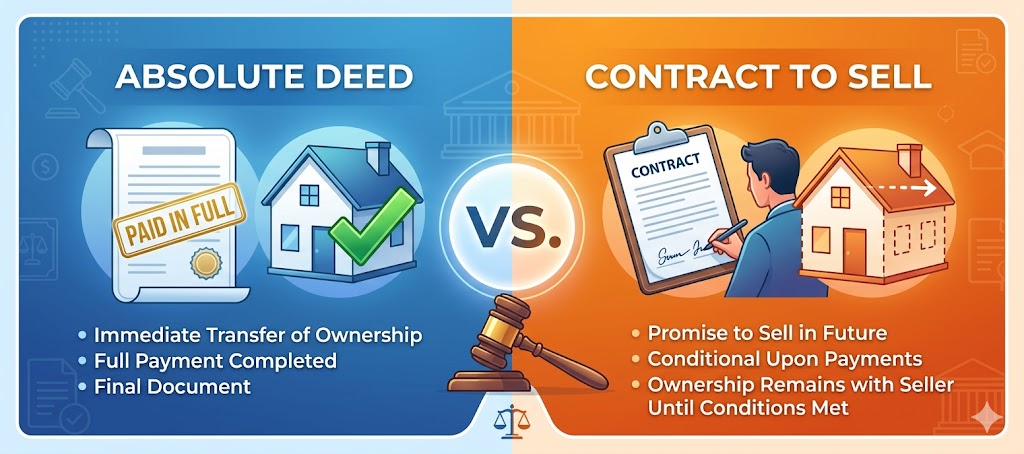
A Contract to Sell is a conditional agreement between a buyer and seller. In this arrangement, the seller agrees to transfer ownership only after the buyer has fulfilled certain obligations—usually full payment of the purchase price. This document is commonly used in installment sales, such as in subdivisions, condominiums, or housing projects.
Key Characteristics of a Contract to Sell:
The seller retains ownership until the condition (e.g., full payment) is met.
The buyer does not acquire ownership immediately.
If the buyer fails to pay in full, the seller may cancel the contract, and no title is transferred.
This is not yet a sale in the strict legal sense—it is a promise to sell, subject to a condition precedent.
Legal Basis: Under Article 1475 of the Civil Code, a contract of sale is perfected by agreement on the object and price. A Contract to Sell, however, defers the actual sale until the agreed condition is met. In a Contract to Sell, the title to the property does not pass to the buyer until full payment of the purchase price.
What is a Deed of Absolute Sale (DOAS)?
A Deed of Absolute Sale (DOAS) is a final and binding contract that transfers ownership of the property from seller to buyer. This document is the definitive proof of the transfer of ownership.
Key Characteristics of a Deed of Absolute Sale:
Ownership is transferred immediately upon signing and notarization.
The buyer has paid the full purchase price, or the contract explicitly waives any remaining condition.
The document is notarized and submitted to the Registry of Deeds to effect the title transfer.
Both the BIR and the local Treasurer’s Office will require the notarized DOAS for tax clearance and computation.
Legal Basis: Governed by the Civil Code and the Property Registration Decree (PD 1529), the Deed of Sale is required for property registration with the Registry of Deeds.
Comparison of the Two Documents
Legal Effect:
A Contract to Sell is a conditional promise to sell, while a Deed of Absolute Sale is an outright transfer of ownership. The legal effect of the two documents is fundamentally different.
Ownership Transfer:
In a Contract to Sell, ownership is transferred only after full payment or the fulfillment of other conditions. In a Deed of Absolute Sale, ownership is transferred immediately upon signing and notarization.
Installment Terms:
A Contract to Sell is commonly used for installment purchases, and ownership is deferred until full payment. A Deed of Absolute Sale is generally used for lump sum payments or after full payment has been made.
Buyer’s Obligation:
Under a Contract to Sell, the buyer must pay in full to trigger title transfer. Under a Deed of Absolute Sale, the payment has already been completed, and the buyer has no further payment obligations.
Seller’s Obligation:
In a Contract to Sell, the seller must deliver the title only after the buyer complies with the conditions. In a Deed of Absolute Sale, the seller must deliver the title immediately.
Risk of Cancellation:
A Contract to Sell carries a risk of cancellation if the buyer fails to comply with the terms. A Deed of Absolute Sale is a completed contract and cannot be cancelled unless challenged in court.
Document Type:
A Contract to Sell is a private contract that can be notarized but is not registrable on its own. A Deed of Absolute Sale is a public document that is registrable with the BIR and the Registry of Deeds.
Notarization:
Notarization is optional but recommended for a Contract to Sell. For a Deed of Absolute Sale, notarization is mandatory for registration.
When Should You Use a Contract to Sell?
A Contract to Sell is appropriate in cases such as Pag-IBIG or bank-financed purchases, installment-based sales for subdivisions or condos, transactions where the buyer needs time to complete payments, and when the seller wants to retain legal control of the title until full payment.
When Should You Use a Deed of Absolute Sale?
A Deed of Absolute Sale is used when the buyer has paid the full purchase price, when there are no remaining conditions to be fulfilled, and when the parties are ready to transfer ownership immediately.
Author John Paul Ybañez Paquibot Licensed Real Estate Broker | PRC No. 00014132 | DHSUD No. CVRFO-B-03/18-2672 Bachelors Realty and Brokerage, Inc. Cebu G/F Cap Building, Brgy. Corner, Osmeña Blvd. Arlington Pond St. Extension, Cebu City, 6000 Cebu
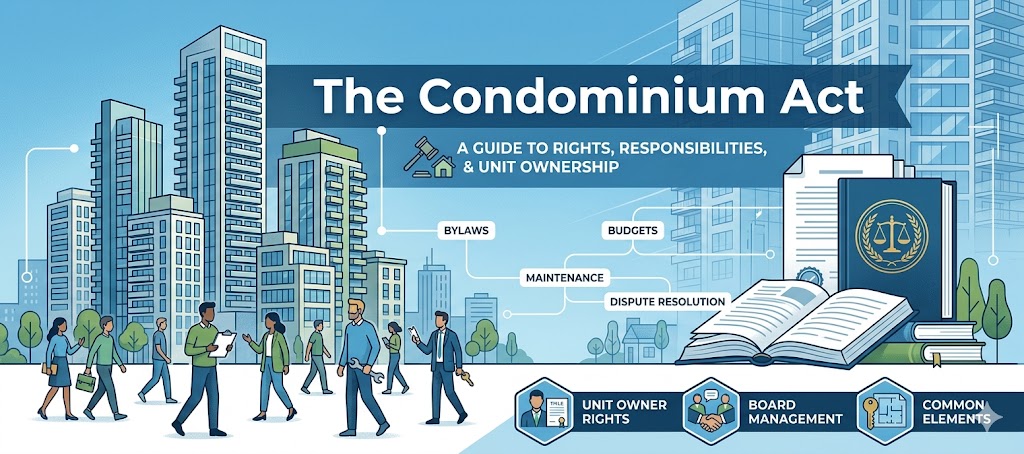
Republic Act No. 4726, otherwise known as “The Condominium Act,” was enacted on June 18, 1966. This law defines what a condominium is, establishes requirements for its creation, and governs its incidents. It remains the primary legal framework for condominium ownership in the Philippines.
Key Provisions of RA 4726
1. Definition of Condominium
The Act covers all condominium projects as defined in RA 4726, including those that are now in existence, those under construction, or those that may be constructed. A condominium consists of individually owned units and common areas that are jointly owned by all unit owners.
2. Rights of Condominium Owners
Under Section 5 of the Condominium Act, a condominium owner has the exclusive right to mortgage, pledge, or encumber his condominium unit and to have the same appraised independently of the other condominiums. However, any obligation on the condominium unit does not affect the common areas. This means that a unit owner can use their unit as collateral without affecting the ownership rights of other unit owners.
3. Foreign Ownership of Condominiums
The Condominium Act allows foreigners to buy condominium units in the Philippines, subject to certain limitations. Section 5 of the Act provides that any transfer or conveyance of a condominium unit is subject to the constitutional limitation that foreigners cannot own land. However, they can own condominium units as long as the foreign ownership in the condominium project does not exceed 40% of the total units. This is a significant advantage for foreigners who wish to invest in Philippine real estate.
4. Declaration of Restrictions (Section 9)
Under Section 9 of RA 4726, a condominium owner shall register a declaration of restrictions, which shall be annotated to the certificate of title of the land included within the project. This declaration sets out the rules and restrictions governing the use of the common areas and the units themselves.
5. Lien for Association Dues (Section 20)
When a unit owner fails to pay the association dues, the condominium corporation can enforce a lien on the condominium unit by selling the unit in an extrajudicial foreclosure sale. This is a powerful remedy that protects the financial health of the condominium corporation.
Condominium Certificate of Title (CCT)
Unlike house and lot properties that use Transfer Certificates of Title (TCT), condominium units are registered under a Condominium Certificate of Title (CCT) . When buying a condo in Cebu, always request a Certified True Copy of the CCT from the Registry of Deeds to verify ownership and check for any annotations. The CCT will also show the proportion of ownership in the common areas.
Author John Paul Ybañez Paquibot Licensed Real Estate Broker | PRC No. 00014132 | DHSUD No. CVRFO-B-03/18-2672 Bachelors Realty and Brokerage, Inc. Cebu G/F Cap Building, Brgy. Corner, Osmeña Blvd. Arlington Pond St. Extension, Cebu City, 6000 Cebu
When a loved one passes away and leaves behind property, transferring that property to the rightful heirs requires paying estate tax. This is a critical step that many heirs overlook, leading to penalties and complications.
What is Estate Tax?
Under Philippine tax rules, estate tax is a tax on the privilege of the decedent to transmit his estate at death to his lawful heirs or beneficiaries. The estate tax is imposed on the net estate, which is the total value of the estate minus allowable deductions.
Currently, the net estate of every decedent, whether resident or non-resident of the Philippines, is subject to an estate tax at the rate of six percent (6%) . This means that 6% of the net value of the estate must be paid to the BIR before the property can be transferred to the heirs.
In addition to the national estate tax, local transfer taxes are levied by local government units for the transfer of real properties, with rates of up to 0.50% if the property is located in the provinces.
Important Clarification: Estate Tax Status for 2026
As of June 2026, there is no “Estate Tax Abolition Bill” currently in effect. The 6% estate tax remains the law of the land under the National Internal Revenue Code. While there have been legislative discussions and proposals regarding various tax reforms, the estate tax is still actively enforced by the Bureau of Internal Revenue (BIR).
What this means for heirs:
Any property transfer through inheritance is still subject to the 6% estate tax
The tax is computed based on the net estate value
The deadline for filing and payment remains one year from the date of death
Estate Tax Amnesty: Officially Closed
This is a critical point that many heirs may not be aware of. The primary window for the Estate Tax Amnesty (which offered relief from penalties and surcharges) officially closed on June 16, 2025.
As of June 2026, there is currently no active amnesty law in effect.
What This Means for Heirs:
While there are legislative efforts in Congress—such as House Bill 6614 and Senate Bill 1865—to extend the amnesty period until December 31, 2028, these bills have not yet been enacted into law. As of today, heirs must settle estates under the regular tax regime.
Under the Regular Tax Regime:
Heirs are subject to the 6% estate tax rate. However, they must also account for the following penalties for late filing:
Surcharges of 25% for late filing
Interest of 12% annually for any filings made beyond the statutory one-year deadline from the date of death
Warning for Heirs:
If you inherited a property before June 16, 2025, and did not settle the estate tax during the amnesty period, you are now subject to the full regular rates, including possible penalties and interest for late filing. The BIR now strictly enforces the requirements for a Certificate Authorizing Registration (CAR), and the absence of an amnesty program means that late filings will incur significant penalties.
Important: There is currently no flexibility allowing sworn undertakings in lieu of formal Extrajudicial Settlements. The BIR now requires full, formal documentation, including a notarized Extrajudicial Settlement or a Court Order.
Estate Tax Computation for 2026
Step 1: Determine the Gross Estate
The gross estate includes all properties owned by the deceased at the time of death, including real estate, bank accounts, vehicles, and other assets.
Step 2: Compute Allowable Deductions
The following deductions may be claimed:
Standard deduction (currently PHP 5,000,000)
Medical expenses (subject to BIR rules)
Funeral expenses
Judicial and administrative expenses
Claims against the estate
Step 3: Calculate the Net Estate
The net estate is the gross estate minus the allowable deductions. The 6% estate tax is imposed on the net estate.
Step 4: File BIR Form 1801 and Pay the Tax
The estate tax return must be filed within one year from the date of death. File BIR Form 1801 (Estate Tax Return) with the Revenue District Office (RDO) that has jurisdiction over the property.
The Extrajudicial Settlement Process
If the deceased left no will (intestate), there is no legal dispute among the heirs, and all debts have been settled, the heirs can execute an Extrajudicial Settlement of Estate (EJS) . This is the most common way to distribute property among heirs.
Who Can Use Extrajudicial Settlement? Under Philippine inheritance law, legal heirs include the surviving spouse, legitimate children, illegitimate children, adopted children, and parents or ascendants (if there are no children). All heirs must agree to the settlement, and there must be no outstanding debts.
Required Documents for Extrajudicial Settlement
Certified True Copy of the land title
Latest Tax Declaration of the property
Death Certificate of the deceased
Certificate of No Marriage (CENOMAR) (if relevant to the inheritance)
Valid IDs of all heirs
Proof of relationship (birth certificates, marriage certificates)
Estate tax computation and proof of payment
Steps to Transfer Title to Heirs
1. Draft and Notarize the Extrajudicial Settlement (EJS)
Have a lawyer draft a legally sound EJS that includes the full names and signatures of all heirs, a complete description of the property, an agreement on the division of the property, and a statement that there are no pending debts. The document must be notarized by a licensed notary public.
Important: The EJS must be published in a newspaper of general circulation for 3 consecutive weeks. This publication is required by law and serves to inform the public of the settlement.
2. Pay the Estate Tax at the BIR
Submit BIR Form 1801 (Estate Tax Return) and pay the tax based on the total net estate value. Submit all required supporting documents to the BIR. Once the tax is paid and the documents are processed, the BIR will issue a Certificate Authorizing Registration (CAR) or eCAR.
3. Pay the Transfer Tax at the Municipal or City Treasurer’s Office
Present the notarized EJS and the CAR to the Treasurer’s Office. Pay the transfer tax, which is levied by the local government.
4. Transfer the Title at the Registry of Deeds
File the following documents at the Registry of Deeds:
Notarized Extrajudicial Settlement
Original land title
Certificate Authorizing Registration (CAR) or eCAR from the BIR
Transfer Tax receipt
Valid IDs of all heirs
Important: Penalties and interest may apply if the estate tax is not paid within one year of death. Heirs should act promptly to avoid additional costs. Because the amnesty period has lapsed, the BIR now strictly enforces the requirements for a CAR, and the absence of an amnesty program means that late filings will incur significant penalties.
Author John Paul Ybañez Paquibot Licensed Real Estate Broker | PRC No. 00014132 | DHSUD No. CVRFO-B-03/18-2672 Bachelors Realty and Brokerage, Inc. Cebu G/F Cap Building, Brgy. Corner, Osmeña Blvd. Arlington Pond St. Extension, Cebu City, 6000 Cebu
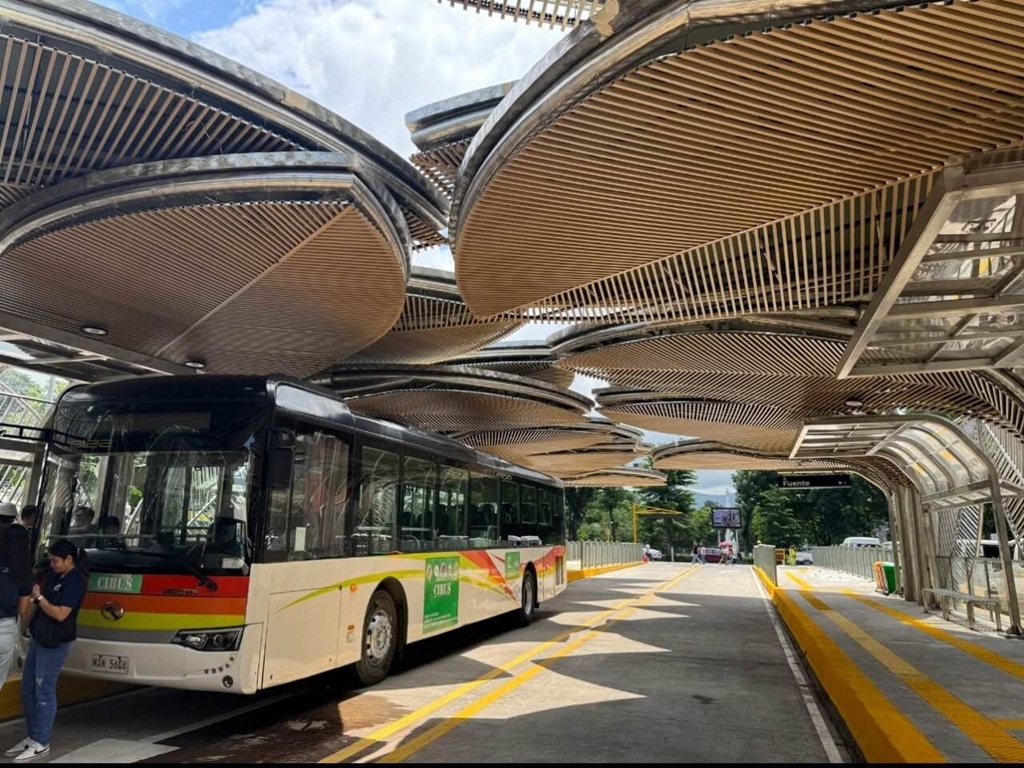
As of June 2026, Metro Cebu’s real estate market has shifted dramatically. With the Cebu Bus Rapid Transit (BRT) now in partial operation and the CCLEX corridor reshaping southern accessibility, the appetite for “horizontal” living—houses and lots—remains robust. Data from early 2026 indicates that while the condominium market is entering a period of supply normalization with 102,000 units projected by 2028, well-located gated subdivisions and lot-only developments continue to see steady appreciation.
The question today is not whether to invest in Cebu real estate, but which specific property in which specific location with which specific strategy will hold value five or ten years from now. This guide walks you through the numbers, the fees, the risks, and the opportunities that actually matter in 2026—without the developer spin.
Key Takeaways for Busy Readers
Before we dive into the details, here are the most important things you need to know:
For Families Seeking Security and Amenities: Established communities like Maria Luisa Estate Park, Pristina North, and North Town Homes remain top choices. These offer spacious lots, premium security, and proximity to international schools.
For Those Building a Dream Home: Lot-only subdivisions like Vera Estates and Montelago at Monterrazas de Cebu provide the flexibility to design and build a custom home. Always conduct thorough due diligence on the title and budget for closing costs (8% to 12% on top of the contract price).
For Investors and First-Time Buyers: Rising star subdivisions like Serenis Residences, Modena Liloan, and North Grove at Pristina Town offer affordable entry points with modern amenities and growth potential.
The Brutal Truth:
House-and-lot products are appreciating faster than condos (7% to 10% annual gains versus 4% to 7% for condos)
Land is the scarcer, more stable investment with a 94% take-up rate for lot-only projects in 2025-2026
Infrastructure is everything—follow the BRT, CCLEX, and airport expansion
Budget 8% to 12% above the contract price for taxes and closing costs
Part 1: Top 10 Best Gated Subdivisions in Cebu (2026)
Choosing a gated community is about more than just security; it is about choosing a lifestyle. Based on current demand, infrastructure proximity, and community reputation, here are the standout communities in 2026.
1. Maria Luisa Estate Park (Banilad/Budlaan)
Often considered the gold standard of gated communities in Cebu, Maria Luisa offers large residential lots, stunning mountain and city views, and easy access to international schools and business hubs. It is peaceful, green, and located near Cebu International School and Oakridge Business Park.
What Makes It Special:
Premium security with controlled entry points
Clubhouse with function rooms, swimming pools, and tennis courts
Jogging paths and green spaces
Mature trees and well-maintained roads
Remains the “gold standard” for prestige and consistent value
The Brutal Truth: Prices are significantly higher than other communities. Expect to pay a premium for the location and exclusivity. Lot sizes tend to be larger, which means higher overall costs and higher property taxes.
Best For: Families with school-age children, executives, and those who value exclusivity and prestige above all else.
2. Pristina North (Talamban)
Developed by AboitizLand, this community is known for thoughtful urban planning, tree-lined roads, and a clubhouse with pool and fitness facilities. It offers close proximity to schools like Bright Academy and feels like a modern village with plenty of open spaces for kids to roam.
What Makes It Special:
Excellent master planning with wide roads
Family-centric amenities
Close to schools and commercial areas
Strong developer reputation
The Brutal Truth: Being in Talamban means you are further from the city center. Commute times to Cebu Business Park or IT Park can be 30 to 45 minutes during peak hours. The community is still developing, so some amenities may take time to mature.
Best For: Families who want a modern, well-planned community and do not mind a slightly longer commute.
3. North Town Homes (Talamban / Canduman, Mandaue)
This established subdivision offers mature trees and landscaped gardens, large homes with lawns, and strict security measures. Its proximity to Cebu International School makes school runs quick and easy.
What Makes It Special:
Fully secured gated community with round-the-clock security
Mature trees and landscaped gardens
Large homes with lawns
Proximity to premier international schools
The Brutal Truth: As an older community, some homes may require renovations. Lot sizes vary significantly, so check carefully before buying. The location is convenient for schools but may be less so for other amenities.
Best For: Families prioritizing proximity to international schools and a classic suburban feel.
4. Beverly Hills Subdivision (Guadalupe)
This iconic Cebu City community is nestled on hilly terrain with panoramic views. It features older but spacious homes in an established community with quick access to uptown Cebu.
What Makes It Special:
Panoramic city views
Spacious older homes
Established community with mature landscaping
Quick access to uptown Cebu
The Brutal Truth: The hilly terrain means steep drives and potential issues with landslides or soil erosion. Some roads are narrow, and older homes may require significant renovation. It is not ideal for those with mobility issues.
Best For: Families who prioritize space and do not mind some hilly driving. Great for those who want an “in-city” suburban feel.
5. South Glendale (Talisay)
Located near SRP and south Cebu areas, this community features newer homes with modern design and is gated with security. It is ideal for families working or studying in the southern part of Metro Cebu.
What Makes It Special:
Newer homes with contemporary architecture
Gated with security
Close to SRP and CCLEX corridor
Good commute-to-value ratio
The Brutal Truth: Being in Talisay means a longer commute to northern areas like IT Park or Mandaue. The area is still developing, so some amenities may be limited.
Best For: Families working in the SRP corridor or southern Cebu who want modern homes at more affordable prices.
6. North Hills Talamban (SterlingLand)
Nestled in the peaceful enclave of Barangay Pit-os, North Hills is a premier gated community thoughtfully designed for elevated living and timeless elegance. It features a lifestyle clubhouse, outdoor lounge, swimming pool, fitness gym, function room, basketball court, children’s playground, and 24/7 security.
What Makes It Special:
Elegant, modern architecture
Comprehensive clubhouse amenities
24/7 security with controlled entry
Master-planned estate with beautiful landscaping
The Brutal Truth: North Hills is a premium community with premium pricing. The location in Talamban means a longer commute to the city center. Some homes are single-attached rather than single-detached, which may affect privacy.
Best For: Families who want a sophisticated, modern community with comprehensive amenities and do not mind the northern location.
7. Silver Hills Subdivision (Talamban)
Silver Hills is a gated community in Talamban that offers a quieter alternative to the hustle and bustle of downtown Cebu. It is close to reputable schools like Cebu International School and Sacred Heart School – Ateneo de Cebu.
What Makes It Special:
Cooler climate due to higher elevation
Quieter, more private atmosphere
Close to reputable schools
Single-detached houses with decent-sized yards
The Brutal Truth: The higher elevation means steeper roads and potentially higher construction costs for any renovations. The location is somewhat secluded, so you will need a vehicle for most errands.
Best For: Families who value privacy, cooler weather, and a quieter lifestyle.
8. Vera Estates (Tawason, Mandaue City)
Vera Estates is a master-planned, lot-only residential subdivision designed for buyers who want to build their own homes. It offers a secure, low-density environment with complete community amenities and controlled development standards.
What Makes It Special:
Lot-only development allowing custom home builds
Lot sizes from 237 sqm to over 600 sqm
Guarded entrance with 24/7 security
Clubhouse, swimming pool, jogging trails, playground, and basketball court
High aesthetic standards with architectural controls
The Brutal Truth: Because it is lot-only, you need to budget separately for construction. The location in Mandaue is convenient but may not be as prestigious as Maria Luisa. The community is still developing, so some amenities may take time to mature.
Best For: Buyers who want to design and build their own dream home with the flexibility to choose their own builder and timeline.
9. Modena Liloan
The fourth subdivision in the successful Modena series, following sites in Minglanilla, Mactan, and Consolacion. It offers updated home designs and the comforts of subdivision living.
What Makes It Special:
Updated home designs
Modern subdivision comforts
Affordable entry pricing
Successful track record from previous sites
The Brutal Truth: Liloan is further north, meaning a longer commute to Cebu City. The community is new, so amenities may still be developing. Prices are affordable, but resale value may take time to build.
Best For: Young families and first-time buyers who want a modern subdivision at an affordable price and do not mind the northern location.
10. 88 Hillside Residences (Pardo)
More budget-friendly but still gated and secure, this community offers duplex and bungalow units with playgrounds and green zones. It is great for young families starting out or relocating on a tighter budget.
What Makes It Special:
Budget-friendly pricing
Gated and secure
Duplex and bungalow options
Playgrounds and green zones
The Brutal Truth: The location in Pardo is further south. Units are smaller and may have less privacy than single-detached homes. The community is more basic than premium subdivisions.
Best For: Young families on a budget who prioritize security and community over size and prestige.
Part 2: Buying the Best Lot for Your Dream Home
In 2026, land is the ultimate hedge against inflation. If you are buying a lot to build your dream home, treat it like a long-term asset, not just a plot of soil.
Why Buy a Lot-Only Property?
A lot-only subdivision gives you full flexibility to design and build homes according to your needs, timelines, and budgets—subject to subdivision guidelines that maintain neighborhood quality. Inland, you can often find larger lots for a fraction of the cost of beachfront or prime city properties, giving you space for a garden, a bigger house, or even a small business.
Top Locations for Residential Lot Purchases
Cebu offers a blend of city and island life. You can find residential lots in Cebu City itself, or in more laid-back areas like Talisay City or Mandaue City, striking a good balance between urban convenience and a relaxed atmosphere.
Prime Lot-Only Developments:
Vera Estates (Tawason, Mandaue City)
Vera Estates is a master-planned, lot-only residential subdivision designed for buyers who want to build their own homes. It offers a secure, low-density environment with complete community amenities and controlled development standards. Located in an elevated area of Mandaue City, it provides a balance of city accessibility and a quieter residential atmosphere. Lot sizes range from approximately 237 sqm to 600+ sqm.
Montelago at Monterrazas de Cebu
This development offers lots overlooking Cebu City with cool mountain breezes and exclusive living. It is part of the larger Monterrazas de Cebu development, a 200-hectare project.
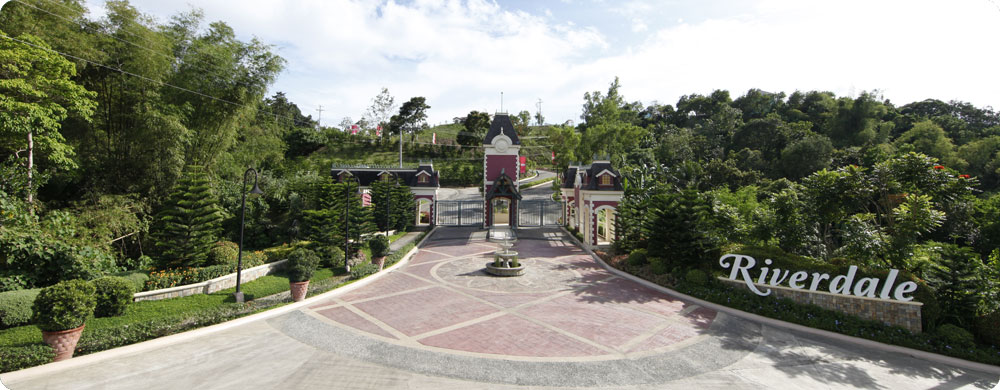
Riverdale Subdivision (Talamban)
An elevated community known for its scenic mountain views and quiet residential environment. It offers lots suitable for end-users or investors planning to build a custom home in an elevated, low-density subdivision.
Doña Rita Village (Banilad)
A prime location for residential lots in Banilad, Cebu City.
The Due Diligence Checklist
Verify the Title
Never rely on a photocopy. Request a Certified True Copy (CTC) from the Registry of Deeds to check for “Lis Pendens,” liens, mortgages, or existing adverse claims. If the property was inherited, ask for the Extrajudicial Settlement of Estate (EJS) and estate tax clearance.
Infrastructure Check
In 2026, look for “future-proof” lots. Are they near the new BRT transit nodes or major highway ramps? Accessibility is now the #1 factor in long-term value. Properties within walking distance of transit nodes historically maintain the highest liquidity even when the broader market softens.
Soil & Topography
Cebu’s hilly terrain can hide high construction costs. A flat, build-ready lot might cost more upfront but saves you millions in retaining walls and soil stabilization later. Always have a soil test done before purchasing.
Zoning and Restrictions
Check the subdivision’s deed restrictions. Are there building height limits? Are commercial activities allowed? What are the architectural guidelines? These restrictions protect property values but may limit your design options.
Utilities and Access
Confirm that the lot has access to reliable water supply, electricity, and high-speed fiber-optic internet. The 2026 professional is choosing suburbs not just for the house, but for the quality of their digital infrastructure.
Budgeting
Always set aside 8% to 12% of the total contract price for taxes, registration, and title transfer fees. Do not stretch your budget so thin that you cannot afford to start construction.
Part 3: The True Cost of Buying a Lot
The listed price of a lot is just the beginning. Government taxes, professional fees, and ongoing costs can add thousands of dollars to your total budget.
Buyer Closing Costs (One-Time)
Total buyer closing costs in Cebu typically range from 3% to 6% of the purchase price. On a ₱3 million lot, that is an extra ₱90,000 to ₱180,000 in fees and taxes.
The minimum extra budget for closing costs, when keeping expenses to the bare legal minimum, is around 2.5% to 4% of the purchase price.
The maximum extra budget buyers should realistically plan for can reach 15% to 20% of the purchase price, especially if you agree to a “net of taxes” contract that shifts the seller’s 6% capital gains tax to you.
Key Taxes and Fees Explained
Capital Gains Tax (CGT): 6% of the selling price, zonal value, or fair market value—whichever is higher. This is typically the seller’s responsibility, but some contracts shift it to the buyer.
Documentary Stamp Tax (DST): 1.5% of the property’s selling price, zonal value, or fair market value—whichever is higher. This is a buyer cost.
Transfer Tax: Paid to the local government, this rate usually sits between 0.5% and 0.8% of the selling price or fair market value.
Registration Fees: Fees charged by the Registry of Deeds to process the title transfer.
Notary Fees: Fees for notarizing the Deed of Sale.
Processing Timeline and Penalties
The BIR requires that taxes be processed promptly. Delays in processing deeds of sale and title transfers can lead to legal problems, especially if sellers pass away or documents remain unprocessed for years.
Standard processing timeline:
Within 3 days – Review and evaluation of documents and computation of taxes
After 3 days – Taxpayer returns to pay the assessed taxes
Within 3 days after payment – Verification of proof of payment
Within 7 days – Issuance of Electronic Certificate Authorizing Registration (eCAR)
Penalties for delay: Failure to process and pay the required taxes within the prescribed period may result in penalties, including a 25% surcharge, 12% annual interest, and a compromise penalty depending on the amount of tax due.
Part 4: Rising Stars — Suburban Subdivisions in Cebu
While established communities like Maria Luisa and North Town Homes remain highly desirable, several emerging suburban subdivisions are gaining attention for their affordability, modern amenities, and growth potential.
What Makes a Subdivision a “Rising Star”?
Rising star subdivisions are typically characterized by:
Affordability: Priced lower than established communities, making them accessible to young families and first-time buyers
Modern Amenities: Clubhouses, swimming pools, basketball courts, and playgrounds
Strategic Location: Proximity to developing commercial hubs, schools, and infrastructure projects
Master Planning: Thoughtfully designed layouts with wide roads, green spaces, and organized homeowners’ associations
Infrastructure Catalysts: Close to new roads, BRT stations, or other planned improvements
The Liloan-Consolacion North Corridor
With new road networks and the continued expansion of commercial townships, this is the prime zone for value-seeking investors who want to get in before prices hit city-center levels. The area offers modern subdivisions like Modena Liloan and Serenis Residences at competitive prices.
Notable Communities:
Modena Liloan: Updated home designs with the comforts of subdivision living
Serenis Residences: Described as the most elegant middle-end subdivision in the north
North Grove at Pristina Town: Garden-inspired township development
The Brutal Truth: The north corridor is still developing. Commute times to Cebu City can be long during peak hours. Some amenities are still being built. However, the potential for appreciation is significant as infrastructure improves.
Best For: Young families and investors who are willing to wait for appreciation and do not mind the commute.
The SRP-Adjacent Pockets (Talisay & Minglanilla)
The South is the current focus of developer interest. Properties here now offer the best commute-to-value ratio for professionals working in Cebu City or the SRP business hubs. The CCLEX has dramatically reshaped property values, making southern communities more accessible than ever.
Notable Communities:
South Glendale (Talisay): Newer homes with modern design
The Crescent Ville (Minglanilla): Overlooking subdivision with swimming pool and clubhouse
Modena Minglanilla: Affordable suburban comfort
The Brutal Truth: Southern communities are further from northern business hubs. The area is still developing, and some roads are still being improved. However, the CCLEX has made the commute to Cebu City much faster.
Best For: Professionals working in SRP or southern Cebu who want modern homes at affordable prices.
Balamban (Foressa Mountain Town)
For the “lifestyle investor,” mountain communities are becoming the new standard for second-home or leisure-focused investments, offering a reprieve from the city’s density.
Notable Communities:
Foressa Mountain Town (Balamban): Mountain community with cool climate and scenic views
The Brutal Truth: The location is far from the city. It is suitable for weekend homes or retirement but not for daily commuters. The area is still developing, and some amenities may be limited.
Best For: Lifestyle investors, retirees, and those looking for a second home or weekend retreat.
Part 5: The Brutal Truth About Buying a Subdivision Lot
Here are the uncomfortable truths that many buyers discover too late.
The 102,000-Unit Question
Condo supply in Metro Cebu is projected to reach 102,000 units by 2028. This massive supply pipeline may cap price growth in oversupplied segments while prime locations stay firm. For those considering lot-only or house-and-lot investments, this supply dynamic suggests that well-located horizontal developments may offer stronger appreciation potential than condos in saturated areas.
Land Is Scarcer Than Condos
The 94% take-up rate for lot-only projects in 2025-2026 confirms that land is the scarcer, more stable investment. Unlike condos, which can be built in unlimited quantities, land is finite. This fundamental scarcity supports long-term value.
Infrastructure Is Everything
The Cebu-Cordova Link Expressway (CCLEX) has dramatically reshaped property values. Cordova land values jumped 900% from around ₱500 per sqm to ₱5,000 per sqm after the bridge opened. The Cebu BRT system, which began partial operations in late 2025, is another infrastructure catalyst. Neighborhoods along its 13-kilometer route from SRP to IT Park are already seeing price premiums.
Actionable Advice: Focus on areas within walking distance of planned BRT stations and other infrastructure improvements. Infrastructure-led growth is the key to capital appreciation.
The Commodity Trap
Standard 25 to 35 sqm condos in non-prime areas are the most vulnerable segment. When supply exceeds demand, the first thing that happens is rent compression. The second thing is extended vacancy periods. For horizontal properties, the equivalent risk is buying in an area with oversupply of subdivisions and limited demand.
Before buying any lot, ask yourself: “If 10,000 new condo units come online in the next two years, what makes this location stand out?” If you cannot articulate a clear answer, you may be buying in a saturated area.
Hidden Costs
Association dues, property taxes, and maintenance costs can consume a significant portion of your budget. Budget carefully and do not assume you will have 100% occupancy or zero vacancies.
Part 6: Expert Insights for 2026
Follow the Infrastructure
The Cebu BRT’s partial operation (SRP to IT Park) is already changing commute patterns. Properties within 2km of these transit nodes are your safest bets for rental demand and resale value.
The CCLEX has made southern communities more accessible than ever. The airport expansion is another catalyst for properties near Mactan.
Supply Dynamics
Metro Cebu’s condo supply is high, which may cap rental yield growth for investors. Conversely, the 94% take-up rate for lot-only projects in 2025-2026 confirms that land is the scarcer, more stable investment.
The Work-from-Home Shift
When choosing a location, prioritize areas with high-speed fiber-optic reliability. The 2026 professional is choosing suburbs not just for the house, but for the quality of their digital infrastructure.
Developer Promotions
Extended payment schemes and promotional offers are becoming more common—a sign that the market is adjusting to higher inventory levels. Take advantage of these if they fit your budget, but read the fine print carefully.
Foreign Investors: Know the Rules
Foreigners can own condos (subject to 40% cap) and lease land for up to 99 years under the new law (RA 12252), but cannot own land directly. If you are a foreigner, consider a condo investment or a long-term land lease.
Part 7: Your Cebu Subdivision & Land Investment Checklist
Before You Buy
Verify the Title: Request a Certified True Copy of the title from the Registry of Deeds. Check for any liens, mortgages, or adverse claims.
Check Infrastructure: Is the property near BRT stations, CCLEX, or other planned improvements? Accessibility is the #1 factor in long-term value.
Assess Soil & Topography: Have a soil test done. Hilly terrain can hide high construction costs.
Review Zoning & Restrictions: Check subdivision deed restrictions. Are there building height limits? What are the architectural guidelines?
Confirm Utilities: Does the lot have access to reliable water, electricity, and high-speed internet?
Budget for Closing Costs: Plan for 8% to 12% on top of the contract price for taxes, registration, and transfer fees.
During the Transaction
Have the Deed of Sale Notarized: Early in the month is best to allow sufficient time for BIR processing.
Pay Taxes at the BIR: Pay Capital Gains Tax (6%) and Documentary Stamp Tax (1.5%) within 30 days of notarization.
Secure the eCAR: Wait for the BIR to issue the Electronic Certificate Authorizing Registration. This is mandatory for title transfer.
Pay Transfer Tax: Pay Transfer Tax at the Local Treasurer’s Office (up to 0.50% in the provinces).
Transfer the Title: File all documents at the Registry of Deeds.
Summary: Your 2026 Cebu Subdivision & Land Investment Strategy
Location is Everything: Prime locations near infrastructure and transit nodes remain stable. Outside these areas, oversupply risks are real.
Land is Scarce: The 94% take-up rate for lot-only projects confirms that land is the more stable investment compared to condos.
Budget for Closing Costs: Plan for 3% to 6% in buyer closing costs, and up to 15% to 20% if taxes are shifted to you.
Follow the Infrastructure: Focus on areas within walking distance of BRT stations and other planned improvements. Infrastructure-led growth is the key to capital appreciation.
Understand the Risks: Real-world vacancy rates can hit 50% in overbuilt sectors. Commodity units in non-prime areas face the highest risk.
Foreign Investors: Know the Rules: Foreigners can own condos (subject to 40% cap) and lease land for up to 99 years, but cannot own land directly.
Apply the Quality Filter: Prioritize defensible units with unique value propositions. Avoid commodity units in non-prime areas.
Need Expert Guidance?
Real estate is a significant commitment. Don’t go it alone. Whether you are buying a lot to build your dream home, investing in a gated subdivision, or looking for the next rising star, having honest, data-driven insights makes all the difference.
Book a consultation to discuss your goals and avoid the common pitfalls of the current Cebu market. Our team provides transparent advice tailored to your specific needs—no developer spin, no hidden agendas.
Disclaimer: This guide is for informational purposes only and does not constitute financial or legal advice. Real estate markets are dynamic, and individual results vary. Always conduct your own due diligence and consult qualified professionals before making investment decisions.
Author John Paul Ybañez Paquibot Licensed Real Estate Broker | PRC No. 00014132 | DHSUD No. CVRFO-B-03/18-2672 Bachelors Realty and Brokerage, Inc. Cebu G/F Cap Building, Brgy. Corner, Osmeña Blvd. Arlington Pond St. Extension, Cebu City, 6000 Cebu
Buying real estate in Cebu is one of the most significant financial decisions you will ever make. But here is the uncomfortable truth that many buyers learn too late: a beautiful property with a seemingly clean title can still be a legal nightmare if you do not understand the laws that govern property ownership in the Philippines.
This guide consolidates everything you need to know about Cebu property laws—from verifying land titles and transferring ownership to understanding estate taxes, the Condominium Act, and your financing options through SSS, GSIS, and Pag-IBIG. Whether you are a first-time buyer, an investor, or an heir inheriting property, this is your roadmap to a legally sound real estate transaction in 2026.
Part 1: How to Verify a Land Title
Why Title Verification Matters
Many land-related disputes arise from fake titles, double sales, forged signatures, and incorrect land boundaries. The Supreme Court of the Philippines has explicitly ruled that land buyers must verify ownership by checking both the certificate of title and reviewing the records in the Registry of Deeds to avoid fraudulent transactions. Relying solely on a certificate of title is insufficient—especially if there are signs of fraud or irregularity.
In a landmark case, the Supreme Court ruled that buyers who ignore suspicious facts cannot claim to be in good faith. The court stressed that any subsequent registration based on a forged duplicate title is invalid. This is why due diligence is not optional—it is your legal responsibility.
Step 1: Start with the Title Number and Property Details
Ask the seller for a copy of the title (ideally the owner’s duplicate copy). From this, note the following:
Title Number – This is the unique identifier for the property, such as TCT No. 123456 for land or CCT No. 789012 for condominiums. Always verify the exact title number.
Name of Registered Owner – The name on the title must match the seller’s name. Any discrepancy should be investigated immediately.
Location, Lot & Block Number – These details describe the physical location of the property. Verify that the location matches the actual site.
Area in Square Meters – Confirm that the area stated on the title matches the actual land area. Significant differences may indicate an error or fraud.
Important: The Land Registration Authority (LRA) can only trace and verify by title number, not by lot, name, or tax declaration number. This is why having the correct title number is essential.
Step 2: Request a Certified True Copy from the Registry of Deeds
The most reliable way to verify a land title is by securing a Certified True Copy (CTC) from the Registry of Deeds (ROD) where the property is located.
How to Do It:
First, visit the Registry of Deeds in person or use their online portal if available. Submit the title number and property location. Pay the required fee, which varies depending on the jurisdiction. You can receive the CTC within the same day or within a few working days, depending on the volume of requests.
You may also request a CTC online through the LRA eSerbisyo portal at www.eserbisyo.lra.gov.ph. This is a convenient option for those who cannot visit the ROD in person.
The CTC is a direct copy of the RD’s master file and will show the registered owner’s name, all annotations (such as mortgages, lis pendens, or adverse claims), and the full title history including any cancellations or prior transactions.
This is a must-do step in any land purchase. Without obtaining a CTC directly from the ROD, you cannot be certain that the seller’s copy is authentic.
Step 3: Compare with Seller’s Copy
Carefully review the original CTC against the copy provided by the seller. Watch for any differences in the following areas:
Lot Area – Even a small discrepancy in the area measurement should be investigated.
Location – The location described on the title should match the actual physical location of the property.
Encumbrances or Annotations – The seller’s copy may omit certain annotations. Compare the annotation pages carefully.
Ownership Name – The name on the CTC must match the name on the seller’s copy exactly. Any spelling variations or differences in name format should be examined.
Step 4: Examine the Annotations Page
Annotations are notes on the title that indicate legal issues, restrictions, or third-party claims. Common annotations include:
Mortgage or Lien – This indicates that the title is being used as collateral for a loan. If this annotation exists, the property cannot be transferred until the mortgage is fully paid and the annotation is cancelled.
Lis Pendens – This is a notice of pending litigation affecting the property. If there is an ongoing court case, you should be aware of it before proceeding with the purchase.
Right of Way or Easements – These are third-party rights to use a portion of the property for access or utilities. These rights will continue even after you purchase the property.
Notice of Levy or Tax Delinquency – This means the property has been seized by the government for unpaid taxes. The issue must be resolved before you can proceed.
A clean title should have no adverse claims unless fully explained and settled before transfer. If you find any annotations that the seller did not disclose, ask for a full explanation and seek legal advice.
Step 5: Review the Ownership History
Check if the property has a clear ownership chain. The title numbers should transition properly—for example, from an Original Certificate of Title (OCT) to a Transfer Certificate of Title (TCT). The current owner must match the name on the latest title.
If the property was inherited, ask for the Extrajudicial Settlement of Estate (EJS) and the estate tax clearance. These documents prove that the transfer to the current owner was legally done.
This step helps detect fake or “recycled” titles. A clean ownership history shows a clear line of transfer from the original owner to the current seller.
Step 6: Spotting a Fake Title – Red Flags
Before proceeding with any land transaction, carefully inspect the title for the following red flags:
Missing ROD Seal
Legitimate titles have a raised, dry seal from the Registry of Deeds. A missing or flat seal often indicates forgery. The seal should be clearly embossed on the document.
Inconsistent Title Details
Spelling errors, mismatched names, inaccurate lot numbers, or wrong jurisdiction are all warning signs. These inconsistencies may indicate that the title is not genuine.
Suspicious Serial Number
The title number should follow a specific format assigned by the RD. If the serial number looks unusual or does not follow the standard format, verify it with the RD.
No Red Borders or Security Features
Authentic titles have red borders and microtext security elements. These features are difficult to reproduce and are a key indicator of authenticity.
Poor Paper Quality
Genuine titles are printed on judicial form paper with specific weight and texture. A thin, glossy, or photocopied title is a red flag and should be verified with the ROD.
Step 7: Verify Supporting Documents
Aside from the title, ask the seller for the following supporting documents:
Tax Declaration – Obtain the latest tax declaration, and ensure it is in the seller’s name. This document is issued by the City or Municipal Assessor’s Office.
Real Property Tax (RPT) Receipts – Request the most recent receipts to ensure that the real property taxes (commonly called “amilyar”) are fully paid.
Barangay Clearance – This is a clearance from the barangay confirming the seller’s possession or occupancy of the property.
Notarized Deed of Sale – If the seller has already signed a deed of sale, request a copy. This document will provide details about the terms of the sale.
Official Receipt of Title-Related Payments – Request receipts for any payments related to the title, such as registration fees or tax payments.
Step 8: Conduct a Title History Trace (Optional but Recommended)
Through the RD or with the assistance of a lawyer, you can review prior transactions such as previous deeds of sale to ensure continuity of ownership. This step may be critical if you are buying an inherited property or a previously foreclosed property.
A title history trace can reveal issues that are not immediately visible from the current title, such as unresolved disputes or irregularities in prior transfers.
Part 2: How to Transfer a Property Title
Once you have verified that the title is clean, the next step is transferring it to your name. The land title transfer process is governed by several Philippine laws, including the Civil Code, the Property Registration Decree (PD 1529), and various BIR and LGU regulations.
The Sequential Flow of Title Transfer
The process of transferring a title is strictly sequential. Each step depends on the successful completion of the previous one, and the entire process culminates in the issuance of the eCAR (Electronic Certificate Authorizing Registration) from the Bureau of Internal Revenue.
Step 1: Document Preparation and Notarization
The process begins with the preparation and notarization of the Deed of Absolute Sale or Extrajudicial Settlement. This document must be properly executed and notarized by a licensed notary public. It is advisable to have this done early in the month to allow sufficient time for the subsequent steps.
Step 2: Tax Computation and Payment at the BIR
Once the document is notarized, the next step is to compute and pay the required taxes at the Bureau of Internal Revenue. For standard sales, this includes the Capital Gains Tax (6%) and Documentary Stamp Tax (1.5%). For estate transfers, this includes the Estate Tax (6%). These taxes must be paid within 30 days of notarization to avoid penalties.
Step 3: BIR Processing and eCAR Issuance
After the taxes are paid and all required documents are submitted, the BIR processes the application. This is the longest step in the process, typically taking 1 to 3 months. Once approved, the BIR issues the Electronic Certificate Authorizing Registration (eCAR) .
Critical Point: The eCAR is the ultimate gatekeeper. Without this document, the Registry of Deeds cannot proceed with the cancellation of the old title and the issuance of a new one. No property title can move at the Registry of Deeds without the eCAR.
Step 4: Payment of Transfer Tax at the Local Treasurer’s Office
With the eCAR in hand, the next step is to pay the Transfer Tax at the Local Treasurer’s Office. This tax is levied by the local government unit where the property is located, with rates of up to 0.50% in the provinces.
Step 5: Title Transfer at the Registry of Deeds
The final step is to file all required documents at the Registry of Deeds. This includes the notarized Deed of Sale or Extrajudicial Settlement, the original title, the eCAR, the Transfer Tax receipt, and valid IDs. The Registry will then cancel the old title and issue a new one under the buyer’s or heir’s name.
Step 1: Secure a Notarized Deed of Sale
The Deed of Sale is the primary document that proves the transfer of ownership from seller to buyer. The document must include the name and address of both parties, a complete description of the property, the sale amount and terms, and the notary public’s signature and seal.
Important: Ensure that the seller is the registered owner and that the title is free from encumbrances before proceeding with the notarization.
Tip: It is advisable to have the Deed of Sale notarized early in the month. This gives you more time to prepare the necessary requirements and complete the tax payments within the mandatory deadlines. Notarizing late in the month may result in rushed processing and missed deadlines.
Step 2: Obtain a Certified True Copy of the Title
Go to the Registry of Deeds where the property is located and request a Certified True Copy of the Transfer Certificate of Title (TCT) or Original Certificate of Title (OCT). This step is part of the title verification process to ensure the land is free from liens or adverse claims.
Step 3: Secure the Latest Tax Declaration and Real Property Tax Clearance
Visit the City or Municipal Assessor’s Office to get the latest Tax Declaration. You will also need to request a Real Property Tax Clearance, which certifies that the real property tax (commonly called “amilyar”) has been fully paid.
Important: Make sure that the real property tax is fully paid before proceeding to the next steps. Unpaid taxes will prevent the transfer of the title.
Step 4: Compute and Pay Taxes at the BIR
Before you can transfer the title, you must settle the necessary taxes with the Bureau of Internal Revenue (BIR).
Capital Gains Tax (CGT)
The Capital Gains Tax is imposed at a rate of 6% of the selling price or the zonal value, whichever is higher. This tax is payable by the seller, but in many transactions, the buyer agrees to shoulder this cost.
Documentary Stamp Tax (DST)
The Documentary Stamp Tax is imposed at a rate of 1.5% of the selling price or the zonal value. This tax is also payable within 30 days from the date of notarization.
Withholding Tax
In certain cases, a withholding tax may apply. This depends on the nature of the transaction and the classification of the seller.
Critical Deadlines
The BIR requires that these taxes be paid within 30 days from the date of notarization of the Deed of Absolute Sale (DOAS) . If you miss this deadline, surcharges, interest, and penalties will apply. These penalties can significantly increase the total cost of the transaction, so it is essential to meet the deadline.
Pro Tip: Avoid having your Deed of Sale notarized on the last 3–5 working days of the month. Instead, notarize it early in the month, which gives you more time to prepare requirements, compute taxes accurately, and pay within the deadline without pressure.
Certificate Authorizing Registration (CAR)
Once the taxes are paid and all documents are submitted, the BIR will issue the Certificate Authorizing Registration (CAR) . This document is crucial because it serves as proof that all taxes have been settled. The Registry of Deeds will require the CAR before the title can be transferred to the buyer’s name.
Important Update for 2026: The BIR now issues the Electronic Certificate Authorizing Registration (eCAR) . This electronic version is the ultimate gatekeeper in any property transfer. Whether you have paid the taxes or not, no property title can move at the Registry of Deeds without this specific BIR-issued document. The eCAR serves as proof that all tax obligations have been settled, and the Registry of Deeds will not process any title transfer without it.
Processing Time for eCAR:
eCAR processing typically takes 1 to 3 months at the BIR
Applications submitted with complete documentation are processed faster
Missing or incomplete documents will cause significant delays
Step 5: Pay Transfer Taxes at the Local Treasurer’s Office
Submit the notarized Deed of Sale and the CAR to the Local Treasurer’s Office where the property is located. You will then need to pay the Transfer Tax. Transfer taxes are levied by local government units for the transfer of real properties, with rates of up to 0.50% if the property is located in the provinces.
Step 6: Transfer the Title at the Registry of Deeds
File the following documents at the Registry of Deeds where the property is located:
Notarized Deed of Sale
Original land title (or the owner’s duplicate copy)
Certificate Authorizing Registration (CAR) or eCAR from the BIR
Transfer Tax receipt from the Local Treasurer’s Office
Valid IDs of both buyer and seller
The Registry will cancel the old title and issue a new one under the buyer’s name. This is the final and most important step in the transfer process.
Estimated Timelines
Document preparation and notarization typically takes 1 to 2 weeks. The BIR processing for the CAR/eCAR is usually the longest step, taking approximately 1 to 3 months. The Local Treasurer’s Office processing for transfer taxes takes about 1 to 2 weeks. Overall, the entire process can take several months, depending on the efficiency of the various government offices involved.
Part 3: Understanding the Transfer Workflow
The process of transferring a title is sequential and relies heavily on the issuance of the eCAR (Electronic Certificate Authorizing Registration) from the Bureau of Internal Revenue. Without the eCAR, the Registry of Deeds cannot proceed with the cancellation of the old title and the issuance of a new one.
Updated Workflow for 2026 – For Standard Property Sales
Step 1: Secure a Certified True Copy of the title from the Registry of Deeds. Verify all details and check for annotations.
Step 2: Have the Deed of Absolute Sale notarized. Ensure this is done early in the month to allow sufficient time for BIR processing.
Step 3: Pay Capital Gains Tax (6%) and Documentary Stamp Tax (1.5%) at the BIR within 30 days of notarization. Submit all required documents.
Step 4: Wait for the BIR to issue the eCAR. This typically takes 1 to 3 months. The eCAR is mandatory for the title transfer.
Step 5: Pay Transfer Tax at the Local Treasurer’s Office. This is up to 0.50% in the provinces.
Step 6: File all documents at the Registry of Deeds to transfer the title. The Registry will cancel the old title and issue a new one.
Updated Workflow for 2026 – For Estate Transfers (Inherited Properties)
Step 1: Secure a Certified True Copy of the title from the Registry of Deeds. Verify all details and check for annotations.
Step 2: Draft and notarize the Extrajudicial Settlement of Estate (EJS). Ensure all heirs agree and sign the document.
Step 3: Publish the EJS in a newspaper of general circulation for 3 consecutive weeks. This publication is required by law.
Step 4: File BIR Form 1801 and pay the Estate Tax (6%) within one year of death. Note that the estate tax amnesty closed on June 16, 2025, so full rates and penalties apply.
Step 5: Wait for the BIR to issue the eCAR. This is mandatory for the title transfer.
Step 6: Pay Transfer Tax at the Local Treasurer’s Office.
Step 7: File all documents at the Registry of Deeds to transfer the title to the heirs.
Updated Workflow for 2026 – For Property Owners with Unpaid Real Property Taxes
Step 1: Visit the City or Municipal Assessor’s Office to check if you have delinquent real property taxes.
Step 2: If your unpaid taxes were incurred prior to July 5, 2024, take advantage of the RPVARA amnesty before July 5, 2026 to avoid penalties.
Step 3: Settle your taxes and request a Real Property Tax Clearance to prove that your obligations are fully paid.
Part 4: Important 2026 Updates – Estate Tax, Amnesty Closure, and Real Property Tax Amnesty
1. Estate Tax Amnesty: Officially Closed
The amnesty program for estate taxes officially ended on June 16, 2025. As of June 2026, there is currently no active amnesty law in effect.
What This Means for Heirs:
While there are legislative efforts in Congress—such as House Bill 6614 and Senate Bill 1865—to extend the amnesty period until December 31, 2028, these bills have not yet been enacted into law. As of today, heirs must settle estates under the regular tax regime.
Under the Regular Tax Regime:
Heirs are subject to the 6% estate tax rate. However, they must also account for the following penalties for late filing:
Surcharges of 25% for late filing
Interest of 12% annually for any filings made beyond the statutory one-year deadline from the date of death
Important: There is currently no flexibility allowing sworn undertakings in lieu of formal Extrajudicial Settlements. The BIR now requires full, formal documentation, including a notarized Extrajudicial Settlement or a Court Order.
2. Real Property Tax Amnesty (RPVARA): Currently Active
This is a separate but critically important development. The Real Property Valuation and Assessment Reform Act (RPVARA) provides an amnesty for unpaid real property taxes—commonly known as “amilyar.”
Key Details:
This amnesty applies specifically to unpaid real property taxes
It is not for estate taxes
The amnesty is available until July 5, 2026
Strategic Recommendation:
If you are settling an inheritance that includes land with unpaid back taxes, you should prioritize the RPVARA amnesty to clear those specific tax liabilities before the window closes on July 5, 2026.
Who Should Take Advantage:
Property owners with delinquent real property taxes incurred prior to July 5, 2024
Heirs inheriting properties with outstanding tax liabilities
Anyone looking to clear their tax records before a property transfer
3. Electronic Certificate Authorizing Registration (eCAR) – The Gatekeeper
This point cannot be overstated. The Electronic Certificate Authorizing Registration (eCAR) is the ultimate gatekeeper in any property transfer.
Why It Matters:
Whether you have paid the taxes or not, no property title can move at the Registry of Deeds without this specific BIR-issued document
The eCAR serves as proof that all tax obligations have been settled
The Registry of Deeds will not process any title transfer without it
What You Need to Secure an eCAR:
Completed BIR tax forms
Proof of tax payment (receipts from the BIR)
Notarized Deed of Sale or Extrajudicial Settlement
Certified True Copy of the title
Latest Tax Declaration
Valid IDs of all parties
4. Documentation Requirements are Now Strictly Enforced
Since the amnesty flexibility has ended, the BIR now requires full, formal documentation.
For Estate Transfers:
You must have one of the following:
A notarized Extrajudicial Settlement of Estate (EJS) – if there is no will and no disputes among heirs
A Court Order – if there are disputes or if there is a will
For Standard Sales:
You must have:
A notarized Deed of Absolute Sale – properly executed and notarized
Complete tax documents – including proof of payment of Capital Gains Tax and Documentary Stamp Tax
Warning:
The BIR will no longer accept sworn undertakings in lieu of formal documentation. Any attempt to bypass the formal process will result in delays, rejections, and potential penalties.
Part 10: Key Compliance Summary for 2026
As you navigate these procedures, keeping these critical dates and requirements in mind will prevent significant financial losses.
Estate Tax Amnesty: CLOSED
The amnesty window for estate taxes ended on June 16, 2025. Since the amnesty has closed, you must prepare for the regular tax regime.
What This Means:
The 6% estate tax rate still applies
Surcharges of 25% apply for late filing
Interest of 12% annually applies for late filing
Full, formal documentation is now required
Sworn undertakings are no longer accepted
Legislative Efforts:
While House Bill 6614 and Senate Bill 1865 propose to extend the amnesty until December 31, 2028, these bills have not yet been enacted into law. As of June 2026, heirs must follow the regular tax regime.
Real Property Tax Amnesty: ACTIVE
If you are handling property with delinquent “amilyar” (real property taxes), ensure you take advantage of the RPVARA amnesty.
Key Details:
The amnesty applies to unpaid real property taxes
It is not for estate taxes
The amnesty remains in effect until July 5, 2026
This is a distinct opportunity to clear tax liabilities without the usual penalties
Who Should Take Advantage:
Property owners with delinquent real property taxes incurred prior to July 5, 2024
Heirs inheriting properties with outstanding tax liabilities
Anyone looking to clear their tax records before a property transfer
eCAR Requirement: MANDATORY
The Electronic Certificate Authorizing Registration is the ultimate gatekeeper. No property title can move at the Registry of Deeds without this specific BIR-issued document.
What You Need to Secure an eCAR:
Completed BIR tax forms
Proof of tax payment (receipts from the BIR)
Notarized Deed of Sale or Extrajudicial Settlement
Certified True Copy of the title
Latest Tax Declaration
Valid IDs of all parties
Processing Time:
eCAR processing typically takes 1 to 3 months at the BIR
Applications submitted with complete documentation are processed faster
Missing or incomplete documents will cause significant delays
Documentation Requirements: STRICT
Since the amnesty flexibility has ended, the BIR now requires full, formal documentation.
For Estate Transfers:
A notarized Extrajudicial Settlement of Estate (EJS) – if there is no will and no disputes among heirs
A Court Order – if there are disputes or if there is a will
For Standard Sales:
A notarized Deed of Absolute Sale – properly executed and notarized
Complete tax documents – including proof of payment of Capital Gains Tax and Documentary Stamp Tax
Warning:
The BIR will no longer accept sworn undertakings in lieu of formal documentation. Any attempt to bypass the formal process will result in delays, rejections, and potential penalties.
Part 5: Summary of Workflow Dependencies
The following is a summary of the key steps in the title transfer process, showing the dependencies between each step.
Step 1: Certified True Copy of Title
This document must be obtained from the Registry of Deeds before proceeding with any other steps. It verifies the current status of the title and any annotations.
Step 2: Notarized Deed of Sale or EJS
This document must be completed before tax filing. It establishes the legal basis for the transfer.
Step 3: Tax Payment at BIR
This must be completed within 30 days of notarization for sales, or within one year of death for estates. Payment must be made before the BIR will process the eCAR.
Step 4: eCAR Issuance
This document must be obtained from the BIR before proceeding to the Registry of Deeds. It is the ultimate gatekeeper and is mandatory for all title transfers.
Step 5: Transfer Tax Payment
This must be completed before title transfer. Payment is made at the Local Treasurer’s Office.
Step 6: Title Transfer at Registry of Deeds
This requires the eCAR, Transfer Tax receipt, and all supporting documents. This is the final step in the process, where the old title is cancelled and a new one is issued.
Part 6: Summary – Your Cebu Property Transaction Checklist
Before You Buy
Verify the Title:
Request a Certified True Copy of the title from the Registry of Deeds. Compare the CTC with the seller’s copy to ensure consistency. Check the annotations for any liens, mortgages, or adverse claims. Verify the ownership history to ensure the chain of title is clean. Inspect the physical title for security features and red flags.
Secure Supporting Documents:
Obtain the latest Tax Declaration and Real Property Tax Clearance from the City or Municipal Assessor’s Office. Verify that real property taxes are fully paid.
Understand the Documents:
Understand whether you are signing a Contract to Sell or a Deed of Absolute Sale. Each document has different legal effects and obligations.
During the Transaction
Notarize the Deed of Sale:
Have the Deed of Sale notarized (early in the month is best to allow sufficient time for processing).
Pay Taxes at the BIR:
Pay Capital Gains Tax (6%) and Documentary Stamp Tax (1.5%) at the BIR within 30 days of notarization. Secure the Certificate Authorizing Registration (CAR) or eCAR from the BIR.
Pay Transfer Tax:
Pay Transfer Tax at the Local Treasurer’s Office (up to 0.50% in the provinces).
File at the Registry of Deeds:
File the documents at the Registry of Deeds for title transfer.
For Inherited Properties
Execute Extrajudicial Settlement:
Execute an Extrajudicial Settlement (if there is no will and no disputes among the heirs).
Publish the EJS:
Publish the EJS in a newspaper for 3 consecutive weeks.
Pay Estate Tax:
Pay Estate Tax (6%) at the BIR within one year of death. Note that the estate tax amnesty closed on June 16, 2025, so full regular rates and penalties apply for late filings.
Pay Transfer Tax:
Pay Transfer Tax at the Local Treasurer’s Office.
Transfer the Title:
Transfer the title at the Registry of Deeds.
For Condo Buyers
Verify the CCT:
Verify the Condominium Certificate of Title (CCT) at the Registry of Deeds.
Understand RA 4726:
Understand the Condominium Act (RA 4726) and your rights as a unit owner.
Check Foreign Ownership Limits:
Check foreign ownership limits (maximum 40% for foreigners).
Review Restrictions:
Review the declaration of restrictions and understand the association dues.
For Property Owners with Unpaid Real Property Taxes
Check Your Tax Status:
Visit the City or Municipal Assessor’s Office to check if you have delinquent real property taxes.
Prioritize the RPVARA Amnesty:
If your unpaid taxes were incurred prior to July 5, 2024, settle them before July 5, 2026 to avoid penalties.
Clear Your Tax Records:
Once you settle your taxes, request a Real Property Tax Clearance to prove that your obligations are fully paid.
Summary of 2026 Legal & Tax Status
Estate Tax Rate:
The rate remains at 6% in 2026. This is unchanged from previous years.
Estate Tax Amnesty:
The amnesty ended on June 16, 2025. It is now closed. No active amnesty is currently in effect.
Estate Tax Filing Deadline:
The deadline remains one year from the date of death. This is unchanged.
Late Filing Penalties:
Surcharges of 25% and interest of 12% annually apply for late filings. These penalties are now strictly enforced.
Legislative Efforts for Extension:
House Bill 6614 and Senate Bill 1865 propose to extend the amnesty until December 31, 2028. However, these bills have not yet been enacted into law. Heirs must follow the regular tax regime.
Real Property Tax Amnesty (RPVARA):
This amnesty is currently active for unpaid real property taxes. It is available until July 5, 2026. This is separate from the estate tax amnesty.
eCAR Requirement:
The Electronic Certificate Authorizing Registration is mandatory for all title transfers. No title can be transferred without it.
Documentation Requirements:
Full, formal documentation is now required. Notarized EJS or Court Orders are mandatory for estate transfers. Sworn undertakings are no longer accepted.
Final Word
Navigating Cebu’s property laws in 2026 requires careful attention to the specific legal realities of this year. The closure of the estate tax amnesty and the active real property tax amnesty represent two critical changes that affect buyers, sellers, and heirs differently.
Key Takeaways for 2026:
Estate Tax Amnesty is Closed – Heirs must follow the regular tax regime and pay the 6% estate tax with applicable penalties for late filing.
Real Property Tax Amnesty is Active – Property owners with unpaid “amilyar” should settle their delinquencies before July 5, 2026.
eCAR is the Gatekeeper – No title can be transferred without the BIR-issued eCAR.
Documentation is Strict – Formal, notarized documents are now mandatory.
Act Promptly – Delays result in significant penalties.
Remember these key points:
Due Diligence is Non-Negotiable – Always obtain a Certified True Copy (CTC) from the Registry of Deeds. Never rely on a photocopy provided by a seller.
Mind the BIR Deadlines – Whether dealing with Capital Gains Tax (6%) or Estate Tax, the 30-day window for voluntary payments is strictly observed to avoid penalties.
Use Official Channels – Always utilize official portals like the LRA eSerbisyo (www.eserbisyo.lra.gov.ph) and the BIR website (www.bir.gov.ph) to verify processes.
Professional Counsel – Real estate law is highly procedural. Partner with a local real estate attorney or a licensed broker in Cebu to avoid high-stakes mistakes.
Remember: When in doubt, consult a real estate lawyer. The cost of legal advice is far less than the cost of a bad property deal. A qualified lawyer can provide guidance tailored to your specific situation and help you avoid common pitfalls.
Disclaimer: This guide is for informational purposes only and does not constitute legal advice. Laws and regulations may change. Always consult a qualified legal professional for advice specific to your situation.
Author John Paul Ybañez Paquibot Licensed Real Estate Broker | PRC No. 00014132 | DHSUD No. CVRFO-B-03/18-2672 Bachelors Realty and Brokerage, Inc. Cebu G/F Cap Building, Brgy. Corner, Osmeña Blvd. Arlington Pond St. Extension, Cebu City, 6000 Cebu
When considering properties like Plumera Residences in Pajac Lapu Lapu City Cebu, it’s natural to ask: who is the developer behind the project?
For over 40 years, Johndorf Ventures Corporation has been a steady force in the real estate industry across the Visayas and Mindanao. While less known in Manila, this homegrown developer has built a strong reputation by consistently delivering quality, affordable housing that meets the needs of Filipino families.
A Foundation Built on Family and Quality
Johndorf Ventures was established in 1986 in Iligan City by the Sy-Lim Family as a wholly Filipino-owned real estate developer. Starting with projects in Northern Mindanao, the company has grown significantly, establishing its corporate office in Cebu and expanding its footprint across the region. Its core mission remains unchanged: to provide safe, well-built, and affordable homes for Filipinos.
A Proven Track Record
Johndorf Ventures has delivered over 15,000 residential units and developed approximately 50 communities across key cities including Iligan, Cagayan de Oro, Davao, Butuan, and Cebu. This long-term delivery record demonstrates the company’s ability to complete projects and support thousands of homeowners.
Government Recognition
The company has been consistently recognized by national housing agencies. Johndorf has been named a Top Ten Developer in the Visayas and Mindanao by the Home Development Mutual Fund (Pag-IBIG Fund) and the Department of Human Settlements and Urban Development (DHSUD). This recognition highlights its reliability in project completion, financial compliance, and housing quality standards.
Award-Winning Excellence
In 2025, Johndorf made a strong debut at the 13th PropertyGuru Philippines Property Awards, the country’s most prestigious real estate awards program. The company won five major trophies and two citations, a notable achievement for a regional developer.
Johndorf Tower, its first premium office development in Cebu Business Park, received Best CBD Development and Best Office Development.
Plumera Residences Mactan won Best Connectivity Condo Development, Best Affordable Condo Architectural Design, and Best Affordable Condo Development in Metro Cebu.
These awards, judged by industry experts, reflect strong performance in design, connectivity, and value.
A Diversified and Stable Developer
Johndorf has successfully expanded beyond residential condominiums into mixed-use developments. Johndorf Tower, a 21-story LEED Gold-certified office building, has attracted major tenants including AXA, Ascendion, and Booth & Partners. This diversification demonstrates financial stability and capability in both residential and commercial real estate.
Looking Ahead
The company continues to invest in future growth through land acquisitions and new project developments in strategic areas such as Cebu and Cordova, supported by infrastructure improvements like the Cebu-Cordova Link Expressway.
Conclusion
With more than 40 years of experience, thousands of completed homes, dozens of thriving communities, and recognition from both government agencies and industry awards, Johndorf Ventures has established itself as a trusted Cebuano developer. Choosing a Johndorf project such as Plumera Residences means investing with a company that has repeatedly proven its commitment to quality and long-term value.
Author John Paul Ybañez Paquibot Licensed Real Estate Broker | PRC No. 00014132 | DHSUD No. CVRFO-B-03/18-2672 Bachelors Realty and Brokerage, Inc. Cebu G/F Cap Building, Brgy. Corner, Osmeña Blvd. Arlington Pond St. Extension, Cebu City, 6000 Cebu
If you are shopping for a home in the Visayas, the name Primary Homes is everywhere—Cebu, Bohol, Negros, and beyond. But with so much marketing noise, what is the real story? Is this developer genuinely reliable, or are you just buying into a polished brand?
After digging through the company’s three-decade track record, industry awards, building methods, and the often-overlooked details that separate a great purchase from a frustrating one, here is the definitive, honest review—now expanded with the actionable due diligence every buyer must do before signing anything.
Part 1: The Developer’s Track Record
Who Exactly Is Primary Homes?
Primary Homes, Inc. is a Cebu-based real estate developer that has been building subdivisions, condominiums, and commercial projects across the Visayas since 1995. With over 30 years in the game, this is no fly-by-night operation. It is part of the larger Primary Group of Builders—a network of companies with expertise in real estate, construction, engineering, architecture, and manufacturing. Collectively, the group brings over 70 years of construction experience to the table.
To date, Primary Homes has delivered over 7,000 residential units across 47 subdivisions and condominium developments. That is a substantial physical footprint for a regional developer.
The Good: Where Primary Homes Actually Shines
1. Genuine Industry Recognition
Primary Homes is not handing out its own participation trophies. At the 2023 PropertyGuru Philippines Property Awards—widely considered the gold standard in the industry—the company took home four awards, including Best Sustainable Developer and a Special Recognition in Sustainable Design and Construction. Their Royal Oceancrest Mactan project also won Best Eco-friendly Condo Development. These are peer-reviewed recognitions from a respected third-party body.
2. A Tangible Commitment to Sustainability (Not Greenwashing)
This is where Primary Homes genuinely differentiates itself. Instead of empty eco-promises, they have invested in real building technology. The company uses LightStrong Autoclaved Aerated Concrete (AAC) blocks—sustainable alternatives to traditional hollow blocks that offer superior insulation, fire resistance, and earthquake resilience. According to the company, these materials can reduce energy use and electricity bills by up to 40%.
They also run an ongoing tree-planting program called “Nurture.Nature.Future,” which strategically plants trees near new developments. This is not a one-off PR stunt; it is an embedded initiative.
3. The Primary Group Advantage
This is not corporate fluff. Because Primary Homes has direct access to in-house expertise in construction, engineering, and property management (through their affiliate, Primary Properties Corporation), they control the entire value chain. Having architecture, raw materials, construction, and property management under one umbrella translates to better coordination, consistent quality, and fewer delays.
4. A Reputation for On-Time Delivery
In an industry notorious for missed deadlines, Primary Homes has built a name for on-time turnover. Their integrated business model gives them control over supply chains and labor, reducing the common excuses for project delays.
5. An Expanding Portfolio
The company continues to launch new developments, including Royal Palms Bohol in Panglao, LaPrima Homes in Tanjay (Negros Oriental), and Royal Palms Toledo—a PHP 300-million project. This level of sustained activity suggests a healthy, growing company that is not winding down operations.
The Honest Concerns: What the Brochures Won’t Tell You
1. Limited Third-Party Customer Reviews
Here is the honest truth: finding objective, independent customer reviews for Primary Homes is surprisingly difficult. The company website features plenty of glossy testimonials, but independent platforms lack a significant footprint. This is not necessarily a red flag—many regional developers do not have a strong online review presence—but it means you cannot rely on crowd-sourced opinions. You must do your own physical due diligence.
2. The “Primary Residential Mortgage” Confusion
If you search for “Primary Homes reviews,” you will likely stumble across negative reviews for Primary Residential Mortgage, a completely unrelated US-based company with a poor Trustpilot rating. Ignore that entirely. They have nothing to do with the Cebu-based developer.
3. Mid-Market Positioning Means Trade-Offs
Primary Homes occupies the mid-market housing segment. You are getting solid, reliable construction at a reasonable cost—but you are not buying ultra-luxury. If you expect resort-level finishes, high-end concierge services, or premium imported fixtures, you will be disappointed. The value proposition is practical, durable homes at accessible price points, not opulence.
4. Regional Focus
The company is heavily concentrated in the Visayas. If you are looking for properties in Luzon or Mindanao, they are not an option. This is a strength (deep local expertise) and a limitation (no diversification).
Part 2: The Buyer’s Due Diligence Checklist
This is where you separate the informed buyer from the one who buys based on name recognition alone. The developer is reliable, but “reliable” does not mean “perfect.” Treat this as a business transaction, and scrutinize every detail.
Here is your actionable homework before you sign any contract:
1. Verify the Property Management Office (PMO)
The quality of a condo unit often deteriorates based on how it is managed after the keys are handed over. A beautiful building can turn into a run-down dormitory within three years if the PMO is incompetent.
What to do: Ask to see the “House Rules” and the current list of monthly dues for a comparable, finished project. Visit an older Primary Homes development and observe the lobby, the elevators, the garbage disposal area, and the security desk. Ask existing residents how responsive the PMO is to repair requests. Also, ask for the current occupancy rate. A high occupancy rate with a well-maintained lobby is the best proof that the PMO is actually doing its job.
2. Conduct a Physical “Snagging” Inspection for RFO Units
If you are buying a Ready-for-Occupancy (RFO) unit, do not rely on the photos or the showroom. The showroom is a curated illusion. The actual unit you receive may have defects.
What to do: Conduct a physical “snagging” inspection before you accept the keys. Bring these tools:
A marble or a spirit level to check if the floors are sloped.
A piece of tissue paper to run around window edges and door frames to test for drafts or gaps.
Your own eyes to check for signs of water seepage on ceilings and walls (look for yellow stains or bubbling paint).
Test every plumbing fixture—flush toilets, run all taps, and check the water pressure.
Turn on all light switches and test every power outlet with a phone charger.
Open and close every cabinet door and window to check for jamming.
Even reputable developers can have minor defects in individual units. Document everything with photos and demand a written commitment for repairs before you sign the final acceptance form.
3. Understand the “Turnover” Fees (The Hidden Sticker Shock)
This is the classic surprise that ruins the joy of moving in. Many buyers are caught off guard by the “hidden” costs during the handover process. Connection fees for water and electricity in the Philippines can sometimes run into five figures.
What to do: Ask the sales representative for a written, itemized breakdown of all costs beyond the total contract price. Specifically ask for:
Utility connection fees (water and electricity).
Move-in fees and security deposits.
Advance association dues (usually 2-3 months upfront).
Fire insurance premiums.
Get that written quote before you pay the reservation fee so there are no unpleasant surprises on turnover day.
4. Compare Density and the Elevator Ratio
Because Primary Homes focuses on mid-market projects, some of their developments are high-density. This is one of the most overlooked factors that will affect your daily quality of life.
What to do: Check the floor plans to see exactly how many units there are per floor and how many elevators serve those units. A building with 20+ units per floor served by only two slow elevators will lead to daily frustration during rush hour.
Even better: Visit the project during rush hour (6-8 AM and 5-7 PM) . Stand in the lobby and observe how long residents wait for the elevator. If the wait is longer than 3-5 minutes during peak times, that building is underserviced. This single observation will tell you more about your future daily experience than any sales pitch ever will.
5. Scrutinize the Specific Location, Not Just the Brand
Primary Homes has projects across multiple provinces. A well-built house in a bad location is still a bad investment.
What to do: Do not rely on the developer’s promise of “future developments” in the area. Visit the site at different times of day. Check the actual commute time to schools, hospitals, and markets. Talk to locals about flooding history and peace-and-order situations. A good developer cannot fix a bad neighborhood.
The Final Verdict
Primary Homes is a legitimate, established developer with a strong regional reputation. They have three decades of experience, over 7,000 homes delivered, legitimate industry awards, and a genuine investment in sustainable building technology. Their connection to the Primary Group of Builders provides meaningful advantages in construction quality, coordination, and project management.
But here is the honest bottom line: “Reliable” does not mean “perfect.” If you approach this purchase the way most buyers do—based on name recognition and glossy brochures—you risk overlooking the details that matter most. However, if you treat it as a business transaction and do the homework outlined above—scrutinizing the PMO, snagging the unit, calculating turnover fees, testing the elevator wait times, and verifying the location—you are setting yourself up for a much better experience than the average buyer.
Should you buy from Primary Homes? Yes, they deserve a spot on your shortlist. They are unlikely to abandon a project, and their construction quality is generally reliable. Just do not skip the fieldwork. Visit the completed projects, talk to existing residents, ask the tough questions, and read every line of the fine print. Do that, and you will likely end up with a solid, durable home that holds its value for years to come.
Author John Paul Ybañez Paquibot Licensed Real Estate Broker | PRC No. 00014132 | DHSUD No. CVRFO-B-03/18-2672 Bachelors Realty and Brokerage, Inc. Cebu G/F Cap Building, Brgy. Corner, Osmeña Blvd. Arlington Pond St. Extension, Cebu City, 6000 Cebu
Buying real estate in Cebu today is not the same as it was five years ago. The market has matured, prices have risen, and the “easy gains” of the past are gone. Today, success depends on strategy—specifically, a strategy that aligns with your career, your income, and your lifestyle.
Whether you are a nurse working 12-hour shifts, a teacher building long-term security, or a young professional climbing the corporate ladder, your path to homeownership looks different. This guide is written specifically for you.
Let us break down exactly what you need to know in 2026.
The Golden Rule of 2026: The 28% Benchmark
Before you look at a single floor plan, before you visit a showroom, before you talk to an agent, remember this:
Lenders suggest keeping your total housing expenses—loan amortization, association dues, and property taxes—below 28 percent of your gross monthly income.
If you earn ₱75,000 per month, your total housing cost should not exceed ₱21,000. If you earn ₱50,000, your ceiling is ₱14,000. Anything more, and you are sacrificing your financial future for a roof over your head.
This is not a suggestion. It is a survival rule. Ignore it at your own risk.
The Golden Rule of Location: The Commute
In Cebu, the most important question is not “Which developer?” or “Which building?” It is “How long will it take me to get to work every day?”
Cebu’s infrastructure is struggling to catch up with its commercial growth. The roads are congested. Rush hour now stretches well beyond the traditional morning and evening windows. In this environment, the best office tower in the world is worthless if you spend two hours of your day trapped in gridlock.
If you are not in the park, you are in the traffic. That is the unvarnished reality of 2026. Every recruitment conversation, every retention strategy, and every real estate investment thesis must start with that premise.
So before you compare lease rates or study vacancy trends, pull up a map. Draw a fifteen-minute walking radius around your workplace. Look at the residential options inside that circle. If your budget cannot put you inside that radius, then the property you choose is almost irrelevant—you are already fighting a losing battle against Cebu’s traffic.
The 2026 Market Snapshot
Before we get into profession-specific advice, here is the big picture.
Prices: The median housing price in Cebu in 2026 is around ₱14.8 million, but that number is pulled up by luxury listings. Entry-level properties—compact condos of around 25 square meters in areas like Tipolo or Mandaue—start from roughly ₱3.5 million to ₱6 million. In more affordable locations like Talamban, Talisay, or inland Mandaue, prices can range from ₱62,000 to ₱120,000 per square meter for condos and townhouses, and house-and-lot packages can start below ₱3 million.
Rental yields: Across Metro Cebu, the average gross rental yield is about 5.6 percent, dropping to roughly 3.5 percent net after condo dues, taxes, and management fees. In prime locations like IT Park, studios can lease in as little as 10 days and enjoy 95 percent occupancy.
The market reality: Economist Fernando Fajardo put it bluntly: “Cebu condos aren’t a bad asset… But they’re no longer automatic winners.” The market has shifted. Supply is expanding, buyers are more selective, and location is now the single most critical factor.
Good news for buyers: The Bangko Sentral ng Pilipinas policy rate sits at 4.5 percent as of December 2025, making mortgage financing more accessible than during the tighter period of 2023–2024. Pag-IBIG has also raised its maximum housing loan cap to ₱10 million, with rates starting as low as 5.75 percent depending on the fixing period.
Pag-IBIG has made significant changes in 2026 that benefit professionals.
The loan cap has been raised to ₱10 million, expanding access for middle-income workers seeking homes in higher price segments. Qualified members can access loans at a subsidized 3 percent rate for the first five years, extendible for another five years. For loans above the socialized housing threshold, rates start as low as 5.75 percent depending on the fixing period. Repayment terms extend up to 30 years, making monthly amortizations manageable.
Eligibility for the 3% subsidized rate: First-time homebuyers earning less than ₱34,686 monthly in regions outside Metro Manila. This means many nurses, teachers, and entry-level young professionals may qualify.
Bank Financing
Banks offer competitive rates, especially with the BSP policy rate at 4.5 percent. However, banks typically require stable employment of at least 2 years, good credit history, a down payment of 10 to 20 percent, and monthly amortization not exceeding 30 to 40 percent of gross income.
Developer Financing
Many developers offer in-house financing or extended payment schemes, especially with the current market adjustment where promotional offers are becoming more common. These can be useful for bridging gaps, but interest rates are typically higher than Pag-IBIG or bank loans.
The Nurse’s Guide to Buying Property in Cebu
Nurses in Cebu typically work in hospitals located in Cebu City (Vicente Sotto, Chong Hua, Cebu Doctors’), Mandaue, or Mactan. Shift work is the norm—12-hour days, night shifts, and irregular schedules. For a nurse, the single most important factor in choosing a property is proximity to the hospital.
Income and Affordability
A registered nurse in Cebu typically earns between ₱25,000 and ₱45,000 per month, depending on experience, hospital, and whether they take on extra duties. Government nurses may earn slightly more with benefits.
With a monthly income of ₱30,000 to ₱40,000, you can realistically afford a property in the ₱1.5 million to ₱3 million range, assuming a Pag-IBIG or bank loan with a 20 to 30 year term.
Where to Buy
Near Major Hospitals in Cebu City
Lahug is close to Chong Hua, Velez, and several clinics. Studios in Lahug produce an estimated 5.5 percent net yield. Prices are more affordable than IT Park but still within walking distance of hospitals and amenities.
Mabolo is near Cebu Doctors’ and several BPO offices. Mabolo studios offer one of the best rental yields in Cebu at 7.7 percent gross, with entry prices around ₱3.1 million. This is a practical, value-oriented area.
Banilad is slightly farther but still accessible to hospitals via public transport. Studios average ₱4.2 million with 4.8 percent net yield.
Near Hospitals in Mandaue or Mactan
Mandaue City is more affordable than Cebu City proper. Net yields for studios sit around 5.0 to 5.2 percent. Access to malls, offices, and hospitals makes this a practical choice.
Lapu-Lapu City (Mactan) – If you work at a Mactan hospital, buying near your workplace makes sense. However, the office vacancy rate in Mactan reached 30.4 percent in Q1 2026, which suggests the rental market here is softer. Be cautious if you are banking on rental income.
What to Buy
For a nurse, a studio or 1-bedroom condo within walking distance or a short commute to your hospital is the best option. Avoid buying a house-and-lot unless you are ready for a longer commute and higher maintenance costs.
The Nurse’s Strategy
Prioritize proximity over size. A 25 to 30 square meter studio near your hospital will save you hours of commute time each week—and that matters when you are working 12-hour shifts.
Consider a condo near IT Park or Lahug. These areas have strong rental demand from BPO workers and students, so if you ever need to rent out your unit, you will have options.
Check Pag-IBIG eligibility. With the Expanded 4PH program, qualified members can access loans at a subsidized 3 percent interest rate for the first five years. Monthly amortizations for units priced up to ₱2 million can be as low as ₱8,432.
Factor in night-shift logistics. If you work nights, look for buildings with 24-hour security, reliable backup power, and proximity to 24-hour convenience stores or food options.
Avoid tourist-heavy condos. Noise from short-term renters (Airbnb) can disrupt your sleep during the day. Ask the property management about their short-term rental policy before buying.
The Teacher’s Guide to Buying Property in Cebu
Teachers in Cebu work in public schools, private schools, and universities scattered across the city and province. Many teachers have the advantage of job stability and access to government housing benefits, but salaries are often modest.
Income and Affordability
A public school teacher (Teacher I) earns around ₱27,000 to ₱35,000 per month, with higher salaries for Master Teachers or those with longer service. Private school teachers may earn less, depending on the institution.
With a monthly income of ₱25,000 to ₱35,000, you can realistically afford a property in the ₱1.2 million to ₱2.5 million range. This puts you in the territory of affordable house-and-lot packages in emerging areas or smaller condo units.
Where to Buy
Near Schools and Universities
Talamban is home to the University of San Carlos (USC) Talamban campus and several schools. Prices here are more affordable, ranging from ₱62,000 to ₱120,000 per square meter. House-and-lot packages can start below ₱3 million.
Mandaue City is accessible to schools in both Cebu City and Mandaue. Inland barangays away from the waterfront offer more affordable options.
Lahug is near USC Main, Cebu Normal University, and several private schools. Studios here offer strong rental demand from students and young professionals.
Affordable House-and-Lot Subdivisions
Talisay City is south of Cebu City, more affordable than the city center, and accessible to schools in the south.
Minglanilla is an emerging suburban zone with more affordable house-and-lot packages.
Liloan is in northern Cebu, with affordable houses and lots available.
What to Buy
For a teacher, you have two viable paths.
Path A: A condo near your school. This is the “convenience” option. It is more expensive per square meter but saves you commute time and gives you access to urban amenities.
Path B: A house-and-lot in an emerging area. This is the “space and value” option. You get more square meters for your money, but you will need to commute. If you are a public school teacher with a permanent assignment, this can be a smart long-term play.
The Teacher’s Strategy
Leverage the Expanded 4PH Program. Socialized house-and-lot units priced up to ₱950,000 qualify for the 3 percent subsidized rate for qualified first-time homebuyers. Monthly amortizations can be as low as ₱4,005—less than 15 percent of a Teacher I’s income. This is the lowest cost of borrowing in the market today.
Check DepEd or CHED housing programs. Government employees may have access to specialized housing programs or preferential loan terms. Check with your HR department.
Think about the school calendar. If you are a private school teacher, your income may be spread across 12 months or concentrated during the school year. Choose a payment scheme that matches your cash flow.
Factor in the commute. If you buy a house in Talisay or Minglanilla, make sure you have reliable transportation to your school. The Cebu Bus Rapid Transit (CBRT) expansion is improving connectivity, but the system is still developing.
Consider the long game. Teachers have job security that many other professionals lack. A 30-year mortgage may seem daunting, but with stable government employment, it is a viable path to building generational wealth.
The Young Professional’s Guide to Buying Property in Cebu
This category includes BPO workers, office employees, remote workers, and young professionals in their 20s and 30s. You are likely working in or near Cebu IT Park, Cebu Business Park, or one of the growing commercial centers in Mandaue or Mactan.
Income and Affordability
A young professional in Cebu typically earns between ₱25,000 and ₱60,000 per month, depending on the industry. BPO workers with experience can earn ₱30,000 to ₱50,000, while IT professionals and managers can earn significantly more.
With a monthly income of ₱30,000 to ₱50,000, you can realistically afford a property in the ₱2 million to ₱5 million range. This puts you in the territory of studio or 1-bedroom condos in prime areas, or larger units in more affordable locations.
Where to Buy
IT Park (Cebu City)
IT Park is the densest concentration of BPO jobs, nightlife, and walkable amenities in all of Cebu. Studios here lease in 10 days on average and enjoy 95 percent occupancy. Net yields sit around 5.0 percent. Prices are higher—newer condos range from ₱180,000 to ₱260,000 per square meter—but the rental demand is unmatched.
Cebu Business Park (Cebu City)
CBP offers walk-to-work convenience for corporate tenants and access to the Ayala retail ecosystem. However, yields here are lower—1-bedroom condos yield around 3.6 percent gross. This is a prestige location, not a yield-maximizing one.
Lahug
Lahug is the sweet spot for many young professionals. It is near IT Park, Salinas Drive, schools, and hospitals. Studios produce an estimated 5.5 percent net yield. Prices are more affordable than IT Park proper.
Mabolo
Mabolo offers the best rental yield in Cebu at 7.7 percent gross for studios, with entry prices around ₱3.1 million. It is accessible to both IT Park and Cebu Business Park, making it a practical choice for young professionals who want good returns.
Mandaue City
Mandaue is a value area with net yields around 5.0 to 5.2 percent. It is accessible to malls, offices, hospitals, and cross-city routes. If you work in Mandaue or want more space for your money, this is worth considering.
What to Buy
For a young professional, a studio or 1-bedroom condo in a location that minimizes your commute is the best choice. If you work in IT Park, buy near IT Park. If you work remotely, you have more flexibility—you can prioritize amenities, space, or investment potential over proximity.
The Young Professional’s Strategy
Buy where you work—or where you want to work. The Golden Rule of Cebu real estate applies: Do not base your decision on the building. Base it on the commute. If you are not in the park, you are in the traffic.
Avoid the pre-selling trap if you need to move soon. If you plan to move in within the next 2 years, prioritize RFO or “Near-Turnover” units. Developers are currently competing for buyers, so negotiate for lower down payments—many are now accepting 10 percent instead of the traditional 20 percent.
Consider the rental potential. Even if you plan to live in the unit, think about its rental appeal. If you ever need to relocate or upgrade, a unit in a high-demand area will be easier to rent or sell.
Check the building’s foreign ownership cap. Popular developments in IT Park and Mactan often reach the 40 percent foreign ownership limit quickly. If you are a foreign national, act fast.
Use the Pag-IBIG ₱10 million loan cap. With the newly raised ceiling, young professionals can now access affordable long-term financing for higher-priced units. Rates start as low as 5.75 percent.
Do not chase the highest yield blindly. The safest investment approach is to compare net yield, tenant depth, building management, condo dues, realistic vacancy, and resale liquidity together.
Real-World Scenarios
Scenario 1: The Nurse
Maria is a nurse at Chong Hua earning ₱35,000 monthly. She is looking for her first property.
Option A: Lahug Studio at ₱3.5 million
With a Pag-IBIG loan at 6 percent over 30 years, her monthly amortization is ₱20,985. This is 60 percent of her income—dangerously high. She should not buy this unit.
Option B: Mabolo Studio at ₱2.8 million
With the same loan terms, her monthly amortization is ₱16,800—just under 48 percent of her income. Still high, but more manageable. If she rents out the unit for ₱12,000 per month while continuing to live with family, her net cost drops to ₱4,800—just 14 percent of her income.
The Verdict: Maria should look for a unit in the ₱2.5 to ₱2.8 million range in Mabolo or Lahug, or consider a more affordable location like Mandaue where prices are lower.
Scenario 2: The Teacher
Jose is a public school teacher earning ₱28,000 monthly. He qualifies for the 3 percent subsidized rate on a socialized housing unit.
Option: Socialized House-and-Lot in Liloan at ₱950,000
With the 3 percent subsidized rate over 30 years, his monthly amortization is just ₱4,005—less than 15 percent of his income.
The Verdict: Jose can comfortably afford this property while building equity and maintaining his budget for other expenses. This is a smart, sustainable investment.
Scenario 3: The Young Professional
Ana is a BPO team leader earning ₱50,000 monthly in IT Park. She wants to buy a condo near her workplace.
Option: Mabolo Studio at ₱3.1 million
With a bank loan at 6.5 percent over 20 years, her monthly amortization is ₱22,500. This is 45 percent of her income—on the high side.
The Strategy: Ana offsets this by renting out the unit for ₱12,000 per month while she continues living with her parents. This reduces her net cost to ₱10,500 per month—just 21 percent of her income.
The Verdict: Ana can afford this unit, but she is relying on rental income to make it work. If she cannot find a tenant, she will be stretched thin. She should build a buffer of at least 3 to 6 months of mortgage payments before committing.
Red Flags to Watch For
Before you sign any contract, watch out for these warning signs.
Buildings with low occupancy
Ask the property manager for the current occupancy rate. Below 70 percent is a warning sign. It suggests the building has issues—poor management, high dues, or location problems.
High association dues
Dues above ₱100 to ₱150 per square meter per month can eat into your budget. A 30 square meter studio with ₱150 per square meter dues costs ₱4,500 per month in fees alone—before you even pay the mortgage.
Unclear payment schemes
If the developer cannot clearly explain the payment timeline—down payment schedule, monthly amortization, balloon payments, turnover date—walk away. Transparency is non-negotiable.
No sample computation of monthly amortization
A reputable developer or bank will provide this without hesitation. If they refuse, something is wrong.
Pressure to sign immediately
If the agent says “this is the last unit” or “the promo ends today,” it probably is not. High-pressure sales tactics are a red flag.
No DSHUD license
Never pay a reservation fee without verifying that the developer has a valid DSHUD license.
No clear policy on short-term rentals
If you plan to rent out your unit, verify if the building allows short-term rentals. Many Cebu condos are tightening these rules in 2026. Ask specifically:
What is the minimum rental period?
Are there any restrictions on Airbnb or similar platforms?
What are the penalties for violating the policy?
The SeekCebu Checklist
Before you make any offer, go through this checklist.
Verify the Developer’s License
Check with DSHUD that the developer has a valid license to sell. Never pay a reservation fee without this verification.
Check the Building’s Reserve Fund
Ask the property management office about the building’s reserve fund. A healthy fund means no surprise “Special Assessments”—unexpected bills for major repairs—later. A good rule of thumb is at least 1 to 2 years of operating expenses in reserve.
Ask About the Airbnb Policy
If you plan to rent out your unit, get the policy in writing. Some buildings are banning short-term rentals entirely.
Calculate Your Total Monthly Cost
Do not just look at the monthly amortization. Add:
Association dues
Property taxes (annual, but set aside monthly)
Insurance
Utilities
Maintenance
Your total housing cost should not exceed 28 percent of your gross monthly income.
Visit the Site—Not Just the Showroom
The showroom is designed to sell. The actual site tells the real story. Look at the surrounding neighborhood. Check the road access. Talk to residents if possible.
Read the Contract Carefully
Pay special attention to:
Move-in fees and association dues
Utility connection costs
Penalty clauses for late payments
Cancellation and refund policies
Get Everything in Writing
Verbal promises are worthless. If the agent promises something—a free parking slot, a waived fee, a specific turnover date—get it in the contract.
The short answer is: It depends on the location and your strategy.
Cebu condos are no longer “automatic winners” like they were a decade ago. Economist Fernando Fajardo put it bluntly: “Cebu condos aren’t a bad asset… But they’re no longer automatic winners.” The market has matured, supply has expanded, and buyers are more selective.
When it is a good investment:
You buy in a high-demand location like IT Park, Mabolo, or Lahug where occupancy rates exceed 90 percent.
You buy for the long term (5 to 10 years) to ride out market fluctuations.
You factor in all costs—association dues, taxes, insurance, and maintenance—not just the monthly amortization.
You choose a unit with strong rental appeal if you ever need to lease it out.
When it is not a good investment:
You buy in an oversupplied area with low occupancy and weak rental demand.
You overextend your budget and ignore the 28 percent rule.
You expect quick flipping gains in a mature market.
You buy a pre-selling unit without understanding the timeline and risks.
The bottom line: Cebu real estate remains a solid long-term investment, but the days of guaranteed double-digit appreciation are over. Success now depends on location, timing, and financial discipline.
What is the best area for nurses to live in Cebu?
For nurses, the single most important factor is proximity to their hospital. Shift work—especially night shifts—makes commuting a health and safety issue, not just a convenience issue.
Top recommendations for nurses:
Mabolo – Near Cebu Doctors’ Hospital and several BPO offices. Studios here offer some of the best rental yields in Cebu at 7.7 percent gross, with entry prices around ₱3.1 million. It is practical, accessible, and value-oriented.
Lahug – Close to Chong Hua, Velez, and several clinics. Studios produce an estimated 5.5 percent net yield. Prices are more affordable than IT Park but still within walking distance of hospitals and amenities.
Mandaue City – If you work at a hospital in Mandaue or want more affordable options, this is a strong choice. Net yields for studios sit around 5.0 to 5.2 percent.
What to avoid: Buying a cheap property far from your hospital to save money. The 4-hour daily commute will destroy your physical and mental health—and make night shifts unbearable. A smaller unit near your hospital is almost always the better choice.
Can I use Pag-IBIG for luxury condos in Cebu?
Yes, but with limitations.
Pag-IBIG raised its maximum housing loan cap to ₱10 million in 2026, which means you can now finance higher-priced units that were previously out of reach.
However, there are important caveats:
The 3% subsidized rate only applies to socialized housing. To qualify for the subsidized 3 percent rate, you must be a first-time homebuyer earning less than ₱34,686 monthly outside Metro Manila, and the property must be priced at ₱950,000 or below for socialized housing. This means luxury condos do not qualify for the subsidized rate.
Standard Pag-IBIG rates apply for luxury units. For loans above the socialized housing threshold, rates start at 5.75 percent depending on the fixing period. This is still competitive compared to bank rates, which typically range from 5.5 to 8.0 percent.
The ₱10 million cap is the maximum. If a luxury condo costs ₱15 million, you cannot finance the entire amount through Pag-IBIG. You would need a combination of Pag-IBIG (up to ₱10 million) and a bank loan or developer financing for the balance.
The bottom line: Pag-IBIG can finance luxury condos up to ₱10 million, but you will pay standard market rates, not the subsidized 3 percent. For truly high-end properties, you may need to combine Pag-IBIG with other financing sources.
Should I buy a house-and-lot or a condo as a first-time buyer?
This is one of the most common questions first-time buyers face. The answer depends on your lifestyle, budget, and long-term goals.
Choose a condo if:
You want to be close to your workplace or the city center.
You value convenience, security, and low maintenance.
You are single or a young couple without children.
You want rental income potential.
You prefer a lock-and-leave lifestyle for travel or work.
Choose a house-and-lot if:
You need more space for a growing family.
You want a garden, yard, or outdoor area.
You plan to stay in the property for 10+ years.
You are willing to commute from an emerging area.
You prefer land ownership and long-term capital appreciation.
The honest truth: Condos offer better rental yields and liquidity—they are easier to rent or sell. House-and-lot packages offer more space and land appreciation but come with higher maintenance costs and longer commutes. Your decision should align with your current life stage and your 5-to-10-year plan.
The Bottom Line
Cebu is a mature, global city. Prices are not going to crash, but they are not going to skyrocket overnight either. Focus on utility and connectivity. If you buy where you live, work, and commute effectively, your asset will hold its value regardless of market fluctuations.
For nurses, that means proximity to your hospital. For teachers, that means accessibility to your school. For young professionals, that means being near your workplace—or at least near the commercial hubs that drive rental demand.
The Cebu property market in 2026 is not about easy gains. It is about making smart, location-driven decisions that will hold value over the long term. Do your due diligence. Visit the site. Talk to residents. Read the fine print. And if it still makes sense for your specific situation, invest with your eyes wide open.
Disclaimer: This article is for educational and informational purposes only. It does not constitute financial or legal advice. Real estate investments carry risks, and past performance does not guarantee future results. Property prices, loan terms, and interest rates are subject to change. Always conduct your own due diligence and consult with licensed professionals before making any investment decision.
Author John Paul Ybañez Paquibot Licensed Real Estate Broker | PRC No. 00014132 | DHSUD No. CVRFO-B-03/18-2672 Bachelors Realty and Brokerage, Inc. Cebu G/F Cap Building, Brgy. Corner, Osmeña Blvd. Arlington Pond St. Extension, Cebu City, 6000 Cebu
Buying a house, condo, or lot on installment is the most common path to homeownership for Filipino families. But what happens when life gets in the way—a job loss, a medical emergency, or an unexpected expense—and you fall behind on your monthly payments?
Many buyers assume they simply lose everything they have paid. That is not true.
Republic Act No. 6552, more popularly known as the Maceda Law or the Realty Installment Buyer Protection Act, was approved on August 26, 1972 to protect buyers of real estate on installment payments against onerous and oppressive conditions. It was enacted to remedy the plight of low and middle-income buyers, save them from exacting default clauses, and assure them of a home they can call their own.
This guide explains the Maceda Law in plain English—what it covers, what rights it gives you, and how to claim what is rightfully yours. Remember, this is for educational purposes only. Always consult a qualified professional for advice specific to your situation.
What Is the Maceda Law?
The Maceda Law is a Philippine statute that protects buyers who purchase real estate through installment payments. It applies to transactions involving the sale or financing of real estate on installment payments, including residential condominium apartments.
The law does not cover:
Industrial lots
Commercial buildings
Sales to tenants under the Agricultural Land Reform
If you are buying a residential property—a house and lot, a condo unit, or a residential lot—and you are paying in installments, the Maceda Law likely applies to you.
The Two Scenarios: Paid 2+ Years vs. Paid Less Than 2 Years
The Maceda Law gives different rights depending on how long you have been paying. The critical threshold is two years of installments.
Scenario A: You Have Paid at Least Two Years of Installments
If you have paid at least two years of installments, you have stronger protections under the law. You are entitled to:
1. A Grace Period to Catch Up You can pay your unpaid installments without additional interest within a grace period you have earned. The law gives you one month of grace period for every one year of installment payments you have made.
For example, if you have been paying for 4 years, you get a 4-month grace period to settle your arrears—interest-free.
Important: You can only exercise this right once every five years of the contract. Use it wisely.
2. A Refund (Cash Surrender Value) If the Contract Is Cancelled If the seller or developer cancels your contract, you are entitled to a refund called the cash surrender value. This is computed as:
At least 2 years but less than 5 years Refund You Are Entitled To: 50% of your total payments
5 years Refund You Are Entitled To: 50% of your total payments
More than 5 years Refund You Are Entitled To: 50% + 5% per year after the 5th year, capped at 90%
What counts as “total payments”? Your down payments, deposits, and option fees are all included in computing the total number of installment payments you have made. Every peso you have handed over counts.
Example Computation: You bought a condo for ₱2,000,000. You paid a down payment of ₱100,000 and made monthly amortizations of ₱10,000 for 4 years (48 months). Your total payments are:
Down payment: ₱100,000
Monthly payments: ₱10,000 × 48 = ₱480,000
Total payments: ₱580,000
Since you paid between 2 and 5 years, your cash surrender value is 50% of ₱580,000 = ₱290,000.
Example with 7 Years of Payments: Same property, but you paid for 7 years (84 months):
Total payments: ₱100,000 + (₱10,000 × 84) = ₱940,000
Base refund (50%): ₱470,000
Additional 5% per year after year 5: 2 years × 5% = 10%
Additional refund: 10% × ₱940,000 = ₱94,000
Total cash surrender value: ₱564,000 (60% of total payments)
Scenario B: You Have Paid Less Than Two Years of Installments
If you have paid less than two years of installments, your rights are more limited but still exist:
1. A 60-Day Grace Period You are entitled to a grace period of not less than sixty (60) days from the date your installment became due to pay your arrears.
2. No Cash Surrender Value Refund Unlike buyers who have paid two years or more, you are not entitled to a refund of your payments if the contract is cancelled. You only get the 60-day grace period.
3. Right to Sell or Assign Your Rights During the 60-day grace period and before actual cancellation, you have the right to sell your rights or assign them to another person. You can also reinstate the contract by updating your account.
The Cancellation Process: What the Seller Must Do
The Maceda Law does not allow a seller to simply declare your contract cancelled and keep all your money. There is a strict process that must be followed.
Step 1: Grace Period The seller must give you the required grace period (60 days if you paid less than 2 years, or the earned grace period if you paid 2+ years) to settle your overdue installments.
Step 2: Notarized Notice of Cancellation If you fail to pay within the grace period, the seller may cancel the contract—but only after sending you a notarized notice of cancellation.
The Supreme Court has repeatedly emphasized that a simple letter or email is not enough. The notice must be notarized.
Step 3: 30-Day Waiting Period Cancellation only takes effect thirty (30) days after you receive the notarized notice of cancellation.
Step 4: Full Payment of Cash Surrender Value If you are entitled to a refund, the actual cancellation of the contract shall take place upon full payment of the cash surrender value to you. The seller cannot cancel and keep your money—they must refund you first.
What If You Only Have a Reservation Agreement?
Many buyers start with a reservation agreement or sales invoice before signing a formal Contract to Sell. Does the Maceda Law still protect you?
Yes. A reservation agreement or sales invoice is given the same validity as a contract of sale or to sell. However, you must prove that you have paid at least two years of installments based on your reservation or the sales invoices issued to you.
How to Claim Your Refund
If your contract has been cancelled and you are entitled to a cash surrender value refund, here is what you should do:
Step 1: Demand Payment Write or personally visit the seller or developer’s office to demand payment of your cash surrender value.
Step 2: Seek DHSUD Assistance If the seller refuses to pay, seek the assistance of the Regional Office of the Department of Human Settlements and Urban Development (DHSUD) to facilitate or mediate a settlement.
Step 3: File a Complaint If the seller still refuses to refund your cash surrender value, you may file a verified complaint before the Regional Adjudication Branch of the Human Settlements Adjudication Commission.
Recent Developments (2025–2026)
The Maceda Law is over 50 years old, and there have been recent discussions about updating it. In March 2025, industry lawyers convened to tackle proposed amendments to the 53-year-old law. While no amendments have been passed as of mid-2026, the fact that developers themselves are discussing reforms shows that the law remains a significant factor in real estate transactions.
In February 2025, the Supreme Court reiterated that a notice to cancel a contract to sell real estate must be notarized under the Maceda Law. This ruling reinforces that sellers cannot simply send an ordinary letter and declare your contract void.
Common Myths About the Maceda Law
Myth 1: “If I stop paying, I lose everything.” False. If you have paid at least two years of installments, you are entitled to a refund of at least 50% of your total payments.
Myth 2: “The seller can cancel my contract anytime.” False. The seller must give you a grace period, send a notarized notice, wait 30 days, and pay your refund before cancellation is final.
Myth 3: “The law only applies if I have a formal Contract to Sell.” False. A reservation agreement or sales invoice is given the same validity as a contract.
Myth 4: “I can only get a refund if I’ve paid for exactly two years.” False. The two-year threshold is the minimum. If you have paid more than two years, you get a higher refund percentage.
Myth 5: “Down payments don’t count toward my total payments.” False. Down payments, deposits, and options are all included in computing your total installment payments.
Practical Tips for Buyers
Keep Records of Everything Save every receipt, official receipt, acknowledgment receipt, and bank transfer confirmation. You will need these to prove your total payments if you ever need to claim a refund.
Read Your Contract Carefully Understand the default and cancellation clauses before you sign. The Maceda Law provides minimum protections, but your contract may give you even more rights.
Communicate Early If you are struggling to pay, talk to your seller or developer immediately. Many developers are willing to restructure payments rather than go through the cancellation process.
Know Your Rights Do not let a seller intimidate you into believing you have no rights. The Maceda Law exists precisely to protect buyers like you.
Consult a Lawyer If your contract has been cancelled or you are facing legal action, consult a lawyer. The law is complex, and professional legal advice is invaluable.
The Bottom Line
The Maceda Law is one of the most important consumer protection laws in the Philippines. It ensures that buyers of real estate on installment are not left with nothing if they fall on hard times.
If you have paid at least two years of installments, you are entitled to:
A grace period of one month for every year you have paid
A refund of at least 50% of your total payments if the contract is cancelled
If you have paid less than two years, you are entitled to:
A 60-day grace period to catch up
The right to sell or assign your rights
The seller cannot cancel your contract without following a strict process: grace period, notarized notice, 30-day waiting period, and full payment of your refund.
The Maceda Law is not a loophole for buyers to walk away from their obligations. It is a safety net—a recognition that life happens, and that losing your home should not also mean losing everything you have worked for.
Know your rights. Protect your investment. And if you are ever in doubt, seek professional legal advice.
Disclaimer: I am not a lawyer. Laws can be complex and are subject to specific contract terms and jurisprudence. If you are facing a potential cancellation or default, please consult with a licensed real estate professional or a legal expert in the Philippines to review your specific Contract to Sell. This article is for educational purposes only and does not constitute legal advice.
Author John Paul Ybañez Paquibot Licensed Real Estate Broker | PRC No. 00014132 | DHSUD No. CVRFO-B-03/18-2672 Bachelors Realty and Brokerage, Inc. Cebu G/F Cap Building, Brgy. Corner, Osmeña Blvd. Arlington Pond St. Extension, Cebu City, 6000 Cebu
If you have driven along the Cebu South Coastal Road recently, you have seen it: cranes piercing the sky, massive structures taking shape, and a skyline that did not exist five years ago. The South Road Properties (SRP) is no longer just a reclamation project—it is becoming Cebu’s next urban frontier.
But here is the question every investor, homebuyer, and business owner is asking: Is the SRP waterfront the next Cebu Business Park, or is it overhyped reclaimed land that will take decades to mature?
After digging through the data, visiting the sites, and tracking every major project from SM Prime, Ayala Land, and Filinvest, here is the honest, no-BS assessment of where the SRP waterfront is headed—and whether you should put your money there.
What Exactly Is the SRP?
Before we talk about the future, let us get the basics straight.
The South Road Properties is a 300-hectare reclamation project built on land reclaimed from the sea, located just south of Cebu City’s historic center. It is owned by the Cebu City Government, but the city has partnered with major developers to transform it into a modern, globally competitive urban core.
Think of it as Cebu’s answer to Manila’s Mall of Asia complex—but on a much larger scale, with a more ambitious master plan.
The SRP is not one project. It is a corridor of multiple developments, each with its own identity, timeline, and risk profile. The three major players are:
SM South Coast City (26 hectares) – a joint venture between SM Prime and Ayala Land
City di Mare (CDM) (58 hectares) – developed by Filinvest Land in partnership with the Cebu City Government
Various other commercial and residential parcels – including NUSTAR Resort, SM Seaside City Cebu, and future developments
Together, these projects are transforming 84 hectares of reclaimed waterfront into what developers are calling Cebu’s “next central business district”.
The Heavyweight: SM South Coast City
If there is one project that defines the SRP’s future, it is South Coast City. This 26-hectare integrated, mixed-use waterfront development is a joint venture between two of the Philippines’ largest developers: SM Prime and Ayala Land.
What’s Already There or Coming Soon
SM Seaside City Cebu – The mall is already operational and draws massive foot traffic. But it is just the anchor.
SM Seaside Cebu Arena – This is the game-changer. A 25,000-seat indoor arena set to launch in June 2026. To put that in perspective, it is among the largest indoor arenas in the Philippines. The seven-story arena will have a 1.6-hectare building footprint and 7.4 hectares of gross floor area. It is designed for concerts, sporting events, and major productions, with premium suites, a centerhung 360-degree viewing system, and configurable event spaces. SM Prime is bringing the same proven model that made MOA Arena a success.
SMX Convention Center Seaside Cebu – Opening in the third quarter of 2026 with a ₱5.3 billion investment, this will be the largest convention center in the Philippines. It offers over 40,000 square meters of gross floor area, including 21,000 square meters of flexible event space. It features 4 trade halls, 8 function rooms, and 19 meeting rooms across 6 levels. For context, this means Cebu will no longer need to fly to Manila for major exhibitions, summits, or concerts.
SM Hotels – A dual-branded hotel development is also planned, with direct access to the convention center and arena.
Commercial Lots – Prime commercial lots ranging from 1,660 to over 3,100 square meters are available, with indicative land values starting at ₱350,000 per square meter. These are intended for corporate headquarters, BPO facilities, hotels, and mixed-use developments. This is institutional-grade real estate—not for small speculators.
The Strategic Positioning
Ayala Land explicitly positions South Coast City as the “Entertainment Capital of the Region”. It is designed to be a complete MICE (Meetings, Incentives, Conferences, Exhibitions) and entertainment destination. The arena, convention center, mall, hotels, and commercial spaces are all interconnected, creating a self-contained ecosystem that can host international events, drive tourism, and generate year-round economic activity.
The Other Giant: City di Mare (Filinvest)
While SM and Ayala dominate the entertainment and commercial side, Filinvest is building a different kind of waterfront community.
City di Mare is a 58-hectare master-planned mixed-use township within the SRP. It is designed as a “live-work-play” environment that integrates residential communities, commercial districts, and waterfront public spaces.
What’s Already There
Il Corso – A 10-hectare waterfront lifestyle strip that is already operational. It features dining, retail, and seaside promenades. The Cebu Bus Rapid Transit (CBRT) now provides direct access to Il Corso from Cebu IT Park in approximately 35 to 40 minutes.
Residential Communities – Sanremo Oasis and Amalfi Oasis are already built and occupied. Filinvest recently topped off Sanremo Oasis Building 8 in January 2026.
Commercial Development – As of May 2025, development of CDM’s prime commercial lots was nearly 30% complete, with full completion on track for Q1 2026.
What’s Coming
Coastal Block – A rare offering of only five oceanfront commercial lots, each envisioned for landmark buildings with iconic architectural potential. These feature expansive cuts, higher allowable floor area ratios, and stunning sea and mountain views.
Greenway Block – Commercial lots adjacent to a 1.3-hectare linear park, blending commercial potential with environmental harmony.
New Retail and Dining – Well-established brands such as Jollibee, Chowking, Bo’s Coffee, and Caltex are set to open within the year, offering drive-thru convenience along the coastal road.
Recreational Amenities – Future Golf’s driving range, TGR Football Academy, and a skate park are all in the pipeline.
Pedestrian Bridgeway – A bridge currently under construction will link CDM directly to Il Corso, creating a walkable, integrated hub.
City di Mare is not an organic district—it is a designed business environment, governed by use controls, density rules, and long-term planning intended to support institutional-grade commercial activity. This is not a place for short-cycle speculation; it is a multi-decade play.
The Infrastructure Backbone
None of these developments matter without the roads, bridges, and public transport to support them. Here is what is happening on the infrastructure front.
CCLEX Viaduct (₱3–4 Billion)
A proposed set of new ramps connecting the Cebu-Cordova Link Expressway (CCLEX) directly to the SRP has been pushed as a solution to worsening traffic. The plan shifts from an earlier V. Rama alignment (which would have displaced 300 to 400 families) to an offshore viaduct along the SRP.
The new ramps will allow direct access to CCLEX from downtown and uptown Cebu, as well as direct exit from the bridge to key city routes. Currently, motorists must loop toward Talisay, covering about seven kilometers before reaching their destination. This project could significantly reduce travel time, fuel consumption, and congestion. Completion is targeted in about one and a half years.
Mayor Nestor Archival emphasized the urgency: with the SM Arena expected to draw up to 16,000 people per event, traffic congestion is a real concern.
Cebu Bus Rapid Transit (CBRT) Expansion
The DOTr is pushing to build additional CBRT stations at the SRP before its World Bank loan expires in September 2026. The plan includes a 2.70-kilometer loop road with four stations (SRP 3 to SRP 6), dedicated BRT lanes, bicycle lanes, planting strips, and upgraded sidewalks.
The SRP 5 station is expected to serve commuters from City di Mare, Il Corso, and several government offices that have relocated to the SRP area. The CBRT already provides direct access from SRP to Cebu IT Park in 35 to 40 minutes.
Pedestrian Infrastructure
A second pedestrian skywalk is coming to the SRP, following the first bridge at Il Corso. The new overpass will be built across the Cebu South Coastal Road fronting NUSTAR Resort. It will include elevators for PWD accessibility and is expected to benefit thousands of workers, particularly the 5,000 employees at NUSTAR.
Power and Utilities
VECO is starting a power line expansion project at the SRP, and the city is bidding out a ₱204 million contract for a new waste transfer station. The city is also preparing an SRP Drainage Master Plan—critical for a reclamation area.
Residential Real Estate: What Are You Actually Buying?
If you are considering buying a condo or house in the SRP area, here is what you need to know.
Current Prices
Metro Cebu residential properties in 2026 average about ₱110,000 per square meter, with condos in business districts commanding ₱130,000 to ₱190,000 per square meter. SRP properties are generally at the higher end of this range, given the premium waterfront location and master-planned environment.
The Developer Landscape
Filinvest – Sanremo Oasis and Amalfi Oasis are established residential communities within City di Mare.
SM Prime and Ayala Land – South Coast City will include residential components alongside its commercial and entertainment offerings.
Other developers – Various lots and projects are available through different developers, but the major players are the ones with the track record and the capital to deliver.
The Rental Market
The SRP is positioned to attract a mix of tenants:
BPO and office workers – As commercial spaces fill up, demand for nearby housing will grow.
Event-related workers and tourists – The arena and convention center will generate short-term rental demand.
Executives and expatriates – Waterfront living with master-planned amenities appeals to high-income renters.
However, the rental market is still nascent. Unlike Cebu IT Park or Cebu Business Park, which have established tenant pools, the SRP is still building its residential base. Early buyers are betting on future demand, not current occupancy.
The Investment Thesis: Why SRP Could Work
1. Scarcity of Large-Scale Commercial Land
Metro Cebu is running out of available land for large-scale development. The Cebu Business Park and IT Park are effectively full. The SRP offers 300 hectares of prime, master-planned waterfront land—something no other location in Cebu can match.
2. Institutional-Grade Developers
You are not betting on fly-by-night developers. SM Prime, Ayala Land, and Filinvest are among the most established real estate companies in the Philippines. They have the capital, the track record, and the long-term vision to see this through.
3. Infrastructure Catalysts
The CCLEX viaduct, CBRT expansion, and pedestrian infrastructure are not hypothetical—they are actively being planned or constructed. Each piece of infrastructure makes the SRP more accessible and more valuable.
4. Entertainment and MICE Anchor
The arena and convention center are not just buildings—they are demand generators. They will draw people from across the Philippines and internationally, creating a continuous flow of visitors, business travelers, and event attendees. This is the kind of foot traffic that makes commercial real estate work.
5. Government Commitment
The Cebu City Government owns the land and has a vested interest in the SRP’s success. They are actively supporting infrastructure projects, approving developments, and positioning the SRP as the city’s next central business district.
The Risks: What Could Go Wrong
1. Reclamation Soil Stability
This is reclaimed land. While modern engineering standards are high, the long-term stability of reclamation areas is always a consideration. The city is preparing a drainage master plan for a reason.
2. Timeline Risk
Major developments take time. City di Mare’s commercial lots are only 30% complete as of mid-2025. South Coast City is in pre-selling phases with phased development. If you are buying preselling, you are betting on timelines that could slip.
3. Traffic Congestion
The SRP’s success could become its own worst enemy. More people, more events, and more businesses mean more traffic. The CCLEX viaduct and CBRT expansion are designed to address this, but infrastructure often lags behind development.
4. Oversupply Risk
If too many residential and commercial projects come online at the same time, there could be a temporary oversupply. This is a common risk in emerging districts.
5. The “Ghost Town” Factor
Master-planned developments can feel empty for years while waiting for tenants and residents to fill them. The SRP already has SM Seaside City and Il Corso as anchors, but the broader district is still in its early stages.
Who Should Invest in SRP Waterfront?
The “Yes” List
Institutional investors and developers – If you have the capital to buy commercial lots and develop them, the SRP offers scarcity value and long-term upside.
Long-term residential buyers – If you are buying a condo to live in or hold for 10+ years, the SRP offers waterfront living in a master-planned environment.
Businesses targeting the MICE and entertainment sectors – Hotels, restaurants, and event-related businesses will benefit from the arena and convention center.
Investors with patience – This is not a get-rich-quick play. The SRP is a multi-decade development.
The “Wait and See” List
Short-term speculators – Flipping a condo in an emerging district is risky. Price appreciation is not guaranteed in the near term.
Buyers who need immediate rental income – The residential rental market is still developing. Do not expect IT Park-level occupancy from day one.
Risk-averse investors – If you cannot stomach construction delays, traffic headaches, or the “ghost town” phase, wait until the district is more mature.
The Golden Rule of SRP Investment
Do not buy the brochure. Buy the timeline.
The SRP waterfront in 2026 is not what it will be in 2030, and it is certainly not what it will be in 2036. Every project has a timeline, and every timeline has risks.
If you are buying into South Coast City, you are buying into SM Prime and Ayala Land’s vision of an entertainment and MICE capital. If you are buying into City di Mare, you are buying into Filinvest’s vision of a live-work-play coastal township. Both visions are credible. Both have institutional backing. Both will take time.
The question is not whether the SRP will succeed—it almost certainly will, given the scale of investment and government support. The question is whether your timeline matches the district’s timeline.
If you can wait 5 to 10 years, the SRP waterfront offers one of the most compelling real estate opportunities in the Visayas. If you need returns in 2 to 3 years, look elsewhere—Cebu IT Park and Cebu Business Park are still the safer bets for near-term yields.
The Final Verdict
The SRP waterfront is not a mirage. It is real, it is happening, and it is transforming Cebu’s skyline before our eyes. The 25,000-seat arena is launching in June 2026. The largest convention center in the Philippines is opening in Q3 2026. The CCLEX viaduct is being planned. The CBRT is expanding. Commercial lots are selling for ₱350,000 per square meter.
This is not hype. This is a fundamental shift in Cebu’s urban geography.
But it is also a long game. The SRP will not replace Cebu Business Park or IT Park overnight. It will complement them, offering something neither can provide: large-scale, master-planned waterfront development with world-class entertainment and convention infrastructure.
If you are an investor with patience, capital, and a long-term view, the SRP waterfront deserves your serious attention. If you are looking for quick returns or a proven, established market, wait a few years and let the infrastructure catch up.
The future of Cebu is being built on reclaimed land along the coast. The question is whether you want to be part of that future—or watch it from the shore.
Author John Paul Ybañez Paquibot Licensed Real Estate Broker | PRC No. 00014132 | DHSUD No. CVRFO-B-03/18-2672 Bachelors Realty and Brokerage, Inc. Cebu G/F Cap Building, Brgy. Corner, Osmeña Blvd. Arlington Pond St. Extension, Cebu City, 6000 Cebu