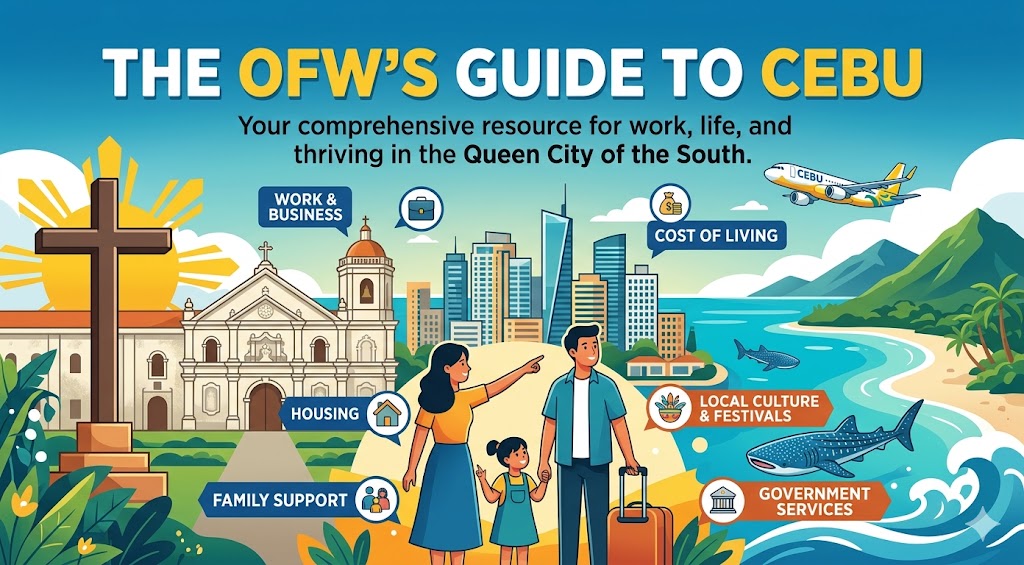
Cebu is more than just a tourist destination—it’s home to roughly 600,000 Overseas Filipino Workers (OFWs) , making up about 80% of Central Visayas’ overseas workforce. Whether you’re returning for good, on vacation, or sending your family ahead while you work abroad, this guide cuts through the fluff and tells you what you actually need to know.
1. Arriving at Mactan-Cebu International Airport (MCIA)
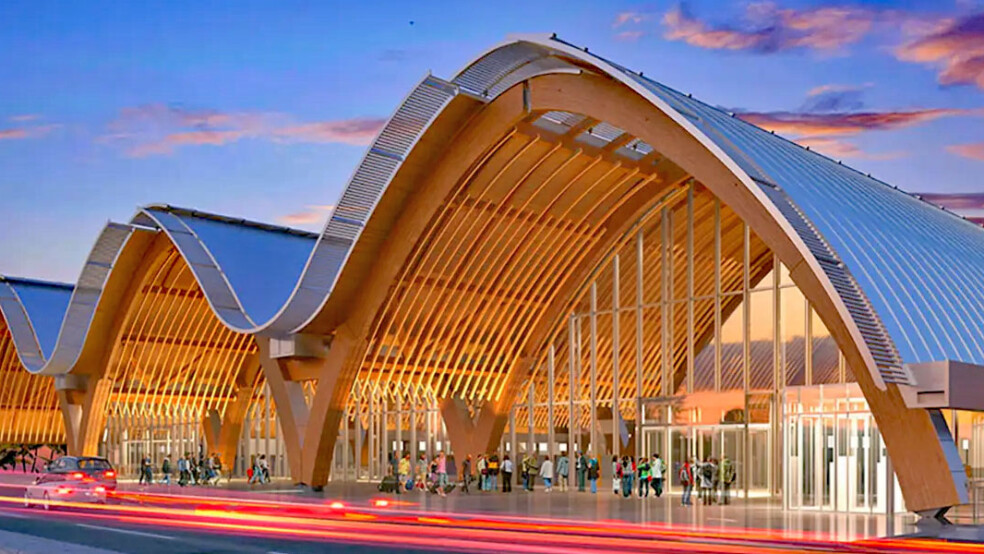
The good news: You no longer have to fly to Manila to sort out your documents.
MCIA Terminal 2 now hosts an OFW Facilitation Center (operational since mid-2025) where you can process Overseas Employment Certificates (OECs) and exit clearances on the spot. There’s also an OFW Lounge scheduled to open by June 2026, giving you a comfortable space to rest between flights.
What to do upon arrival:
- Head to the OFW assistance kiosk at Terminal 2 if you need help with travel documents.
- OWWA and DMW kiosks are also available at Terminal 2 Departures for assistance.
- Use the official taxi queue outside—avoid touts offering “fixed rates.”
MCIA is served by 20 airlines operating 13 international routes, with a growing number of direct flights to the Middle East.
2. Cost of Living: What Your Money Actually Buys
Cebu is cheaper than Manila but more expensive than the provinces. Here’s the honest breakdown for 2025.
For rent (1-bedroom):
- Budget options in the city center run from ₱8,000 to ₱15,000 per month.
- Comfortable modern condos will set you back ₱20,000 to ₱45,000.
For food (groceries, cooking at home):
- A budget grocery run costs ₱3,000 to ₱6,000 monthly.
- If you include imported goods and occasional treats, expect ₱8,000 to ₱15,000.
For utilities:
- Electricity with air conditioning usage: ₱5,000 to ₱8,000 per month.
- Fiber internet: ₱1,200 to ₱2,000.
- Mobile plan: ₱500 to ₱1,000.
For transport:
- Jeepney rides cost ₱15 to ₱50 per trip.
- Grab rides range from ₱150 to ₱400 depending on distance and surge.
The real talk: A single person can live on ₱40,000–₱50,000 per month for a budget lifestyle. For a comfortable lifestyle with a city condo and eating out occasionally, expect ₱60,000–₱90,000 per month.
3. Where to Live: Neighborhoods, Ranked Honestly
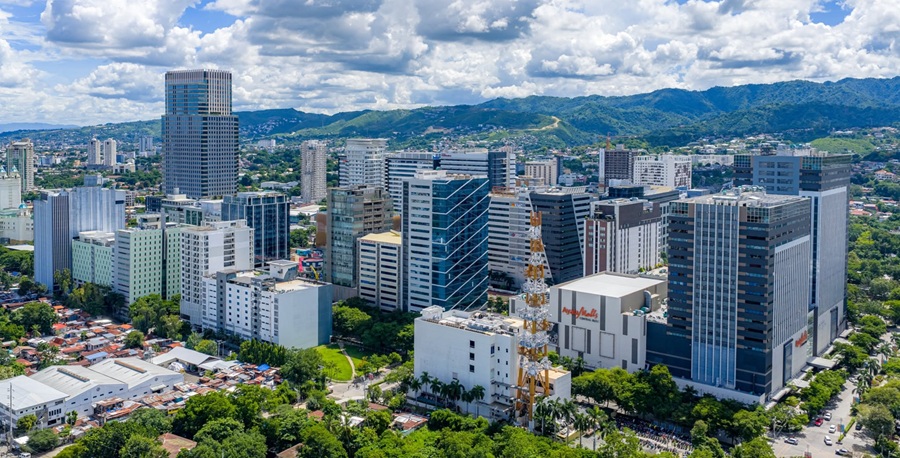
IT Park and Cebu Business Park – This is the most modern, central, and safest area, but it’s also the most expensive. Rent runs from ₱25,000 to ₱45,000. Best for professionals who want walkable convenience to offices, malls, and restaurants.
Lahug and Banilad – These neighborhoods offer a balanced, quieter vibe and are near good schools. Rent is ₱18,000 to ₱30,000. Ideal for families or long-term stays.
Mactan Island – If you want beach views and resort-style living, this is your spot. Rent goes from ₱20,000 to ₱40,000. Perfect for ocean lovers and remote workers who don’t mind crossing the bridge.

Mandaue and Talamban – These are the most affordable options, with a strong local feel. Rent runs ₱8,000 to ₱15,000. Best for those on a strict budget who are okay with commuting.
Pro tip: Before signing any lease, confirm if fiber internet is already installed in the building. Many condos in IT Park and Cebu Business Park have building-wide backup power, which is a lifesaver during brownouts.
4. Getting Around: Transportation Reality Check
Traffic is real—especially around IT Park, Mandaue, and the two bridges to Mactan during rush hour.
Jeepneys cost ₱13 to ₱25 per ride. They are the cheapest and most authentic way to travel, but the routes are confusing for newcomers and there’s no air conditioning.
Grab costs ₱120 to ₱300 per trip. It’s safe, convenient, and air-conditioned, but beware of surge pricing during rain or rush hour.
Angkas (motorbike taxis) cost ₱50 to ₱150. They beat traffic easily, but they’re not for everyone—you must be comfortable on the back of a bike and wear a helmet at all times.
Regular taxis cost ₱120 to ₱250 metered. They are widely available, but some drivers will refuse to use the meter. Insist on it, or step out and find another one.
Honest advice: Download Grab and Angkas before you arrive. Always carry small bills for jeepneys—drivers rarely have change for ₱1,000.
5. Internet and Staying Connected
Fiber is available in most urban areas. The three main providers are PLDT Home Fibr, Converge FiberX, and Globe GFiber.
- PLDT offers 200 Mbps for ₱1,699 per month.
- Converge offers 200 Mbps for ₱1,500 per month.
- Globe offers 500 Mbps for ₱2,499 per month.
In IT Park, Cebu Business Park, and Mabolo, speeds of 200 to 500 Mbps are common.
For mobile: Globe and Smart both have strong LTE and 4G coverage. For long stays, get a GOMO SIM—it gives you 30GB of data for ₱299 with no expiry date. Remember: all SIMs must be registered with a valid passport.
Backup tip: Power outages still happen. Get a UPS for your devices and consider a Smart 5G Pocket WiFi as a backup internet source.
6. Banking and Remittances
Your family in Cebu has plenty of options for receiving money.
Bank transfers can be done through Chinabank, BDO, and Bank of Commerce.
Remittance centers like Cebuana Lhuillier, M Lhuillier, and Palawan Pawnshops are everywhere and reliable.
Digital options include GCash, which is widely accepted for payments and transfers, and BCRemit, which can pay your SSS, Pag-IBIG, PhilHealth, and OWWA dues directly.
OFBank (Overseas Filipino Bank) offers products specifically designed for OFWs and their families.
Pro tip: Your family can pay monthly amortizations to major developers like Ayala Land and Megaworld directly through remittance apps.
7. Healthcare: Hospitals and Coverage
Cebu has several reliable private hospitals.
Chong Hua Hospital in Cebu City and Cebu Doctors’ University Hospital in Mandaue City are the top private choices. For public care, Vicente Sotto Memorial Medical Center in Cebu City is the primary government facility.
Costs to expect:
- A local doctor’s visit costs ₱500 to ₱1,500.
- A private hospital consultation runs ₱1,500 to ₱3,000.
- Health insurance premiums range from ₱3,000 to ₱7,500 per month depending on your age and coverage level.
For OFWs: There’s an ongoing push for an OFW Hospital bill that would establish dedicated healthcare facilities for OFWs and their families. Keep an eye on OWWA announcements for updates. OWWA also provides medical assistance for health emergencies.
8. Safety: The Unfiltered Truth
Cebu is generally safe, but petty crime exists—especially in crowded areas like Carbon Market and Colon Street.
Common-sense rules to live by:
- Never flash jewelry or expensive gadgets in public.
- Avoid walking alone in dark or quiet areas at night.
- Use Grab instead of hailing random taxis after dark.
- Have backup routes and backup emergency contacts saved on your phone.
- Stick to well-lit, populated areas, especially if you’re unfamiliar with the neighborhood.
The bottom line: Cebu isn’t dangerous, but it’s a city. Act like you would in any major urban area and you’ll be fine.
9. Support Systems: OWWA and Government Programs
Cebu’s provincial government, led by Governor Pamela Baricuatro (herself a former OFW of 20 years), is actively prioritizing OFW welfare.
What OWWA offers in Cebu:
- Financial aid for distressed or displaced OFWs.
- Medical assistance for health emergencies.
- Livelihood support for returning OFWs who want to start businesses.
- Bookkeeping and accounting training for OFW families to manage remittances wisely.
- Over ₱11.2 million in aid has already been released to OFW organizations in Cebu.
The DMW also runs a Livelihood Program for OFW Reintegration (LPOR) —several Cebu-based OFWs have successfully sustained small businesses through this program.
Where to go: The OWWA Region 7 office is located in Cebu City. Bring your OWWA membership documentation and your passport when you visit.
10. Final Honest Advice
For OFWs returning for good:
Cebu’s real estate market is growing rapidly—over 33,000 condo units are expected to be completed between 2025 and 2028. If you have the means, consider investing in property now. Rental properties can generate good passive income, but do your homework on locations and property management fees before buying.
For OFWs on vacation:
Enjoy the beaches, the lechon, and the slower pace compared to Manila. But don’t let your guard down—keep your travel documents in a hotel safe, spread your cash across multiple accounts or hiding spots, and always let your family know your daily itinerary.
For OFWs sending family ahead:
Make sure they have reliable fiber internet at home for video calls. Set up a backup power plan (even a small generator or a power bank for devices). Arrange auto-remittance through your bank so they don’t have to chase you for monthly expenses. And most importantly, register them with OWWA so they can access medical and educational benefits in your absence.
Cebu is a fantastic base for OFWs and their families—modern enough to have everything you need, yet still affordable and close to nature. Just come prepared, stay smart, and take full advantage of the support systems that exist specifically for you.
Check How to buy a house in Cebu without getting scammed.
Author
John Paul Ybañez Paquibot
Licensed Real Estate Broker | PRC No. 00014132 | DHSUD No. CVRFO-B-03/18-2672
Bachelors Realty and Brokerage, Inc. Cebu
G/F Cap Building, Brgy. Corner, Osmeña Blvd.
Arlington Pond St. Extension, Cebu City, 6000 Cebu
Leave a Reply