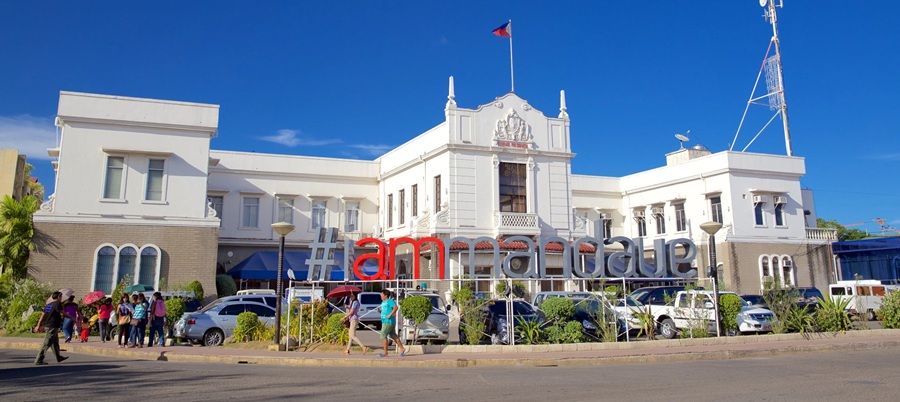
Mandaue City is often called the “industrial heart” of Metro Cebu, but that label misses the texture of everyday life here. It’s not a tourist postcard, and it doesn’t pretend to be. What Mandaue offers instead is something more valuable for long-term residents: practicality, affordability (relative to its neighbors), and continuous improvement. This guide gives you the unvarnished truth about costs, traffic, safety, and daily rhythms in 2026.
1. Overview & Location: The Industrial Engine That Keeps Metro Cebu Moving
Mandaue City is a highly urbanized city on Cebu Island, sandwiched between Cebu City to the west and Lapu-Lapu City (Mactan Island) to the east. Unlike its neighbors, Mandaue has no colonial Spanish heritage district and no beach resorts. Instead, it’s where furniture is crafted, goods are manufactured, and trucks roll toward the ports. This gives the city a workaday, purposeful energy.
Key facts for 2026:
- Land area: 25.18 km² (9.72 sq mi) – small but densely packed.
- Population: Estimated 401,727 (up from 364,116 in 2020).
- Density: 14,461 people/km² – expect neighbors close by.
- 27 barangays, with Paknaan (largest working-age population) and Looc (highest concentration of informal settler families).
In practice, living here means you are 10–20 minutes (light traffic) from Cebu City’s malls and nightlife, and 10–15 minutes from Mactan-Cebu International Airport. But you also live with the sounds of jeepneys, construction, and the occasional trike driver shouting for passengers.
2. Cost of Living: What You’ll Actually Spend in 2026
Let’s be blunt: prices have risen sharply. In May 2026, Mandaue City recorded a 9.7% inflation rate, tied for the highest among Cebu’s three highly urbanized cities, a critical context for understanding your budget. While this marked a slight easing from April’s 10.7% rate, it remained dramatically higher than the 1% inflation posted in May 2025. Mandaue is still about 32% cheaper than the global average, but your peso doesn’t stretch as far as it did even a year ago. A single person with rent should budget ~₱16,100 per month (≈$281 USD) for basics. A family of four will need ~₱58,000+.
Monthly Rent Estimates (2026)
1-bedroom apartment
City Center: ₱25,000 – ₱30,000
Outside Center: ₱12,000 – ₱20,000
3-bedroom apartment/condo
City Center: ₱35,000 – ₱60,000
Outside Center: ~₱25,000
Tip: The Mandani Bay waterfront area is the most expensive. For lower rents, look at barangays like Tipolo, Subangdaku, or Umapad.
Everyday Prices (2026)
Mid-range restaurant (meal for 2)
Approx. Cost (₱): 1,500
Combo meal (fast food)
Approx. Cost (₱): 300
Domestic beer (0.5L draft)
Approx. Cost (₱): 100
Cappuccino
Approx. Cost (₱): 160
Milk (1 liter)
Approx. Cost (₱): 120
White bread (loaf)
Approx. Cost (₱): 44
Rice (1 kg)
Approx. Cost (₱): 60
Eggs (12 large)
Approx. Cost (₱): 125
Chicken fillets (1 kg)
Approx. Cost (₱): 282
Inflation Update: The 9.7% inflation rate (May 2026 data) means that food, transport, utilities, and other essentials continue to face upward pressure. For context, Central Visayas as a region posted the highest inflation nationwide for the 10th consecutive month at 10.8% in May, driven by higher costs for food, transport, power, and water. If you’re on a tight budget, the Mandaue Public Market (not the grocery store) remains your best friend.
Average Monthly Net Salary (local job) – ₱15,000
Yes, that’s lower than rent for a city-center 1BR. Many residents live with family or split rent. If you’re a remote worker earning foreign income, you’ll have a significant advantage.
3. A Day in the Life: What Your Actual Daily Routine Looks Like
Let’s get specific. Here are two realistic daily schedules – one for a single remote worker, one for a family with school-age kids.
For a Single Remote Worker (living in a studio near Parkmall)
5:45 AM – Wake up. No need for an alarm clock; the jeepneys start honking around 5:30 AM. You make instant coffee (₱160/cappuccino is a treat, not a daily habit).
6:30 AM – Quick trike ride (₱15) to a local carinderia for breakfast: garlic rice, fried egg, longganisa – ₱70.
7:00 AM – 12:00 PM – Work from home. Your condo internet is decent (average 34 Mbps download), but you keep a Smart or Globe prepaid LTE stick as backup because outages happen during heavy rain. Your electric bill (AC on half the day) runs ₱2,500–₱3,500/month.
12:00 PM – Lunch. Either cook rice and adobo at home (₱80) or walk to the nearby food court – mixed veggies and pork sisig for ₱120.
1:00 PM – 4:00 PM – Deep work. You invested in noise-canceling headphones. The construction next door is pouring concrete.
4:00 PM – Break. You walk 10 minutes to a small sari-sari store for a 1.5L water refill (₱20) and a pack of Skyflakes (₱15).
5:00 PM – 7:00 PM – Errands or gym. You take a jeepney (₱13) to the public market for vegetables (eggplant, okra, tomatoes – ₱60 total). On gym days, you use a budget fitness center for ₱60/day.
7:30 PM – Dinner with a work friend at a local grill. Two orders of grilled pork belly, rice, and a soft drink: ₱250 each.
9:00 PM – Home. Shower (water pressure is fine, but hot water is a luxury unless you have a heater). Scroll your phone. Bed by 10 PM.
Daily total expenses (excluding rent): ~₱600 – ₱800, depending on eating out.
For a Family of Four (parents + two kids, living in a 3BR house in Barangay Subangdaku)
5:00 AM – Mom wakes up, boils water for coffee (brewed from ₱50/pack grounds). Prepares baon: rice, fried fish, and sliced mangoes.
6:00 AM – Kids wake up. Dad takes the eldest to elementary school via motorcab (₱20 one way). The younger one is in daycare nearby – walking distance (₱0).
6:30 AM – Dad takes a jeepney to his job at a furniture factory in Barangay Paknaan. Fare: ₱15. Commute time: 25 minutes including waiting and traffic.
8:00 AM – 5:00 PM – Mom works from home as a virtual assistant. The kids are at school/daycare. She squeezes in laundry (hand-wash or use a neighbor’s washing machine for ₱100/load).
12:00 PM – Mom reheats leftover chicken adobo. Eats while on a video call.
3:00 PM – Dad finishes work. He stops by the palengke (public market) to buy pork (₱300/kg) and bananas (₱40). Takes the jeepney home – heavier traffic now, so 35 minutes.
4:30 PM – Pick up kids. The eldest has homework. The youngest takes a nap.
6:00 PM – Family dinner. Table conversation: school, work, weekend plans (likely the Mantawi Festival parade if it’s May).
7:30 PM – Dad watches TV (local news), Mom helps with homework. Electricity is on a prepaid meter – they keep AC only in the master bedroom from 9 PM to 5 AM.
9:00 PM – Kids in bed. Parents talk about saving for a family trip to the new Ayala Malls Gatewalk (opening late 2026).
10:00 PM – Lights out. The neighborhood is quieter now – just the occasional barking dog.
Daily total for the family (excluding rent/mortgage): ~₱800 – ₱1,200, depending on meat purchases and transportation.
4. Barangay Culture: Your Hyper-Local Social Ecosystem
Because Mandaue is so densely packed – over 14,000 people per square kilometer – your daily social life rarely happens at the “city” level. Instead, it unfolds within your barangay. After a few months in a neighborhood, you’ll notice that most residents find their entire social ecosystem within a 500-meter radius.
What this looks like in practice:
- Barangay fiestas – Each of the 27 barangays has its own patron saint celebration. For a week, the main street gets closed off for a “perya” (carnival) with rides, food stalls, and live music. It’s the annual event everyone marks on their calendar.
- Basketball leagues – Every barangay has a covered court or at least a concrete half-court. “Barangay liga” games happen on weekend afternoons, drawing crowds of neighbors who cheer (and sometimes argue) like it’s the PBA finals.
- Chapel activities – In barangays like Tipolo and Casuntingan, the local chapel or parish organizes prayer groups, novenas, and community feeding programs. Even if you’re not devout, these are the easiest way to meet your neighbors.
- Sari-sari store as social hub – The corner store isn’t just for buying eggs and load. It’s where gossip is swapped, kids buy candy, and residents gather on plastic stools in the afternoon.
- Barangay hall as first stop – Lost something? Need a barangay clearance? Have a noise complaint? You go to the barangay hall, where the captain and tanods (village watchmen) know you by name.
For newcomers, the adjustment can feel jarring – your “neighborhood” might be three streets deep, and people outside that bubble might as well live in a different city. But once you belong to a barangay, you belong. Neighbors watch your house when you’re away, share leftover lechon after fiesta, and will call you “neighbor” (silingan) even if you’ve only exchanged nods for a month.
Bottom line: Don’t expect a unified “Mandaue City” social scene. Instead, invest in your barangay. Show up to the fiesta, buy from the local sari-sari store, and let your kids play at the barangay court. That’s how you stop being a transplant and start being a silingan.
5. Transportation: The Honest Truth About Traffic
Traffic in Mandaue is heavy but improving. The worst chokepoints: the intersections near Pacific Mall, the Marcelo Fernan Bridge approach, and the roads in Paknaan (ongoing repairs). Morning rush (6:30–8:30 AM) and evening rush (4:30–7:00 PM) will test your patience.
What’s new in 2026:
- AI-powered traffic lights at U.N. Avenue & M.C. Briones Street (in front of Pacific Mall). Cameras detect vehicle volume and adjust timing. It’s not magic, but it shaved off 3–5 minutes during peak hours.
- Permanent zipper lane and a new left-turn option from Cansaga Bridge toward Marcelo Fernan Bridge.
- Cebu North Bus Satellite Terminal opened October 2025 near S&R – a dedicated hub for northbound buses, reducing street-side loading.
Your transport options:
Jeepney
Average cost (₱): 13–20
Best for: Short trips, budget
Tricycle (local trike)
Average cost (₱): 15–50 (negotiate)
Best for: Door-to-door short distances
Bus
Average cost (₱): 20–50
Best for: Longer trips to north Cebu
Grab / taxi
Average cost (₱): 150–300
Best for: Comfort, night time, heavy bags
Private car
Average cost (₱): Fuel + parking
Best for: Flexibility (but parking is scarce)
Hard truth: If you own a car, factor in ₱3,000–₱5,000/month for fuel and parking, and accept that a 5-km trip can take 30 minutes during rush hour.
6. Housing & Neighborhoods: Where Should You Live?
Mandaue’s housing market in 2026 is split between older, affordable barangays and new high-rise developments.
Premium / High-End
- Mandani Bay – Waterfront, studios from ₱25k/month. Best for expats, executives, and those who want walkable dining.
- Oakridge Business Park (technically on the border with Cebu City) – Mixed-use with condos, offices, cafes.
Mid-Range (Family-friendly)
- Banilad – Good schools nearby, less industrial feel, but traffic can be brutal.
- Casuntingan – Quiet residential, lots of townhouses for rent (₱15k–₱25k for 2-3BR).
- Subangdaku – Central, near Parkmall and public market. Mix of apartments and old houses.
Budget / Local Vibe
- Tipolo – Dense but lively. 1BR apartments from ₱8k–₱12k. Expect narrow streets and neighbors close.
- Umapad – More residential, farther from main highways. Good for families wanting a yard (rare).
Buying a condo? Pre-selling units in Mandaue focus on the ₱2.5M–₱7M range. Expect ~5% annual appreciation through 2028. Rental yields: 5.0–5.5% for value properties.
7. Safety & Security: Getting Better Year by Year
Mandaue is safer than many expect. The Mandaue City Police Office reported a 6% drop in average monthly crime rate in first half of 2025.
Total crimes
Jan–Jun 2025 (compared to 2024): 1,358 (down from 1,500)
Average monthly crime rate
Jan–Jun 2025 (compared to 2024): 56.34 (down from 62.23)
Resident perception (2026 survey):
- Feel safe during the day: 84 out of 100
- Feel safe at night: 70 out of 100
The main negative: Illegal drugs remain a police priority. Between Jan–Aug 2025, authorities confiscated nearly ₱200 million worth of suspected shabu. As a resident, you are unlikely to encounter this unless you go looking for it, but it does mean occasional police checkpoints in some barangays.
Practical tips: Lock your doors (opportunistic theft is the most common crime), avoid flashing expensive gadgets on jeepneys, and get to know your barangay tanod (village watchman).
8. Lifestyle, Amenities & Daily Life
You won’t run out of things to do, though nightlife is quieter than Cebu City.
Shopping
Options: Parkmall, Pacific Mall, new Ayala Malls Gatewalk (opens late 2026), Mandaue Public Market
Groceries
Options: S&R (membership), Metro Gaisano, local sari-sari stores for small items
Parks & recreation
Options: Pajara Park (under ₱65M renovation beneath Marcelo Fernan Bridge), City Sports Complex
Festivals
Options: Mantawi Festival (May) – street dancing, parades, food fairs
Healthcare
Options: Mandaue City Hospital (new ₱415M facility under construction), plus Cebu Doctors’ University Hospital just across border
Coworking
Options: Few dedicated spaces inside Mandaue; most remote workers go to Cebu City or Lapu-Lapu
Digital nomad note: Average internet speed is about 34 Mbps upload, but reliability varies by street. Ask your landlord to run a speed test before signing a lease. A backup Globe/Smart prepaid LTE modem is strongly recommended.
The Arrival of IKEA: A Lifestyle Game-Changer
Mark your calendars: Ayala Malls Gatewalk is set to open on December 16, 2026. More importantly, its flagship anchor tenant will be IKEA, marking the Swedish furniture giant’s first physical store in the Visayas and its first location outside of Metro Manila. This four-level, air-conditioned complex is part of Ayala Land’s 17.5-hectare mixed-use estate and will connect to an office tower and a public transport hub, promising to be a major new lifestyle destination for the city. This development will bring an estimated 100 jobs to the area, a significant boon for local employment.
9. What’s New and Coming in 2026 (Infrastructure & Projects)
2026 is a pivotal year for Mandaue’s development. From a new mall to critical flood control, the city’s landscape is changing fast.
Ayala Malls Gatewalk
Status / Completion: Opens December 16, 2026 – part of a mixed-use district with offices, a one-hectare Greenway, a new access road (Gatewalk Drive), and anchor tenant IKEA (first in Visayas).
Modern Mandaue City Hospital
Status / Completion: Construction begins 2026 (national budget ₱415M).
Mandaue City College campus
Status / Completion: ₱450M allocated – construction start 2026.
Pajara Park upgrade
Status / Completion: ₱65M beautification under Marcelo Fernan Bridge – ongoing.
Mandaue Bridge (to mainland)
Status / Completion: ₱76.4B, 4-lane, 3.3km – construction start 2026 (JICA loan ₱50B). Will dramatically alter north-south traffic in 5 years.
Flood Resilience on A.S. Fortuna
Status / Completion: 90% complete. Flood-control measures have resulted in a significant decrease in complaints, making the area more viable for residents and businesses.
City budget for 2026: ₱4.5 billion, focusing on digitalization of frontline services, free medicines in barangay health centers, and disaster preparedness.
The A.S. Fortuna Transformation
For years, flooding along A.S. Fortuna Street was a major deterrent for prospective residents and businesses. In mid-2026, that story is largely resolved. Mayor Thadeo Jovito “Jonkie” Ouano reported that flood-control projects along the street are now 90% complete. “If you observe, we no longer receive complaints about flooding in A.S. Fortuna,” Ouano said, attributing the dramatic improvement to additional waterways and drainage structures. While work continues in other areas like Barangay Tipolo (currently 65% complete), the success of the A.S. Fortuna project marks a major victory for the city’s infrastructure, solving a long-standing problem and boosting resilience for the rainy season.
10. Mandaue vs. Cebu City: Which One Should You Choose?
Vibe
Mandaue City: Industrial, practical, no-frills
Cebu City: Historic, tourist-friendly, 24/7 energy
Cost of living
Mandaue City: ~6% lower overall
Cebu City: ~6% higher
Rent (1BR center)
Mandaue City: ₱25k–30k
Cebu City: ₱31k+
Traffic
Mandaue City: Heavy but improving (AI lights)
Cebu City: Very heavy, more gridlock
Airport access
Mandaue City: Excellent (next to Marcelo Fernan Bridge)
Cebu City: Moderate (must cross Mandaue)
Nightlife
Mandaue City: Limited (some bars in Mandani Bay)
Cebu City: Abundant (IT Park, Crossroads, bars)
Best for
Mandaue City: Families, remote workers, factory/office employees, budget-conscious
Cebu City: Students, tourists, night owls, call center workers
The honest answer: Live in Mandaue if you want better value and don’t mind a 15–20 minute ride to Cebu City’s entertainment. Live in Cebu City if you want to walk to bars and don’t mind higher rent.
11. Final Verdict: Should You Move to Mandaue in 2026?
Yes, move to Mandaue if:
- You prioritize a lower cost of living over prestige addresses.
- You work in industry, logistics, or a remote job that only needs decent internet.
- You’re a family that wants proximity to new hospitals, schools, and parks without Cebu City prices.
- You can tolerate (or plan around) heavy traffic during rush hours.
- You understand and appreciate barangay-level community – that your social life will be local, small-scale, and neighborly rather than city-wide.
No, don’t move to Mandaue if:
- You need beachfront living or lush nature views.
- You despise any kind of congestion or industrial scenery.
- You work in BPOs located deep inside Cebu City’s IT Park (the daily commute would wear you down).
- You prefer anonymity and have no interest in knowing your neighbors or barangay captain.
The bottom line: Mandaue is an honest, hardworking city that is visibly improving. It won’t wow you on arrival, but after six months, you’ll appreciate the practical conveniences, the friendly neighborhood sari-sari store, the barangay fiesta where everyone shares food, and the feeling that your rent money goes further here than almost anywhere else in Metro Cebu.
Quick Reference Card
Airport
Info: Mactan-Cebu International (via Marcelo Fernan Bridge, ~15 min)
Major hospitals
Info: Mandaue City Hospital (new), Cebu Doctors’ University (border)
Major malls
Info: Parkmall, Pacific Mall, Ayala Malls Gatewalk (opens Dec 16, 2026, with IKEA)
Public market
Info: Mandaue City Public Market (best for fresh seafood & produce)
Annual festival
Info: Mantawi Festival (May)
Barangay culture
Info: Hyper-local; your social ecosystem = your barangay court, chapel, sari-sari store, and fiesta
Climate
Info: Tropical, 29°C average, rainy Jun–Nov
Postal code
Info: 6014
Emergency numbers
Info: Police: 166, Fire: 160, Mandaue City Command Center: (032) 520-2400
Sources: Numbeo (2026 cost data), Philippine Statistics Authority (PSA) 7 (May 2026 Inflation Report), Manila Times, SunStar Cebu (traffic, flood control, and IKEA reports), Pulse Daily, Mandaue City Government (2026 budget & project announcements). All data reflects conditions as of June 2026.
Author
John Paul Ybañez Paquibot
Licensed Real Estate Broker | PRC No. 00014132 | DHSUD No. CVRFO-B-03/18-2672
Bachelors Realty and Brokerage, Inc. Cebu
G/F Cap Building, Brgy. Corner, Osmeña Blvd.
Arlington Pond St. Extension, Cebu City, 6000 Cebu
Leave a Reply