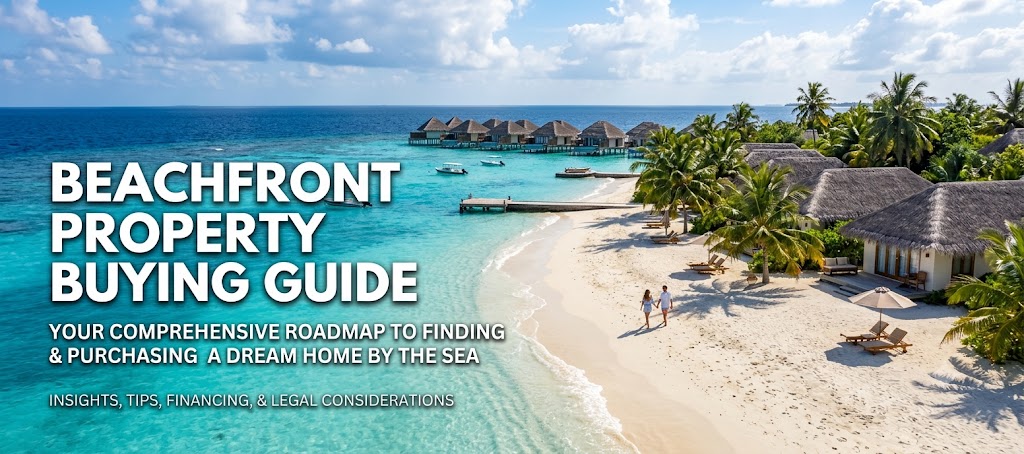
So you’re dreaming of owning a slice of Cebu’s coastline. Turquoise waters, white sand, and the sound of waves lulling you to sleep—it’s a powerful fantasy. And Cebu, with its blend of urban convenience and natural beauty, has become the Philippines’ hottest property destination.
But here’s the truth: buying beachfront property in Cebu is not the same as buying a condo in Manila or a house in the suburbs. The rules are different, the costs are different, and the risks are very real.
This guide will give you the unvarnished truth—what works, what doesn’t, and what nobody tells you until it’s too late.
Part 1: The Legal Reality—What You Can Actually Own
Let’s get this out of the way immediately: foreigners cannot directly own land in the Philippines. This isn’t a loophole you can work around. It’s in the 1987 Constitution (Article XII, Section 7). Land ownership is strictly reserved for Filipino citizens and corporations that are at least 60% Filipino-owned. There’s no grey area here.
So if you’re a foreigner, what are your actual options?
Option 1: Long-term lease (the most practical route). As of September 2025, Republic Act 12252 allows foreign investors to lease private land for up to 99 years. Previously, the limit was 50 years renewable for another 25. This is a significant improvement for anyone serious about building a long-term life in Cebu. There’s a catch though—for tourism projects, the lease requires an investment of at least USD 5 million, with 70% infused within three years. If you’re not an “investor” under this definition, you’re still limited to 25 years renewable for another 25.
Option 2: Condominium ownership. This is the cleanest path for most foreigners. You can legally own a condo unit outright—100% of that specific unit. The catch? Foreign ownership in any single condo project cannot exceed 40% of total units. You own the “air space,” not the land beneath it, but for most practical purposes, it’s ownership.
Option 3: Corporate ownership. You can set up a Philippine corporation with at least 60% Filipino ownership, and that corporation can own land. But be careful—the Supreme Court enforces “anti-dummy” rules strictly. You can’t just put a Filipino on paper and call it a day; actual control must genuinely rest with Filipinos.
Option 4: Filipino spouse. If you’re married to a Filipino, the property can be titled in their name. You can even inherit it through succession if your spouse passes away. But if you’re not married, this isn’t an option.
What about beachfront foreshore land? This is where it gets even trickier. Areas right next to the sea are part of the public domain, regulated by the Department of Environment and Natural Resources. They cannot be privately titled at all—whether you’re Filipino or foreigner. Many “beachfront” properties actually sit on foreshore land, and what you’re really buying is access rights, not ownership.
The bottom line: If you’re a foreigner who wants to build a house on the beach, you’ll be leasing the land. If you want to own something outright, buy a condo. There’s no third way.
Part 2: Where to Buy—The Real Cebu Beachfront Market
Cebu’s beachfront property isn’t one market—it’s several, and they’re very different.
Mactan Island is the crown jewel. It’s connected to mainland Cebu by bridges, and the international airport is just 15–30 minutes from most beachfront areas. This is where the big money goes. Punta Engaño, home to resorts like Shangri-La and Dusit Thani, commands premium prices. Beachfront villas here typically range from PHP 15 million to over PHP 150 million. Land prices in Mactan average around PHP 19,812 per square meter, while beachfront condos range from PHP 84,000 to PHP 250,000 per square meter.
Moalboal and the south offer a different vibe. These are emerging tourism hotspots, attracting investors looking to cash in on eco-tourism and diving. Prices are lower than Mactan, and there’s strong appreciation potential. But infrastructure is less developed, and access can be challenging.
Bantayan Island is further out—more remote, more affordable. A titled beach lot in Santa Fe can go for as low as PHP 1,500 per square meter. But read that carefully: “titled” doesn’t mean “developed.” Utilities, roads, and services are basic at best.
The emerging corridors like Cordova, Liloan, and Consolacion are seeing 18–25% annual land value jumps thanks to new infrastructure like the Cebu-Cordova Link Expressway. These areas offer more affordable entry points with strong growth potential, but you’re buying into areas that are still developing.
The honest take: Mactan is where you pay for certainty—good infrastructure, steady rental demand, and established communities. The south and the outer islands are where you take a bet on future growth. Neither is right or wrong, but know which one you’re doing.
Part 3: What It Actually Costs (Beyond the Sticker Price)
Here’s where most buyers get blindsided.
Transaction costs typically run 7% to 12% of the property value. That includes:
- Capital Gains Tax: 6% (usually paid by the seller, but negotiable)
- Documentary Stamp Tax: 1.5%
- Transfer Tax: 0.5% to 0.75%
- Registration and notarial fees
On a PHP 20 million property, that’s PHP 1.4 to 2.4 million in transaction costs alone.
Ongoing costs add up fast. Real property tax is annual. Maintenance on a beachfront property is brutal—salt air corrodes everything faster than you’d believe. And here’s a specific piece of advice from people who’ve learned the hard way: if you are building or renovating, insist on marine-grade 316 stainless steel for all fixtures and railings. Standard metals will begin to pit and rust within months of being 50 meters from the surf. If you’re not living there full-time, you’ll need property management. If you’re renting it out, factor in marketing, cleaning, and repairs between guests.
Hidden costs are the real killer. Many beachfront locations lack reliable access to electricity, water, and internet. Bringing in utilities can cost hundreds of thousands of pesos. Building materials cost more in remote areas because of transport. And if the property needs renovations—which older beachfront properties almost always do—budget for plumbing, electrical, and roof work.
The honest take: Whatever you think it’s going to cost, add 30%. Then add another 10% for things you haven’t thought of. If that number still works for you, proceed.
Part 4: The Process—How Buying Actually Works
The steps are straightforward, but each one requires care.
Step 1: Verify the title. Get a certified true copy of the title from the Registry of Deeds. Don’t trust photocopies from the seller. Check for liens, encumbrances, unpaid taxes, and pending litigation. A tax declaration is not ownership—only a title is.
Step 2: Check land classification. Only land classified as “alienable and disposable” can be privately titled. Forest, protected, and foreshore lands cannot. The DENR handles this classification. If the land isn’t alienable and disposable, you cannot legally own it—period.
Step 3: Do a relocation survey. This confirms that the physical property matches what’s on the title. Boundaries get disputed. Neighbors encroach. Surveys reveal problems before you pay money.
Step 4: Get zoning certification. This tells you what you can actually build on the property. Some areas have height restrictions, easement requirements (20 meters from the shoreline is legally required in many areas), or use limitations. Don’t assume you can build your dream villa until you’ve checked.
Beyond the formal regulations, dig into the local community culture. Check for local “noise” ordinances. In some beachfront areas, the local tradition of videoke can be deafening on weekends. Do not buy without spending a Friday and Saturday night in the neighborhood. A serene Tuesday morning doesn’t guarantee a quiet weekend.
Step 5: Sign a notarized Deed of Absolute Sale and register it. The sale must be in writing, notarized, and registered with the Registry of Deeds to be legally binding. Then register with the Bureau of Internal Revenue for the Certificate Authorizing Registration.
Step 6: Pay all taxes and fees. This includes the transfer tax with the local government and the documentary stamp tax with the BIR.
The honest take: This is not DIY territory. Hire a licensed real estate broker and a real estate lawyer who specialize in foreign transactions. The money you spend on professionals is nothing compared to what you’ll lose if something goes wrong.
Part 5: The Risks Nobody Wants to Talk About
Typhoons are real. The Philippines gets hit by several typhoons every year. Beachfront properties are ground zero for storm surges and wind damage. After Typhoon Haiyan, many beachfront homeowners faced devastating losses—and some insurance policies didn’t fully cover the damage.
Coastal erosion is relentless. The sea doesn’t stay where it is. Beachfront properties are susceptible to erosion that gradually eats away at your land. What’s a 20-meter beach today might be a 10-meter beach in a decade. What’s beachfront now might be underwater eventually.
Environmental regulations are getting stricter. Projects on Bantayan Island have been halted over environmental violations. The DENR is increasingly proactive about enforcing shoreline easements and protected area rules. Buying a property that’s out of compliance is buying a headache.
Developer risk is significant. Not all developers are created equal. Some overpromise and underdeliver. Some cut corners. Some don’t get the proper permits. If you’re buying pre-construction, research the developer’s track record thoroughly.
The “beachfront” illusion. Some properties marketed as “beachfront” are actually across a road from the beach. Others are on foreshore land that can’t be owned. Others have public access easements that mean anyone can walk past your front door. Always verify what “beachfront” actually means.
The honest take: Every beachfront property in Cebu carries environmental risk. The question isn’t whether there’s risk—it’s whether you understand it and can afford to manage it. Buy insurance that actually covers typhoon damage. Build with resilient materials. Maintain a buffer. And never assume the beach will stay where it is today.
Part 6: The Bottom Line—Who Should Buy and Who Shouldn’t
You should consider buying if:
- You understand that you’re leasing land, not owning it (unless it’s a condo)
- You have budgeted at least 30% above the purchase price for transaction costs, maintenance, and contingencies
- You plan to use the property regularly or have a solid rental management plan
- You’ve done your due diligence on title, zoning, and environmental compliance
- You’re working with licensed professionals who know Cebu’s market
- You’ve actually spent a weekend in the neighborhood to test the real soundscape
You should not buy if:
- You think you’ve found a legal loophole to own land directly—you haven’t
- You’re stretching your budget to make the purchase work—you’ll be stretched further by ongoing costs
- You haven’t visited the property in person, during both dry and rainy seasons
- You’re buying based on “sure thing” appreciation promises—property values go up and down
- You haven’t checked whether the land is actually alienable and disposable
Final Thoughts
Cebu’s beachfront property market is genuinely exciting. Tourism is booming—4.8 million visitors in the first ten months of 2025 alone. Infrastructure is transforming the island. Prices are appreciating faster than Metro Manila’s. The dream is real.
But the dream comes with fine print. You can’t own land outright. You’ll pay more than you expect. The sea is beautiful but indifferent to your investment. The regulations are complex and getting stricter. And sometimes, the biggest threat to your peaceful paradise isn’t the tide—it’s the neighbor’s karaoke machine at 2 AM on a Saturday.
Buying beachfront property in Cebu isn’t for everyone. But for those who go in with eyes open, realistic budgets, professional guidance, and a genuine love for island life—it can be one of the best decisions you ever make.
Just don’t say nobody warned you.
Author
John Paul Ybañez Paquibot
Licensed Real Estate Broker | PRC No. 00014132 | DHSUD No. CVRFO-B-03/18-2672
Bachelors Realty and Brokerage, Inc. Cebu
G/F Cap Building, Brgy. Corner, Osmeña Blvd.
Arlington Pond St. Extension, Cebu City, 6000 Cebu
Leave a Reply