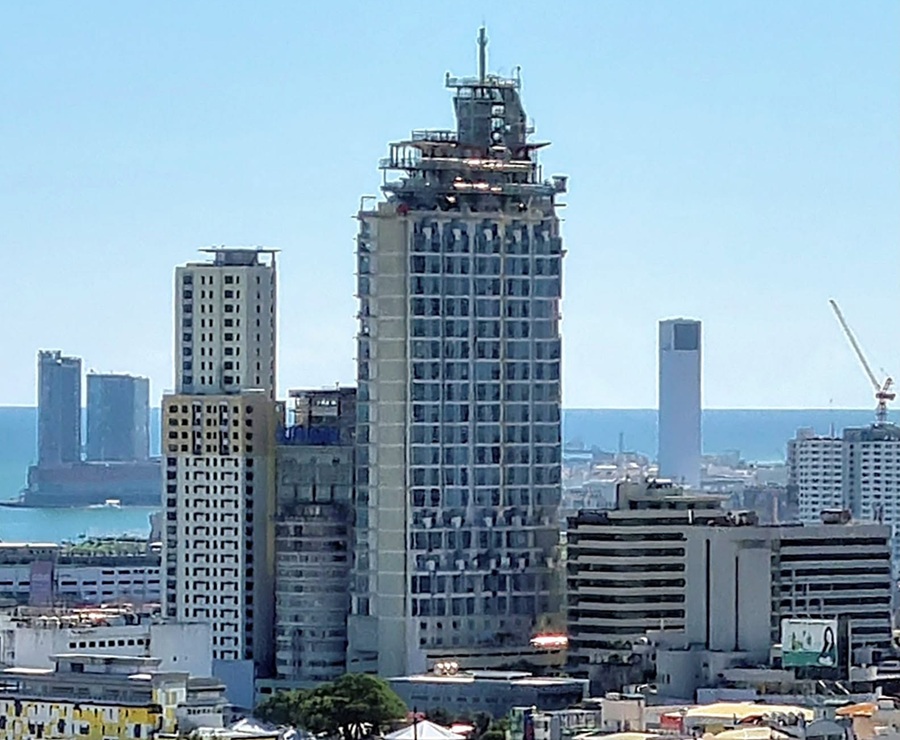
Picture this: you buy a condominium unit in a prime Cebu location, hand the keys to a professional management company, and collect guaranteed rental income every month without lifting a finger. It sounds like the perfect passive investment.
This is the promise of the condotel—a hybrid between a condominium and a hotel that has captured the imagination of investors across the Philippines. But in Cebu’s 2026 market, with over 92,300 condominium units already standing and thousands more on the way, the question demands an honest answer:
Are those guaranteed rental returns actually a realistic bet?
The short answer is no. In 2026, success requires looking past the marketing brochures and understanding a fundamental truth: a condotel is a direct trade-off between convenience and control.
What Exactly Is a Condotel?
A condotel is a unit you own outright—complete with a Condominium Certificate of Title (CCT)—but instead of managing it yourself, you enroll it in a rental pool system run by a professional hotel operator.
The management handles marketing, bookings, cleaning, guest interactions, and day-to-day operations. All the rental income from the units is pooled together. After deducting operating expenses and management fees, the remaining profit is distributed among owners based on unit size.
In Cebu, these properties are typically concentrated in tourist-heavy areas like Mactan, Lapu-Lapu, and other leisure-oriented destinations where resort-style living and airport proximity attract both domestic and international visitors.
While the convenience is real, the price you pay is substantial loss of control. You do not choose your tenants. You do not control daily rental rates. You do not decide when renovations happen. You are a silent partner in a hospitality business—and like any business partnership, your returns depend entirely on the competence and honesty of your partners.
The Allure of “Guaranteed” Returns
Developers marketing Cebu condotels often dangle attractive numbers. Some promise gross returns of 10 to 12 percent, especially in key tourism hubs like Mactan. For comparison, traditional Cebu residential condos typically yield 5 to 7 percent gross annually, but net yields drop to 3 to 5 percent once you factor in dues, taxes, and management fees.
To bridge this gap and ease investor anxiety, developers frequently offer “guaranteed rental returns” fixed for 5 to 15 years, often with automatic renewal clauses. For overseas Filipino workers (OFWs), expatriate Filipinos, and foreign investors who cannot easily manage a property from abroad, this feels like an absolute sure thing.
But here is the uncomfortable truth: there is no such thing as a legally guaranteed rental return in Philippine condotels.
The Brutal Reality: What “Guaranteed” Actually Means
The Securities and Exchange Commission (SEC) has been crystal clear on this point. Under its regulatory framework for rental pool agreements, the SEC explicitly cites the “Lack of guaranteed returns” as a primary risk. Because a rental pool’s income is shared among all unit owners, your returns are fundamentally tied to the property’s real-world occupancy rates, the volatile tourism market, and the competence of the management company.
When a developer promises a “guaranteed” return, they are offering a projection—an estimate based on optimistic assumptions about occupancy, rental rates, and operating costs. If those assumptions prove wrong, the “guarantee” often dissolves into fine print.
The SEC explicitly warns that when an investor participates in a rental pool, they “relinquish direct control over the management and operation of their property”, making the investment highly susceptible to market fluctuations that no developer can fully control.
The Regulatory Landscape Has Tightened
Following the implementation of SEC Memorandum Circular No. 12, Series of 2024 (SEC RENT) , rental pool agreements are now regulated as securities rather than simple real estate purchases. These are investment contracts that must be registered with the SEC before being offered to the public.
If a developer offers a rental pool program without SEC registration, the offer is illegal and your investment is unprotected. This is not a technicality—it is a fundamental protection for investors.
The SEC also requires annual registration renewal, adding ongoing compliance risk. Developers who cannot maintain their registration may be forced to suspend their rental pool programs, leaving you with a unit you cannot rent out through the promised system.
The Hidden Costs and the Occupancy Trap
Even if the tourism market performs well, two structural hurdles frequently devastate investor returns.
The Fee Structure. Condotel management fees are significantly higher than standard condo association dues. While a typical 30-square-meter Cebu condo costs 1,500 to 3,600 pesos monthly in association dues, a hotel operator’s cut can consume a massive slice of your gross revenue before you ever see a cent. You also remain responsible for rising property taxes, specialized insurance, and building-wide special assessments.
The Occupancy Gap. Cebu’s tourism economy is thriving. Mactan-Cebu International Airport hit an all-time monthly passenger record in January 2026, welcoming 1.3 million passengers—a robust 15 percent increase from January 2025. Domestic traffic rose 12 percent year-on-year, while international passenger volume surged 25 percent.
But peak travel seasons do not last all year. Real-world data shows that short-term rentals in Cebu City maintain only 45 to 55 percent average occupancy over a full 12-month cycle. If a developer’s brochure bases its 12 percent “guaranteed” return on an assumed 80 percent occupancy year-round, the math collapses.
The Supply Wave. Cebu’s condominium supply is expanding rapidly. Colliers expects total supply to reach 109,000 units by end 2029, with an average annual completion of 4,000 new units during the period. This means fierce competition for the transient tourist market.
Illiquidity. A condotel unit is an inherently illiquid asset. It cannot be easily or quickly converted into cash without a significant reduction in price. This is a critical point that many investors overlook: you are not buying a liquid investment you can exit quickly if circumstances change.
What Real SEC-Approved Programs Actually Look Like
To understand what a legitimate, SEC-registered condotel rental pool actually offers, look at recent approvals.
In December 2025, the SEC approved Cebu Landmasters Inc.’s rental pool program for its Citadines Cebu City project, which has been operational since September 2019. Under the program, unit owners receive 40 percent of net room revenue, distributed quarterly. Owners also receive 10 to 15 complimentary nights of stay with breakfast annually, subject to availability.
Notice the key details: 40 percent of net room revenue (not gross), distributed quarterly (not monthly), with complimentary stays (not cash). The SEC approved this program because it was properly registered and disclosed. But the 40 percent net revenue share is far lower than the 10 to 12 percent gross yields that developers often advertise.
This is the reality of legitimate condotel investments: your share of the revenue is significantly lower than marketing materials suggest, and your payout is subject to the operator’s deductions.
The Three Traps That Will Destroy Your Returns
Trap One: The “Baked-In” Pricing Scam
Developers often inflate the purchase price of condotel units by 15 to 20 percent compared to standard condos in the same neighborhood. If you are paying a massive premium upfront, you are essentially pre-paying for your own “guaranteed” checks. The developer isn’t paying you out of hotel profits; they are simply returning your own inflated purchase price to you over 5 to 15 years.
Trap Two: Gross Revenue vs. Net Profit
If your payout is based on “Net Profit” —revenue after the hotel operator deducts all operating expenses, administrative overhead, marketing fees, corporate allocations, and depreciation—you are at significant risk. A hotel operator can manipulate “Net Profit” down to zero through creative accounting. The management company still gets paid. The corporate overhead still gets allocated. But your “share” becomes nothing.
If your payout is based on “Gross Room Revenue” —a percentage of the actual room revenue before expenses—you have far more protection. The operator cannot deduct their way to zero because your share is calculated on top-line revenue, not bottom-line profit.
Trap Three: Unverified Management Track Record
Who is actually operating the hotel? A reputable international brand (like Citadines, Ascott, or Wyndham) has proven systems, international standards, and accountability. An unknown local operator with no track record is a much higher risk. If the management company fails or underperforms, your returns disappear—and you have no recourse.
The Smart Money Playbook: Due Diligence Pro-Tips
If the convenience of a condotel still fits your investment profile, you must protect your capital by applying these strict rules before signing any contract.
Verify SEC Registration. Under SEC Memorandum Circular No. 12, Series of 2024, rental pool programs must be registered with the SEC. Ask for the SEC registration number. Verify it directly with the SEC. If it is not registered, the offer is illegal and your investment is unprotected.
Audit the “Baked-In” Pricing. Compare the condotel’s price per square meter to standard condos in the same neighborhood. If you are paying a 15 to 20 percent premium, recognize that your “guaranteed” returns are likely your own money being returned to you. Ask the developer directly: “What is the price premium compared to a non-condotel unit in this building?” If they cannot or will not answer, walk away.
Demand Three Years of Historical Data. If the project is already operational, do not accept pro forma projections. Demand to see audited financial statements showing actual occupancy rates, actual operating expenses, and the actual net payouts distributed to existing owners over the past three years. If the developer refuses to show you historical data, that is a red flag. Walk away immediately.
Stress-Test the Projections. Take the developer’s marketing brochure and manually cut the projected occupancy rate to 50 percent. Simultaneously, increase the projected maintenance and management fees by 15 percent. If the property cannot generate a positive net return under this conservative scenario, the project is a gamble, not an investment.
Read the Revenue-Sharing Fine Print. Have a lawyer review the exact wording of the contract. Ensure your payout is calculated based on Gross Room Revenue rather than “Net Profit.” Net profit can easily be manipulated down to zero through creative hotel accounting.
Check the Management Track Record. Research who is actually operating the hotel. International brands with multi-property track records are safer than unknown local operators. Ask for references. Contact existing unit owners if possible.
Understand Illiquidity. A condotel unit cannot be easily sold if you need cash. Be prepared to hold for the long term—five years minimum, ten years ideally.
Final Verdict
In 2026, guaranteed rental returns in Cebu condotels are a marketing illusion. They are projections, not promises.
This does not mean condotels are inherently bad investments. A well-located, well-managed condotel in a prime Cebu tourist destination—particularly in Mactan’s leisure-oriented corridor—can generate attractive returns. Cebu’s tourism fundamentals are strong, with MCIA setting passenger records and Central Visayas posting 7.3 percent GDP growth.
But those returns are not guaranteed. They are subject to occupancy rates, management competence, operating costs, and market competition. The 10 to 12 percent gross yields that developers advertise are gross—before management fees, taxes, insurance, and repairs. Your net yield will be significantly lower.
A condotel should never be purchased under the assumption of low risk or guaranteed fixed income. It is a highly specialized, medium-risk investment in a hospitality business. If you are an absentee owner or an OFW who values convenience above all else and is willing to surrender control of your asset to a proven, top-tier international hotel brand with an SEC-registered rental pool program, a condotel can be a viable, hands-off addition to a diversified portfolio.
However, if your priority is maximizing your net rental yields, maintaining legal flexibility, or building long-term capital growth, you will find far better returns by purchasing a traditional condominium or a townhouse where you retain absolute control over your property’s destiny.
As economist Fernando Fajardo put it: “Cebu condos aren’t a bad asset… But they’re no longer automatic winners.” The winners in 2026 will be those who do their homework, read the fine print, and invest with realistic expectations—not those who chase marketing promises.
Disclaimer: This guide is for informational purposes only and does not constitute financial, legal, or investment advice. Real estate and hospitality investments involve substantial risk, including the potential loss of principal. Always verify developer License to Sell (LTS) documents, confirm SEC registration of rental pool programs, consult with a licensed PRC broker and a qualified legal professional, and perform rigorous due diligence before committing your capital.
Author
John Paul Ybañez Paquibot
Licensed Real Estate Broker | PRC No. 00014132 | DHSUD No. CVRFO-B-03/18-2672
Bachelors Realty and Brokerage, Inc. Cebu
G/F Cap Building, Brgy. Corner, Osmeña Blvd.
Arlington Pond St. Extension, Cebu City, 6000 Cebu
Leave a Reply