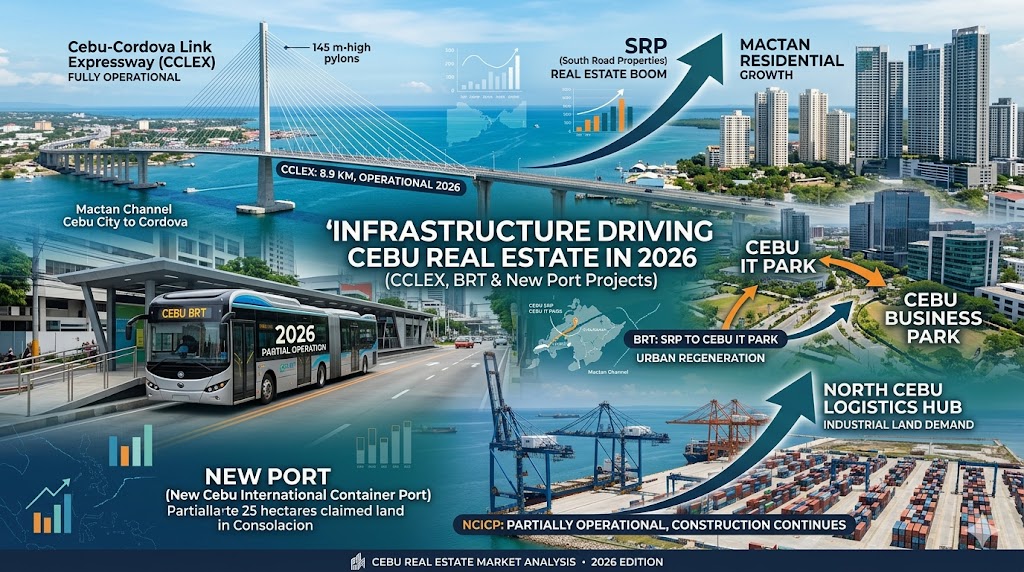
Infrastructure shapes property values. It always has. When a new road, bridge, or port opens, land prices nearby follow. This is not new. But in Cebu right now, a wave of major infrastructure projects is fundamentally rewriting the real estate map—and the effects are already visible.
The Cebu-Cordova Link Expressway (CCLEX), the Cebu Bus Rapid Transit (BRT) system, and the New Cebu International Container Port (NCICP) are the three biggest pieces of this puzzle. Each is at a different stage of completion. Each carries a different set of opportunities and risks. And each will affect where you should buy, rent, or invest in 2026 and beyond.
This guide breaks down each project honestly—with the numbers, the timelines, and the hard truths that marketing materials rarely mention.
Local Context: The “On-the-Ground” Reality
If you drive through Cebu IT Park today, you see a bustling hub—coffee shops full of young professionals, office towers gleaming in the afternoon sun, and a palpable energy that suggests endless opportunity. But if you look at the vacancy data, you see a market that is cooling. Office demand fell 66 percent year-on-year in the first quarter of 2026. Rents are softening. Shadow supply is a growing concern.
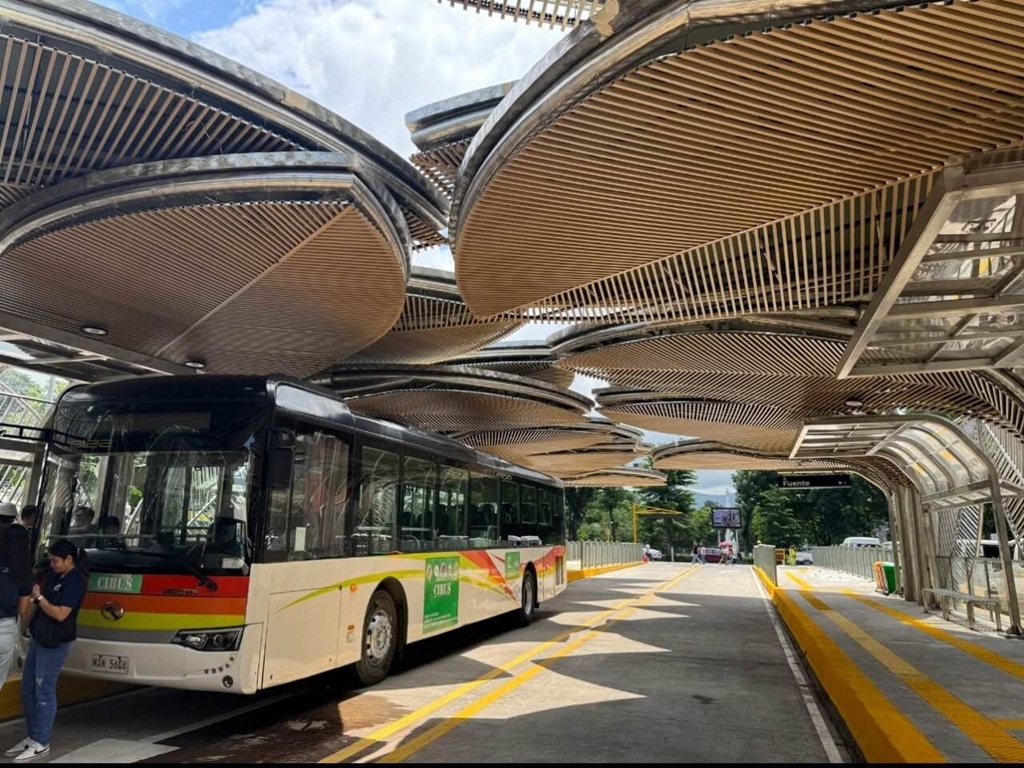
Meanwhile, the Cebu Bus Rapid Transit system began partial operations on March 13, 2026. Seventeen CiBus units now run the Il Corso–IT Park route through Osmeña Boulevard, covering the initial 2.38-kilometer corridor from the Cebu South Bus Terminal to the Capitol. But the rollout has been far from smooth. Traffic congestion has intensified, and Mayor Nestor Archival has publicly defended the lane setup, acknowledging that the adjustments are temporary and meant to deliver long-term efficiency. Commuters have described the first rides as “smooth” but note that significant adjustments are still needed.
This disconnect—between what you see and what the numbers say—is exactly why professional due diligence is more important in 2026 than it was a year ago. The bustling streets mask a market that is becoming increasingly selective. Only the best locations, the highest-quality buildings, and the most strategic sectors will deliver strong returns. The days of buying any property near any infrastructure project and automatically making money are over.
CCLEX: The Bridge That Unlocked the South
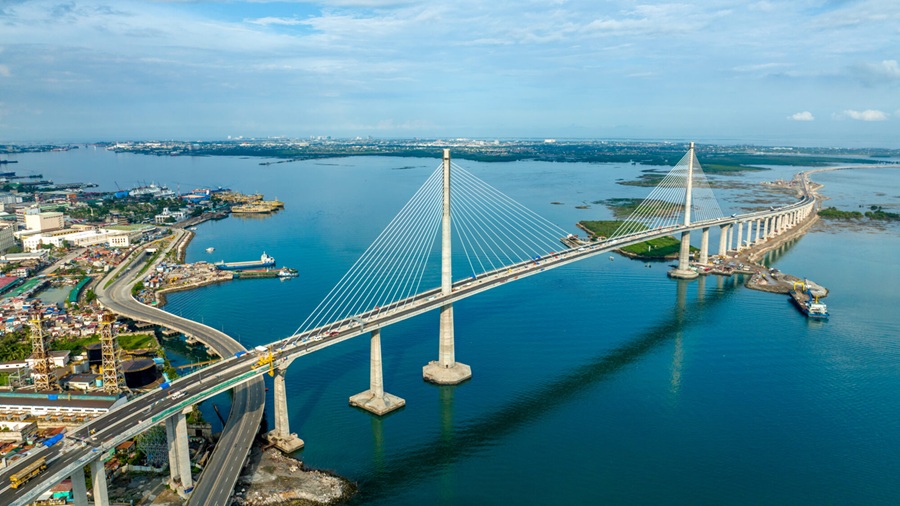
The Cebu-Cordova Link Expressway opened in April 2022. It is 8.9 kilometers long. It links the South Road Properties (SRP) directly to Cordova on Mactan Island. Before CCLEX, Cordova was a quiet town with limited road access. Getting there meant a long drive around Mactan. That changed overnight.
The Numbers Tell the Story
The impact on property values has been nothing short of dramatic. Land in Cordova was valued at around 500 pesos per square meter before construction started. By 2020, prices had already climbed to 5,000 pesos per square meter. That is a 900 percent increase. Since the bridge opened, property developers have been moving in fast.
Daily vehicle usage has more than doubled, jumping from 6,000 to over 12,500 vehicles per day. This increased connectivity is making areas like Cebu City, Mandaue, and Lapu-Lapu even more attractive, and property values there are reflecting that.
The SRP itself has also benefited. The reclaimed district is now more accessible from Mactan and the south. Condos in SRP are newer and priced below IT Park levels, making them attractive to families and first-time buyers.
What to Watch in 2026: The Guadalupe Ramp

The most critical CCLEX development in 2026 is the Guadalupe ramp—a project that has been years in the making and has gone through multiple redesigns.
Originally, the ramp was designed to pass through V. Rama Avenue, directly connecting CCLEX to the heart of Cebu City. But this posed a major problem: around 300 to 400 families would have been displaced.
Following a formal request from Mayor Nestor Archival, CCLEX management proposed a revised alignment. The ramp will now be built toward the South Road Properties via a viaduct, specifically near the Compania Maritima area. The new design eliminates the need for residential displacement.
The shift to a viaduct-based alignment is expected to simplify construction and accelerate implementation, as it avoids right-of-way and relocation issues that have long delayed the project. The city government is set to meet with CCLEX officials in the coming weeks to review the updated project overview, including design details, cost estimates, and timeline. Archival has been pushing hard to get it started: “This year, the area will open, and we can expect more vehicles, and there will be more traffic. Two months ago, I requested CCLEX to start the ramp because it is very important to decongest traffic in the SRP.”
CCLEX officials previously projected completion of the ramp by 2026, subject to resolution of right-of-way and relocation issues. With the redesign now avoiding those issues, the timeline may finally be achievable.
The Bigger Picture: An Interchange and a Skyway
Beyond the Guadalupe ramp, two other major CCLEX-related projects are in the pipeline.
First, CCLEX is prioritizing the construction of a major interchange along the Cebu South Coastal Road (CSCR). This is intended to address traffic surges expected with the opening of the 16,000-seat SM Arena at the South Road Properties.
Second, a proposed four-lane skyway will connect the Mactan-Cebu International Airport to CCLEX and other key areas in Lapu-Lapu City. Construction could begin by late 2026 after the completion of detailed designs, which are expected within five months. The project could be delivered in about a year and a half once construction starts.
The Real Estate Implication
For buyers, land along the CCLEX corridor is still cheaper than central Cebu. But prices are rising. When the Guadalupe ramp opens, travel times will drop further—and another price increase in Cordova and the SRP corridor is widely expected.
The window to buy at current prices is closing. Act before the gap closes.
Cebu BRT: A Cornerstone Project Finally Moving—But Not Without Pain
The Cebu Bus Rapid Transit system was supposed to be the transformative solution to the Queen City of the South’s traffic woes. Instead, it has become a cautionary tale of delays, political infighting, and shrinking ambition. But in 2026, something finally happened: it actually started running.
The Partial Operations
On March 13, 2026, the Cebu Bus Rapid Transit system began partial operations. Seventeen CiBus units now ply the Il Corso–IT Park route through Osmeña Boulevard, covering the initial 2.38-kilometer corridor from the Cebu South Bus Terminal to the Capitol.
The Department of Transportation officially announced the start of partial operations, with median lanes along key road sections closed to general traffic to facilitate the system. Free rides were made available daily from 6:00 a.m. to 9:00 a.m. and from 5:00 p.m. to 8:00 p.m. to support commuters and provide accessible public transportation.
Commuters and officials described the first day of the rollout as generally smooth, although passengers may still need time to adjust to the new station-based transport system. City officials acknowledged that commuters may still experience traffic congestion because the project remains only partially completed.
The Growing Pains
The rollout has not been without controversy. Just days after the partial launch, Mayor Nestor Archival opened parts of the BRT lanes to jeepneys on March 19, citing the small number of buses currently deployed. He has assured Cebuanos that the traffic congestion following the partial rollout is temporary, stressing that the project is meant to instill discipline and deliver long-term efficiency.
As one city official put it: “Dili na siya actually partial. Full operation na gyud na siya sa Package 1 from Il Corso to IT Park. Padayon na gyud na siya”. Package 1 is now considered fully operational within its defined corridor.
The Funding Crisis
The project’s financial situation has deteriorated dramatically. In January 2026, the World Bank canceled $59.9 million from the $116 million IBRD loan, reducing its value to $56.1 million. The entire $25 million Clean Technology Fund loan was also canceled.
In total, more than half of the $141 million World Bank financing package—$84.9 million—has been cut, leaving about $56.1 million available.
Only $40.62 million, or about 29 percent of World Bank loans, has actually been disbursed. Funding from the Agence Française de Développement has similarly lagged, with just €3 million released out of €50.89 million.
The World Bank rated both implementation progress and achievement of project objectives as “unsatisfactory,” pointing to prolonged procurement delays and failure to meet key milestones.
What This Means for Real Estate
The BRT is finally running—but it is a fraction of what was originally promised. The original Bulacao-to-Talamban route has been significantly altered, with portions realigned to pass through the SRP and key commercial areas—a move that has raised concerns that it now favors business districts over the commuting public.
For now, the BRT is a modest driver of property appreciation along its existing corridor. It is no longer a speculative project—it is a real, operational transport system. But its limited scope means its impact on property values is similarly limited. It is a project to watch as it expands—but not one to bet heavily on in 2026.
New Port Projects: Cebu’s Logistics Future
While the BRT struggles, Cebu’s port infrastructure is quietly marching forward. The New Cebu International Container Port (NCICP) is the centerpiece of this effort—and it is already under construction.
The New Cebu International Container Port
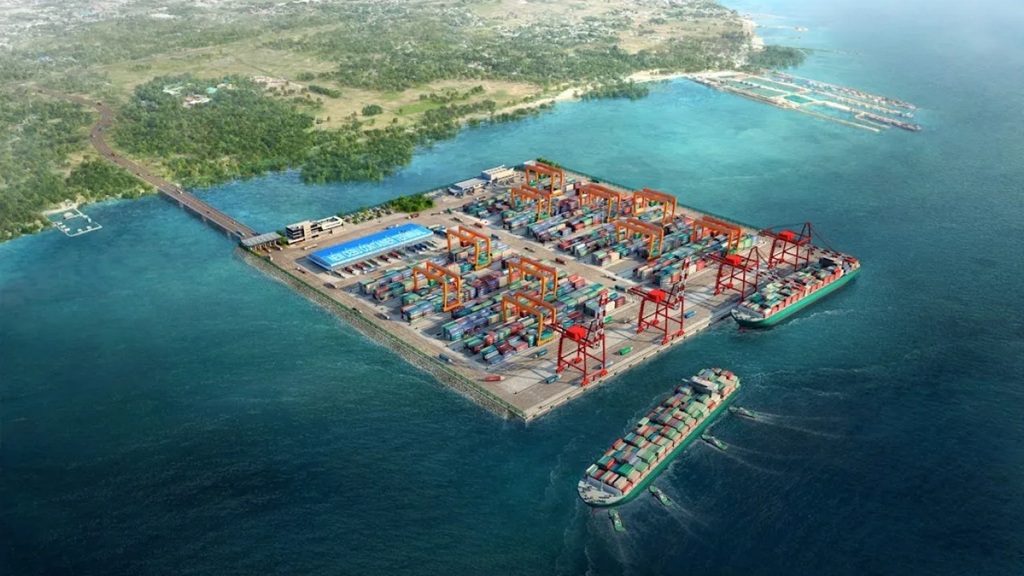
The NCICP broke ground on February 5, 2025, in Tayud, Consolacion. It is a 16-billion-peso project that will develop a modern container terminal on a 25-hectare reclaimed island.
The facility will feature a 500-meter berth with a depth of 12 meters, capable of accommodating two 2,000-TEU vessels, along with five quay cranes. It will also include a 1,365-meter access road and a 300-meter offshore bridge linking it to the main road network.
Designed to handle all foreign containerized cargo, the facility is expected to position Cebu as a central logistics gateway connecting the country’s three main island groups—the Visayas, Mindanao, and Luzon.
The project is expected to be completed in December 2027.
The Economic Impact
Maritime Industry Authority Administrator Sonia Malaluan emphasized that Cebu’s strategic location at the heart of the archipelago has long enabled efficient inter-island connectivity, making it a natural hub for trade and logistics. With the coming completion of the new container port, the province is expected to take a major leap forward.
The new port is projected to substantially increase cargo-handling capacity, accommodate larger vessels, and decongest existing facilities.
The On-the-Ground Reality
Construction is not without its challenges. Residents of Barangay Tayud, Consolacion, have expressed frustration over loud noise and dust from the ongoing port construction. The complaints have reached the general contractor, HJ Shipbuilding and Construction Corp., which has expressed willingness to adjust working hours to 9 p.m..
The project remains on schedule for its December 2027 completion and eventual turnover to the Department of Transportation.
What This Means for Real Estate
The NCICP and related port developments are significant drivers of industrial and logistics real estate. Cebu’s warehouse supply already exceeds 5 million square meters with a remarkable 97 percent occupancy rate—the lowest vacancy among the country’s industrial hubs at just 1.05 percent. Cold chain storage is even tighter at 2 percent vacancy.
The new port will only increase demand for logistics and industrial spaces in surrounding areas. Emerging hotspots like Consolacion, Danao, and Naga are already seeing increased interest. For investors, this is where the fundamentals are strongest.
The Broader Infrastructure Pipeline
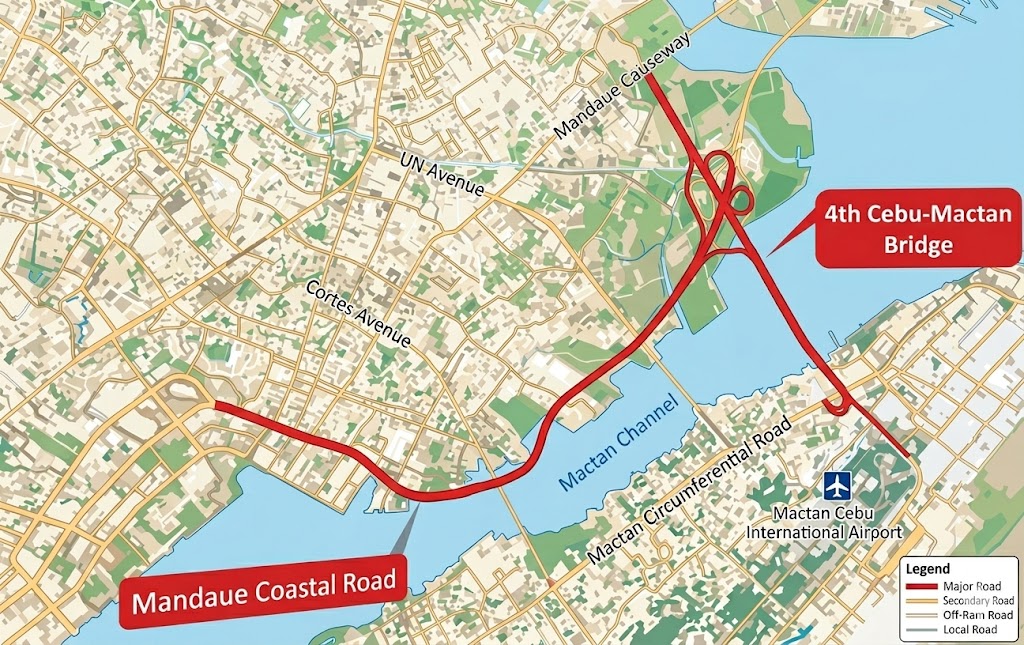
Beyond CCLEX, BRT, and the port projects, Cebu has a broader pipeline of infrastructure developments that industry leaders say are designed not merely as transport facilities, but as platforms that unlock economic activity across sectors.
These include the 4th Cebu-Mactan Bridge, the Mandaue Coastal Road, and the Metro Cebu Expressway. The Metro Cebu Urban Mass Rapid Transit—a railway service that will connect Danao City to Carcar City through a 67.5-kilometer railway, plus a 25-kilometer line to the airport—is also in the pipeline, with a feasibility study expected to start by October 2026.
These projects are expected to ease congestion, improve connectivity, and support industrial and commercial expansion, reinforcing Cebu’s competitiveness as a business destination.
The Investor’s Take: Separating Signal from Noise
Infrastructure drives real estate values—but not all infrastructure is created equal, and not all projects deliver on their promises.
CCLEX is the proven winner. The bridge is already operating, daily traffic has more than doubled, and property values in Cordova have already increased 900 percent. The Guadalupe ramp, now redesigned to avoid displacement issues, is the next catalyst. When it opens, expect another price increase in Cordova and the SRP corridor. The window to buy at current prices is closing.
The BRT is finally operational but limited. Partial operations began on March 13, 2026, with 17 buses running a 2.38-kilometer route. The system is real and running—but it is a fraction of what was originally envisioned. Its impact on property values is real but modest. It is a project to watch as it expands—but not one to bet heavily on in 2026.
The New Port is the long-term play. The NCICP is already under construction and on track for completion by December 2027. It will substantially increase cargo-handling capacity and position Cebu as a central logistics gateway. For industrial and logistics real estate, this is where the fundamentals are strongest. Emerging hotspots like Consolacion, Danao, and Naga offer ground-floor opportunities.
Final Take
Cebu’s infrastructure boom in 2026 is not a single story. It is three distinct narratives playing out simultaneously.
CCLEX is delivering proven value, with the Guadalupe ramp poised to unlock another wave of appreciation. The BRT is finally running—but only a fraction of its original vision, delivering modest benefits along its limited corridor. The New Port is the quiet workhorse, steadily building the logistics infrastructure that will underpin Cebu’s economic future.
For investors, the message is clear: follow the infrastructure that is actually being built, not the infrastructure that is still being debated. CCLEX and the port projects are real, tangible, and already moving. The BRT is operational—but its limited scope means its impact is similarly limited.
The data provides the map, but local expertise provides the compass. Whether you are looking to buy land along the CCLEX corridor before the Guadalupe ramp opens, or identify the next industrial hotspot near the new port in Consolacion, understanding which projects are real—and which are still promises—is your biggest competitive advantage.
Infrastructure shifts market value overnight. If you would like a property assessment based on these specific infrastructure corridors, my team and I are currently reviewing assets in the Cordova and Consolacion zones. The window is closing—but there is still time to act.
You might want to read
Condotel Investment in Cebu
Commercial real estate in Cebu
Disclaimer: This article is for informational purposes only and does not constitute financial, legal, or investment advice. Real estate investments involve substantial risk, including the potential loss of principal. Infrastructure projects are subject to delays, funding changes, and political considerations. Always conduct your own due diligence, consult with licensed real estate professionals and legal counsel, and verify all information with current official sources before making any investment decision.
Author
John Paul Ybañez Paquibot
Licensed Real Estate Broker | PRC No. 00014132 | DHSUD No. CVRFO-B-03/18-2672
Bachelors Realty and Brokerage, Inc. Cebu
G/F Cap Building, Brgy. Corner, Osmeña Blvd.
Arlington Pond St. Extension, Cebu City, 6000 Cebu
Leave a Reply