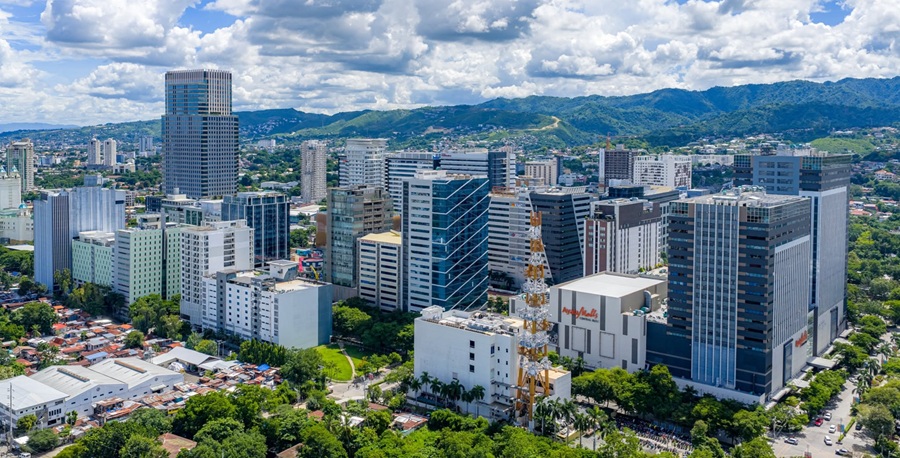
Cebu’s commercial real estate market in 2026 is a story of striking contrasts. One segment is quietly booming with near-full occupancy. Another is wrestling with oversupply and softening rents. And a third is reinventing itself entirely, prioritizing experience over square footage.
For investors, tenants, and business owners, understanding these divergent trends is not optional—it is the difference between seizing opportunity and walking into a trap. This guide breaks down the office, retail, and warehouse sectors honestly, with the data you need to make informed decisions.
The Big Picture: Cebu’s Commercial Landscape in 2026
Cebu remains the Philippines’ premier provincial commercial hub. In 2025, Cebu accounted for 150,000 square meters, or 55 percent, of provincial office take-up nationwide, representing 33 percent year-on-year growth. The city’s economy is heavily driven by services, which account for 89.5 percent of total economic output.
But 2026 is not 2025. The market has entered a “recalibration” phase. Slowing GDP growth, rising inflation, and geopolitical risks are reshaping Philippine real estate, demanding proactive strategies and flexible formats. The era of across-the-board gains is over. Success now belongs to those who understand which sub-sectors are thriving and which are struggling.
Local Context: The “On-the-Ground” Reality
If you drive through Cebu IT Park today, you see a bustling hub—coffee shops full of young professionals, office towers gleaming in the afternoon sun, and a palpable energy that suggests endless opportunity. But if you look at the vacancy data, you see a market that is cooling. Office demand fell 66 percent year-on-year in the first quarter of 2026. Rents are softening. Shadow supply is a growing concern.
This disconnect—between what you see and what the numbers say—is exactly why professional due diligence is more important in 2026 than it was a year ago. The bustling streets mask a market that is becoming increasingly selective. Only the best locations, the highest-quality buildings, and the most strategic sectors will deliver strong returns. The days of buying any commercial property in Cebu and automatically making money are over.
Office Space: A Market in Transition
The office sector is the most complex and contradictory part of Cebu’s commercial real estate story.
The 2025 Boom
Cebu’s office market posted its strongest year on record in 2025, with demand jumping 110 percent from 2024 levels. The information technology-business process management sector accounted for 76 percent of office demand. Cebu City emerged as the largest BPO leasing market in 2025, with 71,000 square meters of new office space leased—outpacing all Metro Manila submarkets.
Several major office buildings reached full occupancy, including Bonifacio District’s Faustina Center, Central Bloc Corporate Center, and Filinvest Cyberzone Cebu Towers 3 and 4. Cebu IT Park recorded 96,000 square meters of office transactions in the first nine months of 2025, with vacancy dropping from 28 percent in Q3 2022 to 14 percent in Q3 2025.
The 2026 Slowdown
Then came the reckoning.
In the first quarter of 2026, Cebu office demand fell 66 percent year-on-year to just 11,000 square meters. Average transaction size also declined sharply to 445 square meters from 1,886 square meters a year earlier. CBRE described the market as “a busy but unproductive market,” noting that while the number of deals increased, deal sizes shrank significantly.
CBRE now expects overall Cebu office vacancy to rise to between 18 percent and 22 percent by the end of 2026, higher than their earlier 15.4 percent forecast.
The Submarket Divide
The vacancy numbers tell a story of extreme geographic disparity. In the first quarter of 2026:
- Cebu Business Park had the tightest vacancy at 9.3 percent
- Cebu IT Park recorded 11.1 percent, though adjusted vacancy factoring in shadow supply is estimated at 14 to 16 percent
- Fringe areas posted 23.3 percent vacancy
- Mactan had the highest vacancy at 30.4 percent
The gap between prime and secondary locations is widening. High-quality, well-located buildings in IT Park and Cebu Business Park continue to attract tenants, while fringe and Mactan locations struggle with oversupply.
Shadow Supply: The Hidden Risk
A growing concern is “shadow supply”—office spaces that are technically leased but remain unused and may re-enter the market. CBRE warns that shadow supply is “starting to bear down on pricing in core sub-districts”. This means even the tightest submarkets may face hidden pressure that official vacancy numbers do not capture.
Rental Rates Under Pressure
Rental conditions are softening. Fair market rents in Cebu IT Park fell 1.3 percent quarter-on-quarter to 541.19 pesos per square meter. In Cebu Business Park, rents declined 1.4 percent to 627.55 pesos per square meter.
The gap between published fair market rents and actual transacted rates has widened as landlords offer incentives to retain and attract tenants. As CBRE put it: “The fair market rent is increasingly a ceiling, not a floor”.
The Supply Pipeline
Approximately 180,000 square meters of new office space is scheduled for completion in 2026, with 60 percent concentrated in premium nodes where vacancy is already tight. Major projects expected to add supply this year include the 60,000-square-meter SM City Cebu office development, Astra Corp Centre, Grand Tower, and Masters Tower.
CBRE warns that rental gains in fringe and Mactan areas “may prove temporary once SM City Cebu’s office project is completed in the fourth quarter”. Tenants are expected to gain more negotiating leverage amid rising vacancy, while landlords may need to offer more flexible lease structures and fit-out support to remain competitive.
The Long-Term Outlook
Despite the current slowdown, Cebu’s long-term office fundamentals remain strong. Savills Philippines notes that while new supply may cause a temporary uptick in vacancy rates by 2027, it positions Cebu as a primary beneficiary of ongoing corporate decentralization away from Metro Manila.
Colliers maintains that diversification toward provincial markets is expected to persist beyond 2026. However, the market is becoming more discerning. Only high-quality, well-located buildings in prime districts will dominate.
Retail Space: Experience Over Expansion
Cebu’s retail property market tells a different story—one of selective growth and strategic reinvention.
High-Street Rents Among the Nation’s Highest
Cebu’s high-street rents now range from about 450 to as much as 2,000 pesos per square meter per month, with prime locations in Metro Cebu matching or even exceeding top-tier rates in parts of Metro Manila. The tighter rental band in Cebu suggests a more balanced market, supported by steady consumer activity and limited supply of prime high-street locations.
At very premium locations, rental rates in Cebu actually command higher rates than some areas in Metro Manila.
What’s Driving Demand
Retail demand remains robust, driven largely by food and beverage operators, which continue to dominate both new market entries and network expansions. A surge in coffee chains has intensified competition, with both local and international brands accelerating store rollouts. Health and wellness concepts—ranging from boutique fitness studios to lifestyle-oriented service retailers—are emerging as a key growth segment.
Foreign brands are showing growing interest in expanding outside the capital, and Cebu is a primary beneficiary.
The Experience Shift
Developers are reconfiguring mall formats to emphasize “dwell time” rather than sheer footfall. Open-air and al fresco spaces are being expanded to encourage longer visits, while tenant mixes are increasingly curated to avoid duplication and foster differentiated experiences.
As one CBRE executive put it: “The focus is no longer just about bringing people in, but keeping them there longer”. Longer dwell times typically translate into higher consumer spending.
This shift is prompting a broader rethink of mall development strategies. Rather than adding more retail space indiscriminately, landlords are becoming more selective about site location and tenant composition. The emphasis is moving from aggregation to curation—prioritizing complementary concepts that align with evolving consumer preferences.
For developers, the message is increasingly clear: build less, but build smarter. Location, tenant mix, and experiential design are emerging as the key differentiators.
Major Developments
Ayala Land is undertaking its largest retail expansion to date in 2026, adding more than 200,000 square meters of new retail space nationwide, with Cebu remaining a central growth area. The company has already completed reinvention works at Ayala Center Cebu, positioning the mall as a “social infrastructure” hub rather than a purely retail destination. About 78 percent of leases due for renewal in 2026 have already been secured or replaced, helping sustain high occupancy levels.
Ayala Malls Gatewalk is set to open in December 2026. This four-level, air-conditioned complex will be anchored by IKEA, marking the Swedish home furnishings retailer’s first store in Cebu and the wider Visayas. The mall will be connected to an office tower and a public transport hub, designed to serve Cebu’s growing residential, office, and visitor markets.
SM Supermalls continues to expand its Cebu presence, introducing new brands across fashion, technology, dining, and lifestyle categories.
The Outlook
The outlook for Cebu’s retail sector remains positive, underpinned by resilient domestic consumption and growing interest from both local and foreign brands seeking expansion outside the capital. Colliers expects future growth to be led by upscale and premium malls that prioritize experience, curation, and omnichannel strategies.
Warehouse and Industrial Space: The Silent Boom
If office space is struggling and retail is reinventing itself, the warehouse and industrial sector is quietly thriving.
Near-Full Occupancy
Cebu’s warehouse supply now exceeds 5 million square meters with a remarkable 97 percent occupancy rate. Cebu has the lowest warehouse vacancy rate among the country’s industrial hubs at just 1.05 percent.
Cold chain storage supply in Cebu has tightened even further, with vacancy rates at only 2 percent. This reflects surging demand for temperature-controlled logistics driven by food security concerns and the growth of e-commerce.
Lease Rates
Average warehouse lease rates in Cebu sit at 246.9 pesos per square meter. While rates have remained firm despite increasing supply, the ongoing Middle East conflict is pushing lessors to consider raising lease rates amid rising construction and operational costs.
What’s Driving Demand
Transportation and logistics operations account for as much as 48 percent of industrial property demand, while manufacturing represents 18 to 20 percent and other services comprise 15 to 18 percent.
Industrial sector supply climbed to 1.3 million square meters in the first quarter of 2026 from 1.2 million square meters previously. Warehouse facility supply has posted an average annual growth rate of 1.8 percent since 2017 and is expected to continue expanding through 2028.
Emerging Hotspots
Industrial decentralization is creating emerging logistics hotspots across Cebu province. Newer developments are on track to create new hotspots in areas such as Balamban, Danao, and Naga.
West Cebu Estate in Balamban, a 540-hectare industrial hub registered with the Philippine Economic Zone Authority, has become a thriving hub for industrial growth. Prestige Warehousing and Logistics Inc. recently secured a 1.2-hectare site at the estate, strengthening its logistics and supply chain presence in Cebu.
AyalaLand Logistics is rapidly expanding cold storage capacity. The newly opened Artico Consolacion facility in Cebu adds significant capacity to the company’s network.
Mandaue City continues to strengthen as one of the most strategic industrial hubs in the Visayas, with a dense network of logistics service providers.
The Long-Term Trend
Industrial spaces are now “the hottest part of the market,” especially in fast-growing areas like Cebu. As multinational companies diversify production away from China and expand manufacturing networks across the region, demand for industrial and logistics real estate is rising rapidly.
Prime Philippines projects nationwide industrial supply to grow by approximately 1.3 to 1.5 percent by the end of 2026. Transportation and logistics are expected to remain the primary demand drivers.
The Investor’s Take: Which Sector in 2026?
Office Sector: The “Cautious” Play
The office sector is the riskiest bet in 2026. Vacancy is rising, rents are softening, and shadow supply is a hidden threat. The 66 percent year-on-year drop in Q1 demand is a genuine warning sign.
However, prime locations in Cebu IT Park and Cebu Business Park continue to perform. If you are considering office investment, focus exclusively on Grade A buildings in these proven corridors. Avoid fringe areas and Mactan, where vacancy exceeds 23 percent and 30 percent respectively. Be prepared for tenants to demand more flexible lease terms and fit-out support.
The opportunity: Tenants now have negotiating leverage. If you are an occupier, 2026 is an excellent time to secure favorable terms. If you are a landlord, differentiate through quality, location, and service.
Retail Sector: The “Experience” Play
Retail offers a more balanced picture. High-street rents remain strong, and demand from food and beverage operators and foreign brands continues. However, the market is shifting toward experience over expansion.
The opportunity: Invest in well-located retail spaces in prime high-street corridors or curated mall environments. Look for assets with high “dwell time”—properties that emphasize experiential design, open-air spaces, al fresco dining, and lifestyle-oriented tenant mixes. Avoid indiscriminate retail development in secondary locations. The IKEA-anchored Ayala Malls Gatewalk opening in December 2026 will likely reshape retail dynamics in its catchment area. Focus on properties that prioritize curation over aggregation—complementary concepts that align with evolving consumer preferences rather than simply filling square footage.
Warehouse Sector: The “Growth” Play
If there is a bright spot in Cebu’s commercial real estate market in 2026, it is the warehouse and industrial sector. With 97 percent occupancy, 1.05 percent vacancy, and surging demand from logistics and e-commerce, this is where the fundamentals are strongest.
The opportunity: Industrial land and warehouse assets are among the most attractive sectors for long-term investors. Cold storage is particularly undersupplied at just 2 percent vacancy. Prioritize emerging logistics hubs like Naga, Balamban, and Danao, where ground-floor opportunities still exist. Average annual net yields for logistics spaces exceed 7 percent.
The key risk is rising construction costs driven by geopolitical tensions. However, strong demand and limited supply suggest that well-located industrial assets will continue to perform.
Final Take
Cebu’s commercial real estate market in 2026 is not a single story. It is three distinct narratives playing out simultaneously.
Office space is in transition. After a record-breaking 2025, the market is correcting. Vacancy is rising, rents are softening, and shadow supply is a hidden threat. The winners will be premium buildings in prime locations. The losers will be secondary spaces in oversupplied fringe areas.
Retail space is reinventing itself. The old model of adding square footage indiscriminately is dead. Success now belongs to curated, experiential destinations that keep consumers engaged longer. High-street rents remain strong, and foreign brands are expanding into Cebu.
Warehouse and industrial space is quietly booming. With 97 percent occupancy and just over 1 percent vacancy, this is the strongest commercial real estate sector in Cebu in 2026. Logistics, e-commerce, and cold storage are driving demand, and emerging hotspots are creating new opportunities.
The era of easy money in Cebu commercial real estate is over. But for the discerning investor who understands these divergent trends, the opportunities in 2026 are real—you just need to know where to look.
The Final Word
The data provides the map, but local expertise provides the compass. Cebu’s commercial real estate market in 2026 demands more than just reading numbers—it requires understanding the on-the-ground reality behind those numbers. The bustling streets of IT Park and the growing industrial corridors of Balamban are not contradictions; they are different facets of a complex, evolving market.
Whether you are looking to optimize your office lease, secure a prime retail location, or identify the next industrial hotspot in Balamban or Naga, having a ground-level view of these divergent trends is your biggest competitive advantage. The opportunities are there. The data is clear. Now it is about making the right move at the right time.
Disclaimer: This article is for informational purposes only and does not constitute financial, legal, or investment advice. Commercial real estate investments involve substantial risk, including the potential loss of principal. Always conduct your own due diligence, consult with licensed real estate professionals and legal counsel, and verify all data with current market sources before making any investment decision.
Author
John Paul Ybañez Paquibot
Licensed Real Estate Broker | PRC No. 00014132 | DHSUD No. CVRFO-B-03/18-2672
Bachelors Realty and Brokerage, Inc. Cebu
G/F Cap Building, Brgy. Corner, Osmeña Blvd.
Arlington Pond St. Extension, Cebu City, 6000 Cebu
Leave a Reply