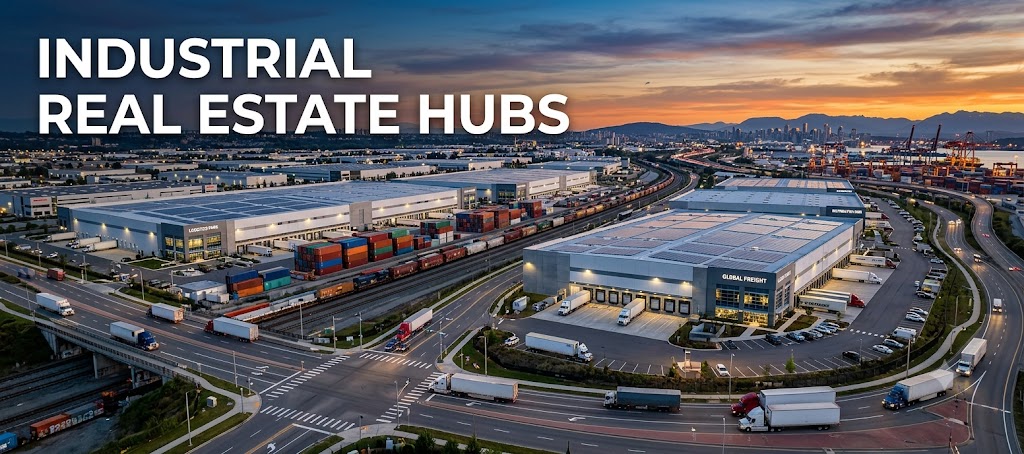
Most people think of Cebu as a tourism destination. White sand beaches. Whale sharks. The Sinulog Festival. But behind the postcard images, something else is happening—Cebu is quietly becoming the Philippines’ most important industrial real estate market outside Metro Manila.
The numbers tell the story. Cebu has the lowest warehouse vacancy rate among the country’s industrial hubs at just 1.05 percent, while newer developments are creating new hotspots in areas like Balamban, Danao, and Naga. Warehouse supply in Cebu grew by 6.3 percent year-on-year to 4.98 million square meters, second only to Batangas among all provinces. The province holds the highest industrial occupancy rate in the country at approximately 98 percent.
This isn’t a trend—it’s a transformation. And if you’re thinking about investing in Cebu’s industrial real estate, you need to understand what’s actually happening, where the real opportunities are, and what nobody tells you until it’s too late.
This guide cuts through the hype. Here’s the unvarnished truth about Cebu’s industrial property market.
Part 1: The Big Picture—Why Cebu Matters
Cebu is the Philippines’ second-largest economy outside Metro Manila. For years, it was known primarily for BPOs and tourism. But that’s changing. The provincial government has unveiled an ambitious plan to reshape the island’s economic geography through strategic zoning and corridor-based industrial development.
The goal is ambitious: position Cebu as a national model for “sustainable, people-centered industrialization” by 2035. And unlike many government plans, this one has teeth. It’s anchored on the updated Provincial Development and Physical Framework Plan, which envisions the creation of industrial corridors and secondary growth centers to decentralize development.
What makes this different is the scale and coordination. Instead of scattered industrial parks, Cebu is building interconnected corridors that link manufacturing, logistics, and energy infrastructure across the entire island. The Metro Cebu Corridor—encompassing Talisay, Naga, and Danao—will anchor logistics and manufacturing expansion. The North Corridor, stretching from Consolacion to Carmen and Bogo City, will drive renewable energy ventures, including a 114-megawatt solar farm in Toledo City. The West Corridor, covering Balamban and Pinamungahan, will focus on medium to heavy industries.
The honest take: This isn’t speculative. Infrastructure projects with the Japan International Cooperation Agency are already advancing, including the Fourth Cebu–Mactan Bridge, the Metro Cebu Expressway, and the Metro Cebu Sewerage System. These projects improve mobility, expand access to new growth zones, and attract export-oriented industries. The government is also dedicating more than 30 percent of the province’s 2026 budget to human development—healthcare, education, and workforce upskilling. The pieces are in motion.
Part 2: The Major Hubs—Where the Action Is
Cebu’s industrial real estate isn’t one market—it’s several distinct ecosystems, each with its own dynamics, costs, and opportunities.
The Mactan Economic Zone (MEZ)
This is the granddaddy of Cebu’s industrial real estate. Spanning 150 hectares across two areas—MEPZ 1 and MEPZ 2—the zone is home to more than 200 industrial, commercial, and retail locators. MEPZ 1 is operated directly by PEZA, while MEPZ 2 is operated by the Aboitiz Group. It’s been operating since 1979 and has the infrastructure, the workforce, and the track record that investors look for.
MEZ2 Estate, the 63-hectare PEZA-registered component, has already delivered $9.24 million in exports as of December 2024. Strategically located next to Mactan-Cebu International Airport and with easy access to Cebu International Port, it’s designed for businesses that depend on both air and sea freight. The estate offers ready-built warehouse spaces ranging from 3,500 to 40,000 square meters, as well as leasable industrial lots suitable for light manufacturing, export processing, and logistics operations.
To date, the estate is home to over 40 locators and more than 12,000 workers across high-value sectors such as electronics, garments, medical equipment, and home furnishings. But MEZ2 isn’t just a collection of warehouses. It functions as a comprehensive industrial ecosystem, including a PEZA-accredited office hub for BPO and shared services, an outlet retail destination, and a transport terminal that improves accessibility for the workforce.
The honest take: MEZ is the safe bet. It has the infrastructure, the regulatory framework, and the track record. But “safe” also means expensive. Land and lease rates here command a premium, and the best spaces are often taken by long-term tenants who renew consistently.
West Cebu Industrial Park (WCIP) in Balamban
If MEZ is the established player, WCIP is the rising star. Located in Balamban—known as the country’s shipbuilding capital—this 540-hectare special economic zone is a joint venture between the Aboitiz Group and Japan-based Tsuneishi Holdings. It hosts 11 locators from medium to heavy industries, including some of the world’s largest shipbuilding firms.
The expansion is aggressive. In October 2024, President Marcos issued Proclamation 710, designating 19 lots totaling 17.7 hectares for inclusion. In December 2025, Proclamation 1105 added seven more parcels totaling 6.9 hectares. And in June 2026, Proclamation 1288 added more than 64 hectares, bringing the total to approximately 629 hectares.
A 40-hectare industrial expansion is now underway at the West Cebu Estate—with half of the inventory already sold. The park provides employment to more than 14,000 skilled Filipino workers engaged in medium- and heavy-industry operations.
The honest take: WCIP is where the growth is. The expansions are real, the incentives are substantial, and the industrial base is diversifying beyond shipbuilding into automotive and manufacturing. But Balamban is a commute from Metro Cebu. If your business depends on urban amenities or a large talent pool living nearby, this is a trade-off.
Mandaue City
Mandaue is the unsung hero of Cebu’s industrial economy. Hosting approximately 10,000 industrial and commercial locators, it’s a linchpin for Cebu’s export economy, accounting for 40 percent of the province’s exporting firms. Unlike the big ecozones, Mandaue offers a more mixed environment—industrial alongside commercial and residential. This can be an advantage for businesses that need proximity to urban amenities.
The emerging corridors
Beyond the established hubs, new areas are coming online. In Consolacion, Prilad Industrial Park is attracting warehouse developments. In Naga, the NVIP-Special Economic Zone hosts manufacturing plants like Minebea Mitsumi. Danao is positioning itself as a logistics and manufacturing anchor within the Metro Cebu Corridor. Land is cheaper in these areas, and infrastructure is improving. But “emerging” also means “less developed.” Utilities, road access, and workforce availability are works in progress.
Part 3: The Numbers—What It Actually Costs
Industrial real estate in Cebu doesn’t come cheap, and prices vary dramatically by location.
In Mactan, commercial lots are listed at around PHP 35,000 per square meter. Prime commercial land in Cebu Business Park can reach PHP 220,000 per square meter. In emerging areas like Balamban, industrial lots are more affordable—around PHP 7,500 per square meter, with a 10,000-square-meter lot listed at PHP 75 million.
But the purchase price is only part of the equation. Prime land in hotspots like the South Road Properties is nearing full saturation, with price appreciation exceeding 15 percent year-on-year. That’s good news if you already own land. It’s less good news if you’re trying to buy in.
Warehouse lease rates in Cebu have remained broadly stable, with most provinces posting an average rate change of zero to 2 percent in recent quarters. But there’s a caveat: Grade A and Grade B warehouses—those built to modern standards with reliable utilities and sustainability features—are in much higher demand than older, Grade C warehouses that require significant renovation. The gap between premium and standard spaces is widening.
The honest take: Industrial land in Cebu is expensive and getting more expensive. The days of cheap land are over. If you’re entering the market now, you’re paying for the growth that’s already happened, not the growth that’s coming. Make sure your numbers work at current prices, not projected prices.
Part 4: The Market Dynamics—What’s Driving Demand
The demand for industrial space in Cebu isn’t a mystery. It’s driven by three powerful forces.
E-commerce and logistics. Nationwide warehouse demand jumped 80 percent in the first half of 2025, powered by wholesale and retail, logistics, and manufacturing activity. Cebu, with its 98 percent industrial occupancy rate, is ground zero for this demand. Companies are consolidating operations to meet faster, larger, and more complex consumer needs, especially for e-commerce fulfillment and regional distribution.
Decentralization from Manila. BPO and industrial clients are increasingly seeing Visayas and Mindanao as strategic needs for the sustainability of their operations. Second-tier cities are attracting capital because “what used to be considered secondary markets are now becoming strategic expansion markets.” Labor costs are more competitive while maintaining access to a young and growing workforce.
PEZA incentives. PEZA-registered enterprises enjoy substantial benefits: income tax holidays of four to seven years, a special corporate income tax rate of 5 percent or enhanced deductions for 10 years, tax- and duty-free importation of capital equipment and raw materials, and VAT exemptions. These incentives are real and they work—which is why PEZA continues to register projects in Cebu and remains optimistic about the province’s ability to attract investors worldwide.
The honest take: These demand drivers aren’t going away. E-commerce is still growing. Decentralization is accelerating. PEZA incentives remain attractive. But demand is already being met with supply. Warehouse supply in Cebu grew 6.3 percent last year, and more is coming. Don’t assume that today’s 98 percent occupancy means tomorrow’s 98 percent occupancy.
Part 5: The Risks Nobody Wants to Talk About
Every industrial real estate investment carries risks. In Cebu, some of them are significant.
Infrastructure bottlenecks. Chronic bottlenecks in infrastructure, logistics, and power reliability could deter foreign investors. Cebu cannot continue to rely on roads alone—mass transit investment is needed. Power reliability is a particular concern. While desalination and similar technologies are being explored for economic zones, the reality is that power interruptions still happen.
Limited flatland. Cebu Island has limited flatlands. This is not a minor issue. If the province wants to attract more investments, it needs to create more usable land—just like Singapore and Hong Kong. The government is reviewing reclamation policies to address this, but the process is slow and regulatory.
Regulatory complexity. The Special Economic Zone Act and its implementing rules are complex. Land classification, zoning, and environmental compliance all require navigation through multiple government agencies. Even the province acknowledges that some provisions have become “burdensome” for investors.
Developer risk. Not all industrial park developers are created equal. Some have the capital, expertise, and track record to deliver. Others are less reliable. If you’re buying pre-construction or leasing from a developer who’s still building out infrastructure, you’re taking on developer risk. Do your homework.
The honest take: The risks are real but manageable. Infrastructure is improving, not deteriorating. The government is actively working on reclamation and regulatory reform. And the major developers—Aboitiz, DoubleDragon, and others—have strong balance sheets and long-term commitments. The question isn’t whether there’s risk. The question is whether you understand it and can price it in.
Part 6: Who Should Invest and Who Shouldn’t
You should consider investing if:
- You understand that industrial real estate is a long-term play, not a quick flip
- You’ve done your homework on the specific hub—location, infrastructure, workforce, and regulatory environment
- You’re working with a developer or broker who knows the Cebu market specifically
- You’ve priced in infrastructure and utility risks
- You’re buying for the long-term growth of Cebu’s industrial sector, not speculative appreciation
You should not invest if:
- You think you can buy cheap land in an emerging area and flip it in two years
- You haven’t visited the site and checked the actual road access, power reliability, and water supply
- You’re relying solely on PEZA incentives without understanding the compliance requirements
- You don’t have the capital to wait out infrastructure development timelines
- You’re buying based on the 98 percent occupancy rate without understanding what’s coming online
Final Thoughts
Cebu’s industrial real estate market is genuinely exciting. The numbers are impressive: 98 percent occupancy, 6.3 percent supply growth, the lowest warehouse vacancy rate in the country at 1.05 percent. The government has a plan, the infrastructure is coming, and the demand drivers—e-commerce, decentralization, and PEZA incentives—are real.
But the market is also changing. Prime land is near saturation. Prices are appreciating rapidly. New supply is coming online. The days of easy wins are over.
If you’re investing in Cebu’s industrial real estate, go in with your eyes open. Buy for the long term. Price in the risks. Work with people who know the market. And never assume that today’s strong numbers guarantee tomorrow’s returns.
The sleeping giant is awakening. Just make sure you’re not the one who gets trampled when it stands up.
Pro Tip: The Infrastructure Reality Check
Before you commit to any industrial property in Cebu, spend a day driving the route from the site to the nearest port, airport, and major highway—during rush hour. Infrastructure maps look great on paper. The reality of Cebu’s traffic, road conditions, and power reliability is something else entirely. A site that’s “strategically located” on a developer’s brochure might be a 90-minute crawl from the port during peak hours. If your business depends on just-in-time logistics, that 90 minutes is the difference between profit and loss. Do the drive yourself. Multiple times. At different times of day. The road doesn’t lie.
Author
John Paul Ybañez Paquibot
Licensed Real Estate Broker | PRC No. 00014132 | DHSUD No. CVRFO-B-03/18-2672
Bachelors Realty and Brokerage, Inc. Cebu
G/F Cap Building, Brgy. Corner, Osmeña Blvd.
Arlington Pond St. Extension, Cebu City, 6000 Cebu
Leave a Reply