Blog

  • Where to Watch Major Sports Events in Cebu: Sports Bars & Expat Hangouts (2026) – SeekCebu

    Finding a reliable spot to watch your favorite team in Cebu is all about knowing which venues cater to international sports schedules. Whether you’re chasing the Premier League, NBA, major fight nights, or the occasional rugby match, Cebu’s sports-bar culture is evolving. Here’s an honest guide to the best hangouts for game day.


    The Reliable Classics

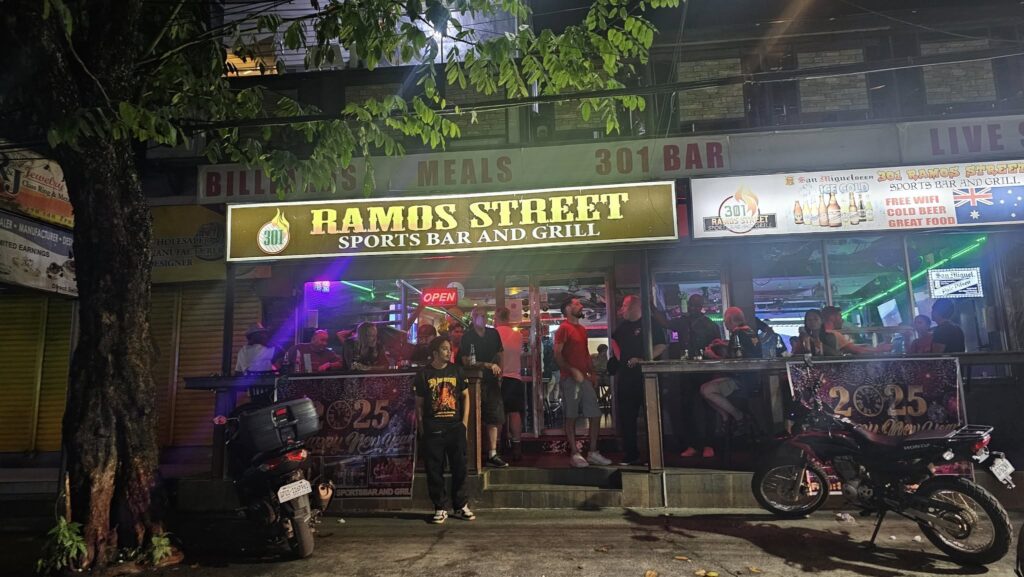
    301 Ramos Street Sports Bar & Grill

    This is the place that comes up first in almost every expat conversation about sports viewing. It’s a long-standing favorite for the international community, offering a classic pub vibe that feels like a home away from home for many Westerners. The menu is made from scratch, the owner clearly cares about quality, and the atmosphere is refreshingly free of the aggressive “buy me a drink” culture that plagues some other venues.

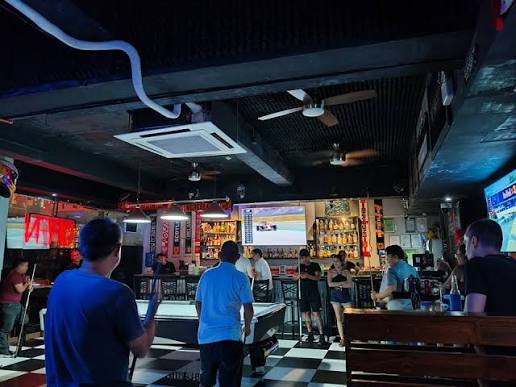
    What makes 301 Ramos work is the consistency. It’s arguably the most reliable spot in the city for catching international sports without any fuss. There’s live music on certain nights, a pool table for downtime, and an outdoor area if you want to escape the screens for a bit. The crowd is a healthy mix of expats and locals who actually care about the game.

    Billy’s Sports Bar

    Billy’s is a well-known haunt for those who want a no-frills, casual environment. It’s less polished than the hotel bars, but it’s packed with regulars who are there for one reason: the game. The beer is famously cold, the staff are efficient, and the atmosphere is lively without being overwhelming.

    Expect the big events here—the Super Bowl, Premier League matchdays, and major UFC cards. The vibe is perfect if you want to make friends quickly and settle in for a few hours of uninterrupted viewing. Bring cash, as plastic isn’t always welcome.


    Modern & High-Energy

    Howling Dogs Sports Grill

    If you prefer high-energy crowds and stadium-style viewing, this is your best bet. The venue is built around large screens and a loud, enthusiastic atmosphere. It’s a popular choice for major PPV events and playoff games.

    A word of honest advice: it can get rowdy, especially during big matches. It’s perfect if you want to celebrate a win with a crowd that’s equally invested, but maybe not the best spot for a quiet, analytical viewing session. Keep an eye on your receipts, pay as you go, and enjoy the energy.

    Axis Sports Bar at NUSTAR Resort

    For major marquee events like the World Cup or championship fights, this is the premium choice. Located within Cebu’s premier integrated resort, Axis offers comfortable seating, premium bar service, and significantly better screen and sound quality than what you’ll find in standard city bars.

    The vibe is more upscale, and the crowd tends to be a mix of resort guests and locals looking for a polished experience. For major matchdays, booking ahead is strongly recommended. It’s a great option if you want to treat the game like a special occasion.


    IT Park & Entertainment Districts

    NY Buffalo Brad’s

    While primarily a wing spot, this location is great for casual viewing. It’s a lower-pressure environment if you’re catching an afternoon match and want to grab a meal at the same time. The buffalo wings come in a variety of flavors—Classic Buffalo, Sweet Spicy, BBQ Lime, Garlic Parmesan—and the casual dining atmosphere works well for groups.

    Bamboozers

    A popular nightlife staple that often features large screens, this is a solid choice for matches that run late into the night. It’s more of an all-night venue, so if the game is on past midnight, this is where you’ll find a crowd that’s still going strong. The music and energy tend to shift toward a club vibe as the night goes on, so get there early if you want to focus on the screen.


    Hotel Bars & Restaurant Lounges

    If you prefer a quieter, more refined viewing experience, several hotels around the city offer good sports coverage. Marco Polo Plaza, Shangri-La Mactan, and Radisson Blu all have bars or lounges that show major events. The atmosphere is more subdued than a dedicated sports bar, but you’ll get comfortable seating, reliable service, and high-quality screens. These are ideal if you’re watching alone and want a calm environment, or if you’re hosting clients or guests.


    3 Rules for the Cebu Sports Fan

    1. The Messenger Check

    Facebook is the operating system of Cebu’s bar scene. Never head to a venue for a niche game without checking their official Facebook page or sending a quick message to ask: “Are you showing the [Team] vs [Team] game tonight?” A two-minute message can save you a disappointing trip.

    2. Traffic is the Enemy

    Do not attempt to cross town during rush hour for a game. If the match starts at 7:00 PM, you need to be in your seat by 6:00 PM, or Cebu traffic will ruin your pre-game vibe. Stick to venues within a 15-minute radius of your home. Choose your sports bar based on location first, atmosphere second.

    3. The Tab Trap

    In larger, rowdier bars, pay as you go. Don’t start a tab unless you’re very familiar with the staff. While most places are honest, the combination of loud crowds, busy staff, and multiple drinks can lead to mistakes. Clear your bill after every round or two for peace of mind.


    What If No Bar Is Showing the Game?

    Sometimes the game you want isn’t on any public screen. The good news is that Cebu’s internet infrastructure has improved significantly over the years. Many condos in IT Park and Cebu Business Park now offer fiber connections that can handle HD streaming without buffering.

    If you’re hosting a viewing party, check your condo association rules first—some buildings have restrictions on common area use. If you’re allowed, a weekend watch party with fellow expats can be just as fun as a bar outing. Better yet, if you’re looking at buying a property, a unit with a good view and reliable internet can become the go-to hangout for your friends.


    A Final Word

    Cebu’s sports bar scene may not be the biggest in Asia, but it’s got heart. The community is welcoming, the beer is cold, and the screens are big. The key is knowing where to go and how to prepare.

    Do your research before game day. Check social media. Call ahead. Arrive early. Pay as you go. And most importantly, enjoy the game. Cebu may be a long way from your home country, but when your team scores and the bar erupts, it feels just like home.


    Need a place near the action? Location matters when you’re watching late-night games. I help expats find condos within walking distance of Cebu’s best sports bars. Reach out if you want to prioritize game-day convenience in your home search.

      Author
      John Paul Ybañez Paquibot
      Licensed Real Estate Broker | PRC No. 00014132 | DHSUD No. CVRFO-B-03/18-2672
      Bachelors Realty and Brokerage, Inc. Cebu
      G/F Cap Building, Brgy. Corner, Osmeña Blvd.
      Arlington Pond St. Extension, Cebu City, 6000 Cebu

    • Beyond Golf: Sports & Fitness Clubs in Cebu for Active Expats – SeekCebu

      Golf gets a lot of attention in Cebu, and for good reason. But what if you’re not a golfer? Or what if you want to mix things up with something different? The good news is that Cebu has a surprisingly vibrant sports and fitness scene that goes far beyond the fairway.

      From world-class multi-sport clubs to niche studios dedicated to running, Pilates, and the latest racquet sports, there’s something for every type of active expat. Here’s an honest guide to what’s available.


      City Sports Club Cebu: The Premier All-in-One Destination

      If you’re looking for a single place that covers almost everything, City Sports Club Cebu (CSCC) is the gold standard. Located right in the heart of Cebu Business Park, it’s a comprehensive fitness and lifestyle destination that goes far beyond a typical gym.

      The club operates on a share-based membership system, meaning you buy a share to gain access. Monthly dues are PHP 3,000, which includes PHP 500 in monthly consumable credits for food and beverage. For that, you get unlimited access to the swimming pool and fitness gym.

      The facilities are genuinely impressive. The fitness center features state-of-the-art equipment, including free weights and a cardio zone with stunning views overlooking the city. Certified trainers are available to create personalized workout plans and help with form. Group fitness classes add another layer of excitement, with options ranging from Zumba and yoga to high-intensity interval training.

      Swimming enthusiasts will appreciate the multiple pools, including a lap pool for serious swimmers, a leisure pool for families, and a kiddie pool. The club also offers swimming lessons for all ages and skill levels, with certified instructors providing expert guidance.

      For racquet sports, CSCC offers top-notch facilities for tennis, squash, and badminton. There’s also an indoor multi-purpose court for basketball and volleyball, a table tennis room, and an aerobics room.

      Beyond the sports, the club emphasizes holistic wellness. After a workout, you can unwind in the sauna or steam room, or enjoy spa services ranging from massages to facials. Healthy meal options are available at the club’s café, so you can grab a protein shake or a nutritious salad to refuel.

      The main drawback is the cost. Buying a share is a significant upfront investment, and the monthly dues add up. But if you’re serious about your fitness and want access to premium facilities in a convenient location, it’s hard to beat.


      Asmara Tennis Association: Tennis Without the Commitment

      Not everyone wants to commit to a share-based membership. For tennis players who prefer a more flexible arrangement, Asmara Tennis Association is worth a serious look.

      Formerly known as Sandtrap / Banilad Sports Club, Asmara has been a popular spot for expats for years. It offers a peaceful setting with three quality tennis courts, and the best part is that there’s no mandatory membership rule. You can simply book a time, show up, and play.

      The pricing is affordable, and experienced coaches are available if you want lessons. After your game, you can relax by the pool, take a shower, or enjoy a meal at the Asmara restaurant, which serves quality food including Italian dishes. The staff are known for being friendly and welcoming.

      Beyond tennis, Asmara also offers swimming pools and billiard tables. It’s an upscale experience without the long-term commitment of a traditional country club. For expats who want to play tennis on their own terms, this is one of the most accessible options in the city.


      Magnum Sports Complex: The New Game-Changer

      If you’re looking for something brand new and comprehensive, Magnum Sports Complex is Cebu’s most exciting recent addition. Opened in July 2025, this PHP 300 million, 1.5-hectare, three-story facility is located on San Miguel Road in Apas, just a short distance from the bustling IT Park.

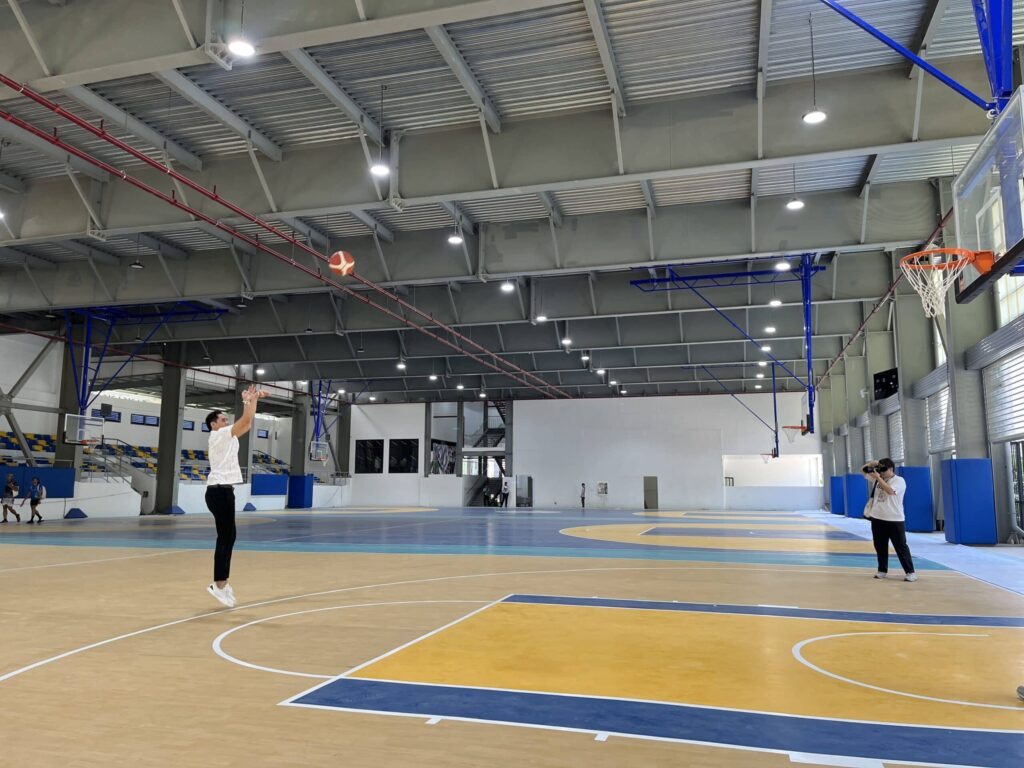
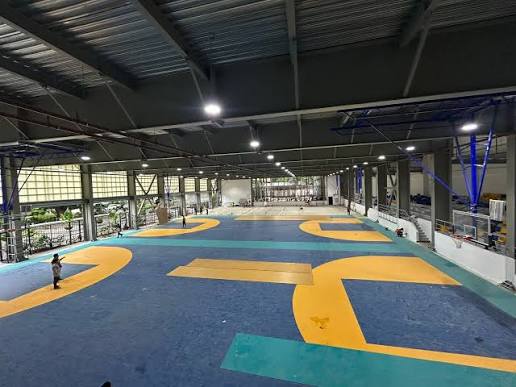
      The facility is designed to cater to everyone from seasoned athletes to casual players. For team sports, there’s a tennis court with premium Tiger Turf Elite grass from New Zealand, FIBA-standard indoor basketball courts, volleyball courts, pickleball courts, and six dedicated badminton courts.

      For individual pursuits, there are spaces for table tennis, an indoor archery range, and billiard tables. The complex also features a serene yoga studio, a martial arts studio, a tennis simulator for immersive training, and a fully equipped wellness gym.

      Food kiosks and parking for over 100 vehicles add convenience. Whether you’re into basketball, badminton, pickleball, or yoga, Magnum has you covered under one roof.


      Masters Ballpark by Gameville: Coming Soon

      Scheduled to open in December 2026, Masters Ballpark by Gameville is another major development worth keeping on your radar. This PHP 100 million sports and lifestyle facility is a joint venture between Cebu Landmasters and GV Sports Facilities.

      The centerpiece will be Cebu’s only twin wooden basketball courts (one airconditioned), both convertible for volleyball, badminton, pickleball, and community events. The facility will also feature a state-of-the-art weights facility, a recovery center operated by Flex Recovery, an on-site barbershop, a sports merchandise store, and a premium sports bar.

      Strategically located along Banilad Road, it’s just minutes from Cebu IT Park and Cebu Business Park, making it highly accessible. If basketball is your sport, this will be the place to be.


      Guild of Runners: For the Running Community

      If running is your thing, Cebu has a dedicated community waiting for you. The Guild of Runners Fitness Studio is the first and only running-centered gym in Cebu, and possibly the only one in the entire Philippines.

      Located on the third floor of Caiaa Center at Vibo Place on N. Escario Street, the studio offers structured training sessions that work on endurance, strength, and speed. The coaches keep tabs on your progress and advise on pacing for upcoming races.

      What sets the Guild apart is the community. Members describe it as a close-knit group of genuine, humble people who support each other regardless of pace. The studio also hosts Saturday run clubs, which are a great way to meet fellow runners.

      For those who prefer running solo but want to join the broader community, the Cebu Executives Runners Club (CERC) organizes the annual Cebu Marathon, which now draws 12,000 registered runners including a strong contingent of international participants. The marathon has drawn runners from Japan, the United States, South Korea, Australia, the UK, Germany, Canada, and beyond.

      There’s also the Breakaway Runners Club (BARC), an independent, non-profit multi-sports team founded by dedicated runners in Cebu City. Whether you’re a beginner or a seasoned marathoner, Cebu’s running community is welcoming and active.


      Pilates and Yoga: For Mindful Movement

      For those who prefer low-impact fitness, Cebu has a growing Pilates and yoga scene.

      Atleta Pilates is one of Cebu’s established Pilates studios, offering structured programs for beginners up to advanced clients. Located at Latitude Corporate Center in Cebu Business Park and at Meridian by Avenir in Kasambagan, the studio focuses on overall wellness, combining strength, flexibility, and mindful movement. Starter packages range from PHP 2,500 to PHP 7,000, with private sessions available.

      Y Pilates Cebu offers a more personalized and supportive training environment, ideal for beginners and those looking for a mindful fitness routine. Located at One Paseo in Paseo Saturnino, the studio emphasizes listening to the body. Solo sessions range from PHP 1,800 to PHP 16,500.

      Balancea Cebu is a community-driven fitness space founded by sisters who promote movement as both wellness and lifestyle. The studio blends Pilates with yoga-inspired and strength-based classes, with single reformer classes at PHP 899.

      For yoga, Bliss Yoga Cebu offers all-day classes and private sessions for both beginners and advanced practitioners, with styles including vinyasa, ashtanga, hatha, power yoga, and gentle flow. Mindful Yoga positions itself as a sanctuary for self-discovery and holistic living.


      Putting It All Together

      Cebu’s sports and fitness scene has something for everyone, whether you’re a serious athlete, a casual weekend warrior, or someone just looking to stay active.

      If you want one club that does it all and don’t mind the cost, City Sports Club Cebu is your best bet. If you’re a tennis player who values flexibility, Asmara Tennis Association offers quality courts without the commitment. If you’re into team sports or newer trends like pickleball, Magnum Sports Complex and the upcoming Masters Ballpark have you covered. If running is your passion, the Guild of Runners and the broader running community will welcome you with open arms. And if you prefer mindful, low-impact movement, Cebu’s growing Pilates and yoga studios offer plenty of options.

      The best part? You don’t have to choose just one. Many expats mix and match—a gym membership here, a tennis session there, a Saturday run club on the side. The community is welcoming, the facilities are improving every year, and the tropical weather means you can stay active year-round.

      So whether you’re a golfer looking to branch out or someone who never picked up a club in the first place, Cebu has more than enough to keep you moving.

        Author
        John Paul Ybañez Paquibot
        Licensed Real Estate Broker | PRC No. 00014132 | DHSUD No. CVRFO-B-03/18-2672
        Bachelors Realty and Brokerage, Inc. Cebu
        G/F Cap Building, Brgy. Corner, Osmeña Blvd.
        Arlington Pond St. Extension, Cebu City, 6000 Cebu
      • Beginner’s Guide to Golf in Cebu: Where to Play, Rent Clubs & Take Lessons

        So you’re thinking about picking up golf in Cebu. Good choice. The island has a surprisingly vibrant golf scene, and unlike many other places in Asia, it’s relaxed, unhurried, and genuinely welcoming to newcomers. The pace of play is slow, the courses aren’t overcrowded, and the service is friendly.

        But starting out can be intimidating. Which courses are beginner-friendly? Can you rent clubs? How do you find a good instructor? Here’s an honest, no-nonsense guide to getting started.


        Where to Play: The Best Courses for Beginners

        Not all golf courses are created equal, and as a beginner, you want somewhere that won’t punish every single mistake. Here are the courses in Cebu that are genuinely welcoming to newcomers.

        Mactan Island Golf Club

        If you’re a beginner, this is probably your best bet. Located right beside Mactan-Cebu International Airport, it’s incredibly convenient. The course features a relaxed ambiance, flat fairways, and wide-open spaces, making it ideal for beginners or a casual round. The terrain is mostly flat, so you won’t be exhausted before you even finish the front nine. It’s also worth noting that the course has a driving range and practice putting green.

        One reviewer mentioned bringing two beginners along, and the caddy patiently taught them throughout the round. That’s the kind of experience you want when you’re just starting out. The course is simple, flat, and enjoyable for players of all ages.

        Club Filipino de Cebu

        Located about 20 minutes from Cebu City, Club Filipino de Cebu is considered one of the most beginner-friendly golf courses in the area. It embodies the spirit of local golf, where the sport is seen as an everyday activity connected to the community rather than something exclusive. The atmosphere is relaxed, and the staff are known for being welcoming to players of all skill levels. Middle to high handicappers will find the course particularly enjoyable when played from the white tees, offering a balance of challenge and playability.

        Cebu Country Club

        Now, here’s the honest truth. Cebu Country Club is the most famous golf course in Cebu, established in 1928 and redesigned by Gary Player. It’s a stunning course with narrow, tree-lined fairways that demand accuracy. The greens are consistent in speed, and the course emphasizes strategy and course management rather than brute force. It’s best suited for mid to low-handicap players.

        Can a beginner play here? Yes, but be prepared to lose some balls. The course is flat and can be enjoyed even by beginners, but the narrow fairways mean you’ll need to keep the ball straight. If you’re completely new to the game, it might be more frustrating than fun. Save this one for when you’ve had a few months of practice.

        Alta Vista Golf & Country Club

        Perched on a hillside 500 feet above sea level, Alta Vista offers breathtaking panoramic views of Cebu City, Mactan Island, and the Bohol Strait. The course was designed by Gary Player’s Black Knight Design Group and features hilly terrain with significant elevation changes. The layout curves along the hillside, with many holes requiring precise club selection rather than long shots.

        Is it for beginners? It can be, but it’s challenging. The course is generally recommended for intermediate to experienced golfers, especially those with a handicap of around 10 to 20. The caddies are friendly and give a lot of tips, which helps, but the hills and wind make it a tough introduction to the game.

        Liloan Golf and Leisure Estate

        A newer addition to Cebu’s golf scene, Liloan combines modern design with natural landscapes. It’s currently a 9-hole course located just north of Cebu City, with plans to expand to 18 holes. The relaxed atmosphere and well-maintained facilities make it worth considering for beginners.


        Where to Rent Clubs

        Here’s some good news: you don’t need to buy a full set of clubs just to try the sport. Most of Cebu’s major golf courses offer club rental services.

        Cebu Country Club offers club and shoe rental on-site. The pro shop is well-stocked, and you can arrange rentals when you book your tee time.

        Alta Vista Golf and Country Club also provides club and shoe rental. The club offers rentals including golf sets, shoes, and even umbrellas. If you don’t have your own equipment, you can arrange rentals on-site.

        Mactan Island Golf Club and Club Filipino de Cebu also offer rental services, though you may want to call ahead to confirm availability.

        The general rule across most courses is that rental clubs are available, but the selection might be limited. If you’re particular about your equipment—or if you’re left-handed—it’s worth calling the pro shop in advance to check what they have.


        Where to Take Lessons

        Taking lessons is the smartest thing a beginner can do. Trying to figure out the swing on your own usually leads to bad habits that are hard to break later.

        At the Golf Courses

        Most of the major clubs offer golf lessons. Cebu Country Club has practice facilities and professional instructors available. Alta Vista offers golf lessons with practice facilities including a driving range, putting green, and chipping area. Club Filipino de Cebu has a well-maintained driving range where players can practice their swing.

        Driving Ranges and Practice Facilities

        If you’re not ready to commit to a full course lesson, driving ranges are a great place to start. Camp Lapu Lapu Golf Driving Range is an ideal spot for beginner golfers looking to hone their skills. It offers affordable rates, with buckets of balls priced at 25 pesos each and an hourly fee of 250 pesos.

        Cebu International Golf & Resort in Badian features a state-of-the-art driving range where players can warm up or work on their swing with the help of a professional instructor.

        Golf Tour Operators

        Companies like GolfLux specialize in golf packages and can help organize lessons as part of a broader golf experience. This can be a convenient option if you want a package deal that includes green fees, rentals, and instruction.


        Practical Tips for Beginners

        Start at the Driving Range

        Before you step onto a course, spend time at a driving range. It’s cheaper, less intimidating, and you can hit dozens of balls in the time it would take you to play a few holes. Work on your grip, stance, and basic swing mechanics before worrying about course strategy.

        Book in Advance

        During the dry season from November to May, and especially during December and January, tee times fill up fast. Book at least a few days ahead, and if you’re playing on a weekend, book even earlier.

        Understand the Caddy System

        Caddies are standard at most Cebu golf courses. They carry your bag, help with club selection, read the greens, and offer advice. For beginners, a good caddy is invaluable—they’ll keep you moving, help you find lost balls, and give you tips on course management. Tipping is customary, so plan for around PHP 250 to PHP 500 per round.

        Dress Appropriately

        Most clubs enforce a dress code. Collared shirts, golf shorts or pants, and soft-spike golf shoes are standard. No denim, no sleeveless shirts, and no hard spikes. Lightweight, breathable fabrics are your friend in Cebu’s tropical climate.

        Bring Sun Protection

        The sun in Cebu is intense year-round. Sunscreen, sunglasses, and a hat are essential. Many golfers also carry a lightweight rain jacket during the wet season (June to October), as afternoon showers can appear suddenly.

        Don’t Worry About Being Bad

        Everyone was a beginner once. The golf community in Cebu is friendly and welcoming, and the courses aren’t crowded or competitive. Take your time, enjoy the scenery, and don’t put too much pressure on yourself. Golf is supposed to be fun.


        Getting Started: A Simple Plan

        If you’re completely new to golf, here’s a simple roadmap:

        1. Visit a driving range like Camp Lapu Lapu. Hit a few buckets of balls just to get a feel for the swing.
        2. Book a lesson at one of the clubs. A single hour with a professional will save you months of frustration.
        3. Play your first round at Mactan Island Golf Club or Club Filipino de Cebu. The flat terrain and forgiving layout will make the experience enjoyable rather than punishing.
        4. Rent clubs until you’re sure you want to commit. Most courses offer rentals, so there’s no need to invest in equipment right away.
        5. Gradually explore other courses as your confidence and skill improve.

        Cebu is one of the best places in Southeast Asia to learn golf. The courses are beautiful, the pace is relaxed, and the community is welcoming. All you need to do is show up.

          Author
          John Paul Ybañez Paquibot
          Licensed Real Estate Broker | PRC No. 00014132 | DHSUD No. CVRFO-B-03/18-2672
          Bachelors Realty and Brokerage, Inc. Cebu
          G/F Cap Building, Brgy. Corner, Osmeña Blvd.
          Arlington Pond St. Extension, Cebu City, 6000 Cebu
        • Cebu Country Club vs. Alta Vista: Which Golf Course is Right for You? – SeekCebu

          If you’re an expat golfer in Cebu, you’ve probably heard the names whispered with a mix of reverence and curiosity: Cebu Country Club and Alta Vista Golf & Country Club. They’re the two heavyweights of Cebu’s golf scene, but they couldn’t be more different. Choosing between them isn’t just about picking a place to play—it’s about choosing a completely different golfing experience.

          Here’s an honest, side-by-side look to help you decide which one fits your game, your budget, and your lifestyle.


          Location and Setting

          Cebu Country Club sits right in the heart of Banilad, one of Cebu City’s busiest districts. It’s remarkably convenient—about 15 minutes from most parts of the city. What’s surprising is how the club manages to feel like an escape despite being surrounded by urban energy. You drive through the gates and suddenly you’re in a lush, mature parkland that feels a world away from the traffic outside.

          Alta Vista, on the other hand, is perched on a hillside in Pardo, overlooking Cebu City. It’s still accessible—roughly 20 to 30 minutes from the city center—but the journey involves climbing higher and higher until the city sprawls out beneath you. The panoramic views from Alta Vista are nothing short of spectacular: Cebu City, Mactan Island, and the Bohol Strait all visible from the course. Some reviewers compare the scenery to California.

          The verdict on location: Choose Cebu Country Club if convenience and proximity to the city matter most. Choose Alta Vista if you’re willing to drive a bit further for breathtaking views and a cooler mountain climate.


          Course Design and Difficulty

          Cebu Country Club is a classic. Established in 1928, it’s the oldest golf course in Cebu and carries a rich history. The course was redesigned by legendary architect Gary Player, who turned it into a stern test of precision. The terrain is mostly flat to gently rolling, but don’t let that fool you. The fairways are narrow and lined with ancient, mature trees that severely punish any shot that strays offline. Accuracy matters far more than distance here. The greens are small and fast, guarded by strategically placed sand traps and water features often enhanced with coral rock. This is a course that rewards strategy, patience, and course management. It’s best suited for mid to low-handicap players who enjoy classic layouts and tactical play.

          Alta Vista offers a completely different challenge. Built on natural hills, the course winds along a mountainside with significant elevation changes. You’ll find yourself teeing off from boxes with dramatic drops below, which makes things really interesting. It’s not an exceptionally long course, but the hilly terrain and the wind factor make club selection critical on every shot. Some reviewers describe it as “tricky”—one player reported losing more than a dozen balls in a single round. The views are incredible, but the course demands your full attention. It’s generally recommended for intermediate to experienced golfers who enjoy a challenge that’s as much about adapting to the terrain as it is about swing mechanics.

          The verdict on difficulty: Cebu Country Club tests your accuracy and mental game. Alta Vista tests your adaptability and ability to handle elevation, wind, and unpredictable lies. Both are challenging, but in very different ways.


          Green Fees and Accessibility

          This is where the two courses diverge significantly.

          Cebu Country Club is a proprietary, member-only club at its core. Public access is available, but it comes at a premium guest or tourist rate. As of recent rates (June 2024), club guest fees are significantly higher on weekends and holidays than on weekdays. For non-members, booking is typically facilitated through the club’s Pro Shop or external golf agencies. Some sources mention green fees around PHP 2,000 for weekdays and PHP 3,500 for weekends, though these figures may vary. The caddy fee is mandatory, and a golf cart is also mandatory for guests and tourists—often included in the high tourist green fee.

          Alta Vista is more transparent and accessible. Green fees are clearly published: weekdays are PHP 2,800 for 18 holes and PHP 1,400 for 9 holes; weekends jump to PHP 4,600 for 18 holes and PHP 2,300 for 9 holes. While still expensive, the pricing is predictable and easier to budget for.

          The verdict on accessibility: If you’re a casual player or just visiting, Alta Vista is far easier to access with transparent pricing. Cebu Country Club is more exclusive and requires more effort—and money—to play as a non-member.


          Membership Costs

          For those considering long-term commitment, the numbers are sobering.

          Cebu Country Club doesn’t publicly advertise its membership fees, which adds to its air of exclusivity. Historically, the entrance fee was PHP 75 with monthly dues of PHP 15 per month—back when one peso could feed a family for a day. Those days are long gone. Today, expect initiation fees to run into the hundreds of thousands of pesos, with monthly dues on top.

          Alta Vista is more open about its costs. Golf share prices range from PHP 500,000 to PHP 1,500,000 or higher, depending on availability and demand. Monthly dues typically range from PHP 5,000 to PHP 15,000, covering facility upkeep and services.

          Here’s a crucial point that catches many people off guard: owning property inside Alta Vista does not automatically grant you golf membership. You still need to purchase a separate golf share and pay the corresponding fees.

          The verdict on membership: Both are significant financial commitments. Alta Vista is more transparent about its pricing; Cebu Country Club maintains an air of mystery that reflects its exclusivity.


          Atmosphere and Vibe

          Cebu Country Club feels traditional, established, and somewhat formal. It’s the social and sporting centerpiece of Cebu’s elite. The clubhouse is well-appointed, with clay court tennis facilities, a swimming pool, and diverse dining options. The dress code is strict—denim and collarless shirts are not permitted. This is a place where history matters, and the atmosphere reflects that.

          Alta Vista feels more like a lifestyle community than just a golf club. The atmosphere is more relaxed, the staff are known for their warmth and hospitality, and the overall vibe is one of resort-style living. Beyond golf, there are swimming pools, tennis courts, and a clubhouse with dining options that serve as a hub for social activities. Some reviewers note that the facilities, food, and overall experience at Alta Vista actually surpass those at Cebu Country Club.

          The verdict on atmosphere: Choose Cebu Country Club if you appreciate tradition, formality, and a sense of history. Choose Alta Vista if you prefer a more relaxed, community-oriented vibe with spectacular views.


          The Caddy Experience

          Both clubs require caddies, and the experience is part of what makes golf in the Philippines unique.

          At Cebu Country Club, caddies are essential for navigating the complex greens and reading the tight lines of the tree-lined holes. Their local knowledge is invaluable on a course where accuracy is everything.

          At Alta Vista, caddies are equally important, especially given the tricky terrain and elevation changes. Tipping is customary at both clubs—plan for around PHP 250 to PHP 500 per round, depending on the level of service.


          So, Which One is Right for You?

          Here’s the honest bottom line:

          Choose Cebu Country Club if:

          • You value convenience and proximity to the city
          • You’re a mid to low-handicap player who enjoys precision and strategy
          • You appreciate tradition, history, and a formal atmosphere
          • You’re willing to pay a premium for exclusivity
          • You have the connections or resources to secure access as a non-member

          Choose Alta Vista if:

          • You want breathtaking panoramic views as part of your round
          • You enjoy a challenge that involves elevation, wind, and adapting to terrain
          • You prefer a more relaxed, resort-style atmosphere
          • You want transparent pricing and easier access as a guest
          • You’re considering a long-term investment in a lifestyle community

          Still undecided? Play both. Book a round at Alta Vista first—it’s easier to arrange and the green fees are predictable. Then, if you can, arrange a guest round at Cebu Country Club through a member or a golf tour operator. Experience the difference for yourself. One round at each will tell you everything you need to know about which course feels like home.

          One final piece of advice: whichever you choose, book in advance, especially during the dry season from November to May. Bring sun protection, stay hydrated, and embrace the caddy system. Golf in Cebu is about more than just the sport—it’s about the experience, the community, and the lifestyle. And both of these courses deliver that in spades.

          “I help many expats and investors find homes in Cebu that align with their lifestyle—including proximity to the city’s best fairways. If you are looking for property in Banilad near the Country Club or hillside homes near Alta Vista, send me a message. Let’s discuss your needs and find the perfect base for your Cebu lifestyle.”

            Author
            John Paul Ybañez Paquibot
            Licensed Real Estate Broker | PRC No. 00014132 | DHSUD No. CVRFO-B-03/18-2672
            Bachelors Realty and Brokerage, Inc. Cebu
            G/F Cap Building, Brgy. Corner, Osmeña Blvd.
            Arlington Pond St. Extension, Cebu City, 6000 Cebu

          • The Ultimate Guide to Golf in Cebu: Top Courses, Membership Fees & Tips for Expats (2026) – SeekCebu

            When people think of Cebu, they usually picture white sand beaches, turquoise water, and tropical islands. But for those who know, Cebu is quietly becoming one of the most appealing golf destinations in Southeast Asia. The golf scene here is different from the crowded, competitive atmosphere you might find in Manila or other major Asian golf hubs. It’s relaxed, unhurried, and built around the idea that golf should be part of a balanced lifestyle—not just a sport.

            What sets Cebu apart is how the courses are integrated into the natural landscape. Hills, trees, and the warm tropical climate all come together to create a golfing experience that’s both challenging and genuinely enjoyable. The pace of play tends to be slower, the courses are rarely overcrowded, and the service is consistently friendly. For expats looking to settle in Cebu, golf isn’t just a weekend hobby—it’s a way to connect with the community and enjoy the island lifestyle.

            Here’s an honest breakdown of what you need to know.


            The Top Golf Courses in Cebu

            Cebu Country Club

            If there’s one course that defines golf in Cebu, it’s Cebu Country Club. Established in 1928 by expatriates, it’s the oldest golf course on the island and carries a rich history. Located just about 15 minutes from Cebu city center, it’s incredibly convenient for anyone living in or near the city.

            The course itself is a classic, mature parkland layout with tree-lined fairways and a traditional feel. The fairways are relatively narrow, with large trees on both sides, which means accuracy matters far more than distance. The greens are consistent in speed, demanding attention to your short game and putting. This isn’t a course where you can just swing hard and hope for the best—it rewards strategy, patience, and course management.

            The atmosphere at Cebu Country Club is professional and polite, with a well-equipped clubhouse. It’s best suited for mid to low-handicap players who appreciate a classic layout and tactical play. While it’s a prestigious club, it has transitioned over the years to be more accessible to guests and tourists—though you’ll pay a premium for that access.

            Alta Vista Golf & Country Club

            Perched on a hillside overlooking Cebu City, Alta Vista offers a completely different experience. The elevated terrain means you’ll feel the altitude and the wind on every shot, and the panoramic views of the city, Mactan Island, and the Bohol Strait are nothing short of spectacular.

            The course layout curves along the hillside, with many holes requiring precise club selection rather than sheer power. Some of the par 3s and par 4s leave a lasting impression, especially when played in the early morning or late afternoon light. It’s generally recommended for intermediate to experienced golfers, particularly those with a handicap around 10 to 20. It’s challenging enough to feel rewarding, but not so punishing that it becomes frustrating.

            Alta Vista transitioned from being strictly members-only to a semi-private club, making it more accessible to visiting golfers. However, don’t mistake “semi-private” for “cheap”—membership here is a significant investment.

            Club Filipino de Cebu

            Located about 20 minutes from Cebu City, Club Filipino de Cebu is often described as one of the most beginner-friendly courses in the area. It embodies the spirit of local golf, where the sport is treated as an everyday activity connected to the community.

            The course is an 18-hole, par-72 layout situated in the hilly terrain of Danao City, about an hour north of Cebu. The natural terrain creates interesting elevation changes and unique holes that keep the game engaging. It’s a great option if you want a more relaxed, community-oriented golf experience without the stuffiness of a private club.

            Mactan Island Golf Club

            For those living on or near Mactan Island, or for travelers arriving at Mactan-Cebu International Airport, this course is incredibly convenient. Located right beside the airport, it’s a par-71 course with flat, narrow fairways and coral stones scattered around the playing areas.

            The terrain is generally flat, making it an easy walk, and the relaxed ambiance is perfect for a casual round. It’s ideal for beginners or anyone looking for a low-stress game close to the airport.

            Liloan Golf and Leisure Estate

            A newer addition to Cebu’s golf scene, Liloan is currently a 9-hole course located just over 20 kilometers north of Cebu City. However, plans are underway to expand it to a full 18-hole championship course. It’s being developed as part of a larger eco-tourism and residential project, so it’s worth keeping an eye on if you’re looking for something more modern and serene.


            Membership Fees: The Honest Reality

            Let’s be direct about the costs. Golf in Cebu isn’t cheap, and the membership fees reflect the exclusivity and prestige of these clubs.

            Cebu Country Club remains highly regarded as a proprietary, member-only club. While public access is available, it comes at a premium guest or tourist rate. Exact membership figures aren’t publicly advertised, but expect initiation fees that run into the hundreds of thousands of pesos, with monthly dues on top.

            Alta Vista Golf & Country Club is perhaps the most transparent about its pricing. Golf share prices can range anywhere from PHP 500,000 to PHP 1,500,000, depending on availability and demand. And that’s just the initial investment. Monthly dues typically range from PHP 5,000 to PHP 15,000, covering the upkeep of the facilities and services.

            A crucial point to understand: owning property inside Alta Vista does not automatically grant you golf membership. You still need to purchase a separate golf share and pay the corresponding fees. This is a common misunderstanding among prospective buyers.

            For Club Filipino de Cebu, membership is generally more accessible, though specific figures aren’t widely published.

            If you’re not ready to commit to a full membership, green fees are an option. At Alta Vista, weekday green fees for 18 holes are around PHP 2,800, while weekends and holidays jump to PHP 4,600. At Cebu Country Club, non-members pay premium rates, though specific figures are typically available upon inquiry.

            For context, green fees across Cebu courses generally range from PHP 2,000 to PHP 8,000 or more, depending on the course, the day of the week, and the time of year.


            Essential Tips for Expats

            Book in Advance During Peak Season

            The dry season runs from November to May, with December and January being peak tourist months. If you’re planning to play during this time, book your tee times well in advance. The rainy season (June to October) is more budget-friendly, and courses are generally well-drained and playable even after a downpour.

            Understand the Caddy System

            Caddies are a standard part of the golfing experience in the Philippines. They’re knowledgeable about the courses, can help with club selection, and are an integral part of the game. Tipping is customary and appreciated—plan for around PHP 250 to PHP 500 per round, depending on the course and level of service.

            Dress Code Matters

            Cebu’s golf clubs maintain traditional dress codes. Collared shirts, golf shorts or pants, and soft-spike golf shoes are standard. Avoid denim, sleeveless shirts, and hard spikes. The tropical climate means lightweight, breathable fabrics are your friend.

            Bring Sun Protection

            The Cebu sun is intense year-round. Sunscreen, sunglasses, and a hat or visor aren’t optional—they’re essential. Many expats also carry a lightweight rain jacket during the wet season, as afternoon showers can appear suddenly.

            Consider Golf Packages

            If you’re not ready to commit to a membership, golf tour operators like GolfLux offer packages that combine rounds at multiple courses. These can be a cost-effective way to experience Cebu Country Club, Alta Vista, and Queen’s Island Golf & Resort without the long-term financial commitment.

            Join the Expat Golf Community

            Golf is one of the best ways to meet people in Cebu. The expat golf community is active and welcoming, with regular tournaments, social events, and casual rounds. Don’t be shy about asking members about upcoming events—the golf scene here is about community as much as competition.


            Is It Worth It?

            The honest answer: it depends on your budget and priorities. If you’re a serious golfer planning to live in Cebu long-term, the membership fees at clubs like Cebu Country Club or Alta Vista are a significant but justifiable investment. You’re not just paying for golf—you’re paying for access to a community, a lifestyle, and some of the most scenic courses in Southeast Asia.

            If you’re more of a casual player or still testing the waters, green fees and golf packages offer a flexible alternative. You’ll pay more per round, but you won’t be locked into a long-term financial commitment.

            Either way, Cebu’s golf scene is one of the island’s hidden gems. The courses are world-class, the atmosphere is relaxed, and the community is genuinely welcoming. For expats, it’s not just about the sport—it’s about finding your place in the Queen City of the South.

              Author
              John Paul Ybañez Paquibot
              Licensed Real Estate Broker | PRC No. 00014132 | DHSUD No. CVRFO-B-03/18-2672
              Bachelors Realty and Brokerage, Inc. Cebu
              G/F Cap Building, Brgy. Corner, Osmeña Blvd.
              Arlington Pond St. Extension, Cebu City, 6000 Cebu

            • Beach Lot vs. Farm Lot in Southern Cebu: An Honest Guide – SeekCebu

              You’re looking at southern Cebu. Maybe you’ve driven down the coast, past the rolling hills of Argao, through the dive-town energy of Moalboal, all the way to the whale sharks of Oslob. And now you’re thinking: I want a piece of this.

              But here’s the question that stops most people cold: beach or farm? A strip of sand with a view of the sea, or a chunk of green earth with room to breathe?

              It sounds like a lifestyle choice. It’s actually a financial decision with very different rules, very different risks, and very different outcomes. This guide breaks down what you’re actually buying with each option—and what nobody tells you until it’s too late.

              Part 1: The Fundamental Difference Nobody Explains

              Let’s start with the most important distinction: a beach lot and a farm lot are not the same kind of asset.

              A beach lot, at least in the way most people imagine it, is usually classified as residential or commercial land. You’re buying it to build something—a house, a villa, a resort. The value comes from location, views, and proximity to the sea.

              A farm lot is agricultural land. It’s designated for growing crops, raising livestock, or other primary production activities. The value comes from the land itself—soil quality, water access, and productive potential. You can build on it, but that requires navigating a process that many buyers don’t fully understand until they’re already committed.

              The honest take: These are different asset classes with different legal frameworks, different cost structures, and different timelines. Comparing them purely on price per square meter misses the point entirely.

              Part 2: The Price Reality

              Here’s where the numbers get interesting.

              In southern Cebu, beachfront lots in towns like Moalboal, Oslob, and Badian typically range from PHP 4,000 to PHP 9,000 per square meter, depending on frontage and access. That’s significantly cheaper than Mactan, where beachfront land has skyrocketed. But even at those prices, you’re paying a premium for the view and the sand.

              Farm lots, by contrast, can be dramatically cheaper. In rural areas of southern Cebu, agricultural land can range from as low as PHP 50 to PHP 500 per square meter, depending on access, soil quality, and proximity to infrastructure. In Argao, for example, you can find residential farm lots listed at PHP 750 per square meter. A 500-square-meter farm lot in the south might cost you what a 50-square-meter beach lot would cost.

              But here’s the catch: that cheap farm lot is raw. Really raw. No electricity. No water connection. No road access. Maybe not even a clear path to get there. The development costs—clearing land, building access roads, installing utilities, digging a well—can quickly erase any upfront savings.

              The honest take: Beach lots cost more per square meter but usually come with better infrastructure access. Farm lots are cheaper upfront but the development costs can be brutal. Don’t compare the sticker prices—compare the all-in cost to make each property usable for your actual goal.

              Part 3: What You Can Actually Do With It

              Beach lot potential

              A beach lot in southern Cebu is an income-generating machine if you play it right. Tourism is booming in the south. Oslob draws visitors for whale sharks. Moalboal attracts divers from around the world. Badian is famous for canyoneering and Kawasan Falls. Short-term rentals in these areas have consistent demand from local and foreign tourists.

              The math works like this: build a villa or cottage, list it on Airbnb or similar platforms, and earn income from the tourism economy. Rental yields in Cebu’s tourism hotspots can range from 6 to 12 percent annually, depending on location and property type.

              But there’s a ceiling. You’re competing with established resorts, other vacation rentals, and increasingly, larger developers eyeing the same coastline. And the land itself is finite—what’s beachfront today is beachfront forever, which means prices tend to appreciate, but it also means entry costs keep rising.

              Farm lot potential

              A farm lot offers a completely different set of possibilities. You can farm it—growing high-value crops, raising livestock, or pursuing agro-tourism. Some Cebu farmers are earning PHP 200,000 to PHP 300,000 in net profit per month from well-managed operations.

              You can also develop it as a “farm subdivision”—a growing trend in Cebu where buyers purchase agricultural lots with the understanding that only a portion (typically around 25 percent) can be used for residential construction, with the remainder preserved for cultivation and green space.

              Or you can try to convert it to residential or commercial use. This is where it gets complicated.

              The honest take: A beach lot gives you a clear path to income through tourism. A farm lot gives you more options—farming, agro-tourism, residential development—but each option comes with its own regulatory maze and timeline.

              Part 4: The Legal Landmine Nobody Warns You About

              Here’s where the beach lot vs. farm lot decision gets really serious.

              Beach lots and the foreshore problem

              Many “beachfront” properties in the Philippines sit on foreshore land—areas right next to the sea that are part of the public domain. These are regulated by the Department of Environment and Natural Resources and cannot be privately titled, whether you’re Filipino or foreigner. What you’re really buying is access rights, not ownership.

              If you’re a foreigner, the situation is even more constrained. Foreign nationals cannot directly own land in the Philippines under the 1987 Constitution. Land ownership is strictly reserved for Filipino citizens and corporations that are at least 60 percent Filipino-owned. Your options are limited to long-term leasing (up to 99 years for qualified investors, 25 years renewable for another 25 for others), condominium ownership (which doesn’t apply to raw land), or corporate structures with Filipino majority control.

              Farm lots and the conversion problem

              Agricultural land in the Philippines is protected by law. The Comprehensive Agrarian Reform Law (CARL) of 1988 regulates the conversion of agricultural lands to non-agricultural uses. The Department of Agrarian Reform is the primary agency responsible for overseeing this process.

              If you buy a farm lot thinking you’ll build a house on it, you’re in for a shock. Converting agricultural land to residential use requires securing a Conversion Clearance from the DAR—a process that can take six to twenty-four months and incur significant fees. You’ll need to submit proof of ownership, land use maps, and detailed plans for the proposed project.

              And the political winds are shifting against conversion. Multiple bills have been filed in Congress seeking to ban or severely restrict the conversion of irrigated and irrigable agricultural lands. Illegal land conversion can lead to imprisonment of seven to twelve years and fines of up to PHP 100,000.

              The honest take: If you’re a foreigner, a beach lot means you’re leasing, not owning. If you’re buying a farm lot with dreams of building a retirement home, you need to understand that conversion is not guaranteed, not quick, and not cheap.

              Part 5: The Risks You Can’t Ignore

              Beach lot risks

              The sea is beautiful. It’s also destructive. Beachfront properties are ground zero for storm surges and wind damage. Typhoons hit the Philippines regularly, and southern Cebu is not exempt. Coastal erosion is relentless—what’s a twenty-meter beach today might be ten meters in a decade.

              Environmental regulations are getting stricter. The DENR is increasingly proactive about enforcing shoreline easements and protected area rules. Buy a property that’s out of compliance and you’re buying a legal headache.

              And then there’s the noise. In some beachfront areas, the local tradition of videoke can be deafening on weekends. Don’t buy without spending a Friday and Saturday night in the neighborhood.

              Farm lot risks

              The biggest risk with a farm lot is assuming you can do whatever you want with it. You can’t. The land classification determines what you can build, and changing that classification is a long, uncertain process.

              There’s also the infrastructure gap. Many farm lots in southern Cebu lack reliable access to electricity, water, and internet. Bringing in utilities can cost hundreds of thousands of pesos. Building materials cost more in remote areas because of transport.

              And if you’re planning to actually farm the land, you need to understand soil quality, water availability, and market access. Not all agricultural land is equally productive.

              The honest take: Beach lots carry environmental and regulatory risks. Farm lots carry development and conversion risks. Neither is “safer”—they’re just risky in different ways.

              Part 6: The Decision Framework

              So which one should you choose? The answer depends entirely on what you’re trying to achieve.

              Choose a beach lot if:

              • You want to generate income from tourism (short-term rentals, resort development)
              • You understand that you’re leasing the land if you’re a foreigner
              • You’ve budgeted for higher maintenance costs (salt air corrodes everything)
              • You’ve spent time in the area during both tourist season and off-season
              • You’ve verified the property isn’t on foreshore land that can’t be titled

              Choose a farm lot if:

              • You want more land for your money (larger lot sizes, lower per-square-meter costs)
              • You’re actually interested in farming, agro-tourism, or a farm subdivision model
              • You understand the conversion process and have the patience (and capital) to navigate it
              • You’re Filipino or have a clear legal structure for land ownership
              • You’re willing to invest in infrastructure development

              Choose neither if:

              • You’re a foreigner looking to buy raw land outright—you can’t
              • You think you’ve found a legal loophole—you haven’t
              • You haven’t visited the property in person, during both dry and rainy seasons
              • You’re buying based on “sure thing” appreciation promises
              • You haven’t checked the actual land classification with the local government

              Final Thoughts

              Southern Cebu is one of the most exciting property markets in the Philippines. The tourism boom is real. The infrastructure is improving. The potential is genuine.

              But beach lots and farm lots are not interchangeable. They serve different purposes, operate under different legal frameworks, and carry different risks. A beach lot in Moalboal and a farm lot in Argao might be twenty kilometers apart, but they’re worlds away in terms of what you can actually do with them.

              The biggest mistake you can make is buying either one without understanding what you’re actually getting. Before you sign anything, verify the land classification. Check the title. Understand the zoning. If you’re a foreigner, know exactly what you can and cannot own. And never—ever—assume that cheap land means easy development.

              The dream of owning property in southern Cebu is achievable. But it’s achieved by people who do their homework, not by people who chase the cheapest price per square meter.

              Do the work. Visit the site. Talk to the neighbors. Check the regulations. And then, and only then, make your decision.

              Pro Tip: The Overnight Test

              Before you commit to any property in southern Cebu—beach or farm—spend at least two full days and one night in the immediate area. Not at a resort. In the neighborhood. Walk the roads at different times. Listen for noise. Talk to local residents. Check the water pressure. Test the mobile signal. A Tuesday morning visit tells you nothing about what Saturday night sounds like or whether the road is passable after heavy rain. The property won’t change. But your understanding of what you’re actually buying will.

                Author
                John Paul Ybañez Paquibot
                Licensed Real Estate Broker | PRC No. 00014132 | DHSUD No. CVRFO-B-03/18-2672
                Bachelors Realty and Brokerage, Inc. Cebu
                G/F Cap Building, Brgy. Corner, Osmeña Blvd.
                Arlington Pond St. Extension, Cebu City, 6000 Cebu

              • Industrial Real Estate Hubs in Cebu: An Honest Guide for Investors – SeekCebu

                Most people think of Cebu as a tourism destination. White sand beaches. Whale sharks. The Sinulog Festival. But behind the postcard images, something else is happening—Cebu is quietly becoming the Philippines’ most important industrial real estate market outside Metro Manila.

                The numbers tell the story. Cebu has the lowest warehouse vacancy rate among the country’s industrial hubs at just 1.05 percent, while newer developments are creating new hotspots in areas like Balamban, Danao, and Naga. Warehouse supply in Cebu grew by 6.3 percent year-on-year to 4.98 million square meters, second only to Batangas among all provinces. The province holds the highest industrial occupancy rate in the country at approximately 98 percent.

                This isn’t a trend—it’s a transformation. And if you’re thinking about investing in Cebu’s industrial real estate, you need to understand what’s actually happening, where the real opportunities are, and what nobody tells you until it’s too late.

                This guide cuts through the hype. Here’s the unvarnished truth about Cebu’s industrial property market.

                Part 1: The Big Picture—Why Cebu Matters

                Cebu is the Philippines’ second-largest economy outside Metro Manila. For years, it was known primarily for BPOs and tourism. But that’s changing. The provincial government has unveiled an ambitious plan to reshape the island’s economic geography through strategic zoning and corridor-based industrial development.

                The goal is ambitious: position Cebu as a national model for “sustainable, people-centered industrialization” by 2035. And unlike many government plans, this one has teeth. It’s anchored on the updated Provincial Development and Physical Framework Plan, which envisions the creation of industrial corridors and secondary growth centers to decentralize development.

                What makes this different is the scale and coordination. Instead of scattered industrial parks, Cebu is building interconnected corridors that link manufacturing, logistics, and energy infrastructure across the entire island. The Metro Cebu Corridor—encompassing Talisay, Naga, and Danao—will anchor logistics and manufacturing expansion. The North Corridor, stretching from Consolacion to Carmen and Bogo City, will drive renewable energy ventures, including a 114-megawatt solar farm in Toledo City. The West Corridor, covering Balamban and Pinamungahan, will focus on medium to heavy industries.

                The honest take: This isn’t speculative. Infrastructure projects with the Japan International Cooperation Agency are already advancing, including the Fourth Cebu–Mactan Bridge, the Metro Cebu Expressway, and the Metro Cebu Sewerage System. These projects improve mobility, expand access to new growth zones, and attract export-oriented industries. The government is also dedicating more than 30 percent of the province’s 2026 budget to human development—healthcare, education, and workforce upskilling. The pieces are in motion.

                Part 2: The Major Hubs—Where the Action Is

                Cebu’s industrial real estate isn’t one market—it’s several distinct ecosystems, each with its own dynamics, costs, and opportunities.

                The Mactan Economic Zone (MEZ)

                This is the granddaddy of Cebu’s industrial real estate. Spanning 150 hectares across two areas—MEPZ 1 and MEPZ 2—the zone is home to more than 200 industrial, commercial, and retail locators. MEPZ 1 is operated directly by PEZA, while MEPZ 2 is operated by the Aboitiz Group. It’s been operating since 1979 and has the infrastructure, the workforce, and the track record that investors look for.

                MEZ2 Estate, the 63-hectare PEZA-registered component, has already delivered $9.24 million in exports as of December 2024. Strategically located next to Mactan-Cebu International Airport and with easy access to Cebu International Port, it’s designed for businesses that depend on both air and sea freight. The estate offers ready-built warehouse spaces ranging from 3,500 to 40,000 square meters, as well as leasable industrial lots suitable for light manufacturing, export processing, and logistics operations.

                To date, the estate is home to over 40 locators and more than 12,000 workers across high-value sectors such as electronics, garments, medical equipment, and home furnishings. But MEZ2 isn’t just a collection of warehouses. It functions as a comprehensive industrial ecosystem, including a PEZA-accredited office hub for BPO and shared services, an outlet retail destination, and a transport terminal that improves accessibility for the workforce.

                The honest take: MEZ is the safe bet. It has the infrastructure, the regulatory framework, and the track record. But “safe” also means expensive. Land and lease rates here command a premium, and the best spaces are often taken by long-term tenants who renew consistently.

                West Cebu Industrial Park (WCIP) in Balamban

                If MEZ is the established player, WCIP is the rising star. Located in Balamban—known as the country’s shipbuilding capital—this 540-hectare special economic zone is a joint venture between the Aboitiz Group and Japan-based Tsuneishi Holdings. It hosts 11 locators from medium to heavy industries, including some of the world’s largest shipbuilding firms.

                The expansion is aggressive. In October 2024, President Marcos issued Proclamation 710, designating 19 lots totaling 17.7 hectares for inclusion. In December 2025, Proclamation 1105 added seven more parcels totaling 6.9 hectares. And in June 2026, Proclamation 1288 added more than 64 hectares, bringing the total to approximately 629 hectares.

                A 40-hectare industrial expansion is now underway at the West Cebu Estate—with half of the inventory already sold. The park provides employment to more than 14,000 skilled Filipino workers engaged in medium- and heavy-industry operations.

                The honest take: WCIP is where the growth is. The expansions are real, the incentives are substantial, and the industrial base is diversifying beyond shipbuilding into automotive and manufacturing. But Balamban is a commute from Metro Cebu. If your business depends on urban amenities or a large talent pool living nearby, this is a trade-off.

                Mandaue City

                Mandaue is the unsung hero of Cebu’s industrial economy. Hosting approximately 10,000 industrial and commercial locators, it’s a linchpin for Cebu’s export economy, accounting for 40 percent of the province’s exporting firms. Unlike the big ecozones, Mandaue offers a more mixed environment—industrial alongside commercial and residential. This can be an advantage for businesses that need proximity to urban amenities.

                The emerging corridors

                Beyond the established hubs, new areas are coming online. In Consolacion, Prilad Industrial Park is attracting warehouse developments. In Naga, the NVIP-Special Economic Zone hosts manufacturing plants like Minebea Mitsumi. Danao is positioning itself as a logistics and manufacturing anchor within the Metro Cebu Corridor. Land is cheaper in these areas, and infrastructure is improving. But “emerging” also means “less developed.” Utilities, road access, and workforce availability are works in progress.

                Part 3: The Numbers—What It Actually Costs

                Industrial real estate in Cebu doesn’t come cheap, and prices vary dramatically by location.

                In Mactan, commercial lots are listed at around PHP 35,000 per square meter. Prime commercial land in Cebu Business Park can reach PHP 220,000 per square meter. In emerging areas like Balamban, industrial lots are more affordable—around PHP 7,500 per square meter, with a 10,000-square-meter lot listed at PHP 75 million.

                But the purchase price is only part of the equation. Prime land in hotspots like the South Road Properties is nearing full saturation, with price appreciation exceeding 15 percent year-on-year. That’s good news if you already own land. It’s less good news if you’re trying to buy in.

                Warehouse lease rates in Cebu have remained broadly stable, with most provinces posting an average rate change of zero to 2 percent in recent quarters. But there’s a caveat: Grade A and Grade B warehouses—those built to modern standards with reliable utilities and sustainability features—are in much higher demand than older, Grade C warehouses that require significant renovation. The gap between premium and standard spaces is widening.

                The honest take: Industrial land in Cebu is expensive and getting more expensive. The days of cheap land are over. If you’re entering the market now, you’re paying for the growth that’s already happened, not the growth that’s coming. Make sure your numbers work at current prices, not projected prices.

                Part 4: The Market Dynamics—What’s Driving Demand

                The demand for industrial space in Cebu isn’t a mystery. It’s driven by three powerful forces.

                E-commerce and logistics. Nationwide warehouse demand jumped 80 percent in the first half of 2025, powered by wholesale and retail, logistics, and manufacturing activity. Cebu, with its 98 percent industrial occupancy rate, is ground zero for this demand. Companies are consolidating operations to meet faster, larger, and more complex consumer needs, especially for e-commerce fulfillment and regional distribution.

                Decentralization from Manila. BPO and industrial clients are increasingly seeing Visayas and Mindanao as strategic needs for the sustainability of their operations. Second-tier cities are attracting capital because “what used to be considered secondary markets are now becoming strategic expansion markets.” Labor costs are more competitive while maintaining access to a young and growing workforce.

                PEZA incentives. PEZA-registered enterprises enjoy substantial benefits: income tax holidays of four to seven years, a special corporate income tax rate of 5 percent or enhanced deductions for 10 years, tax- and duty-free importation of capital equipment and raw materials, and VAT exemptions. These incentives are real and they work—which is why PEZA continues to register projects in Cebu and remains optimistic about the province’s ability to attract investors worldwide.

                The honest take: These demand drivers aren’t going away. E-commerce is still growing. Decentralization is accelerating. PEZA incentives remain attractive. But demand is already being met with supply. Warehouse supply in Cebu grew 6.3 percent last year, and more is coming. Don’t assume that today’s 98 percent occupancy means tomorrow’s 98 percent occupancy.

                Part 5: The Risks Nobody Wants to Talk About

                Every industrial real estate investment carries risks. In Cebu, some of them are significant.

                Infrastructure bottlenecks. Chronic bottlenecks in infrastructure, logistics, and power reliability could deter foreign investors. Cebu cannot continue to rely on roads alone—mass transit investment is needed. Power reliability is a particular concern. While desalination and similar technologies are being explored for economic zones, the reality is that power interruptions still happen.

                Limited flatland. Cebu Island has limited flatlands. This is not a minor issue. If the province wants to attract more investments, it needs to create more usable land—just like Singapore and Hong Kong. The government is reviewing reclamation policies to address this, but the process is slow and regulatory.

                Regulatory complexity. The Special Economic Zone Act and its implementing rules are complex. Land classification, zoning, and environmental compliance all require navigation through multiple government agencies. Even the province acknowledges that some provisions have become “burdensome” for investors.

                Developer risk. Not all industrial park developers are created equal. Some have the capital, expertise, and track record to deliver. Others are less reliable. If you’re buying pre-construction or leasing from a developer who’s still building out infrastructure, you’re taking on developer risk. Do your homework.

                The honest take: The risks are real but manageable. Infrastructure is improving, not deteriorating. The government is actively working on reclamation and regulatory reform. And the major developers—Aboitiz, DoubleDragon, and others—have strong balance sheets and long-term commitments. The question isn’t whether there’s risk. The question is whether you understand it and can price it in.

                Part 6: Who Should Invest and Who Shouldn’t

                You should consider investing if:

                • You understand that industrial real estate is a long-term play, not a quick flip
                • You’ve done your homework on the specific hub—location, infrastructure, workforce, and regulatory environment
                • You’re working with a developer or broker who knows the Cebu market specifically
                • You’ve priced in infrastructure and utility risks
                • You’re buying for the long-term growth of Cebu’s industrial sector, not speculative appreciation

                You should not invest if:

                • You think you can buy cheap land in an emerging area and flip it in two years
                • You haven’t visited the site and checked the actual road access, power reliability, and water supply
                • You’re relying solely on PEZA incentives without understanding the compliance requirements
                • You don’t have the capital to wait out infrastructure development timelines
                • You’re buying based on the 98 percent occupancy rate without understanding what’s coming online

                Final Thoughts

                Cebu’s industrial real estate market is genuinely exciting. The numbers are impressive: 98 percent occupancy, 6.3 percent supply growth, the lowest warehouse vacancy rate in the country at 1.05 percent. The government has a plan, the infrastructure is coming, and the demand drivers—e-commerce, decentralization, and PEZA incentives—are real.

                But the market is also changing. Prime land is near saturation. Prices are appreciating rapidly. New supply is coming online. The days of easy wins are over.

                If you’re investing in Cebu’s industrial real estate, go in with your eyes open. Buy for the long term. Price in the risks. Work with people who know the market. And never assume that today’s strong numbers guarantee tomorrow’s returns.

                The sleeping giant is awakening. Just make sure you’re not the one who gets trampled when it stands up.

                Pro Tip: The Infrastructure Reality Check

                Before you commit to any industrial property in Cebu, spend a day driving the route from the site to the nearest port, airport, and major highway—during rush hour. Infrastructure maps look great on paper. The reality of Cebu’s traffic, road conditions, and power reliability is something else entirely. A site that’s “strategically located” on a developer’s brochure might be a 90-minute crawl from the port during peak hours. If your business depends on just-in-time logistics, that 90 minutes is the difference between profit and loss. Do the drive yourself. Multiple times. At different times of day. The road doesn’t lie.

                  Author
                  John Paul Ybañez Paquibot
                  Licensed Real Estate Broker | PRC No. 00014132 | DHSUD No. CVRFO-B-03/18-2672
                  Bachelors Realty and Brokerage, Inc. Cebu
                  G/F Cap Building, Brgy. Corner, Osmeña Blvd.
                  Arlington Pond St. Extension, Cebu City, 6000 Cebu

                • Condo Fit-Out & Interior Costs: An Honest Guide for Cebu Buyers – SeekCebu

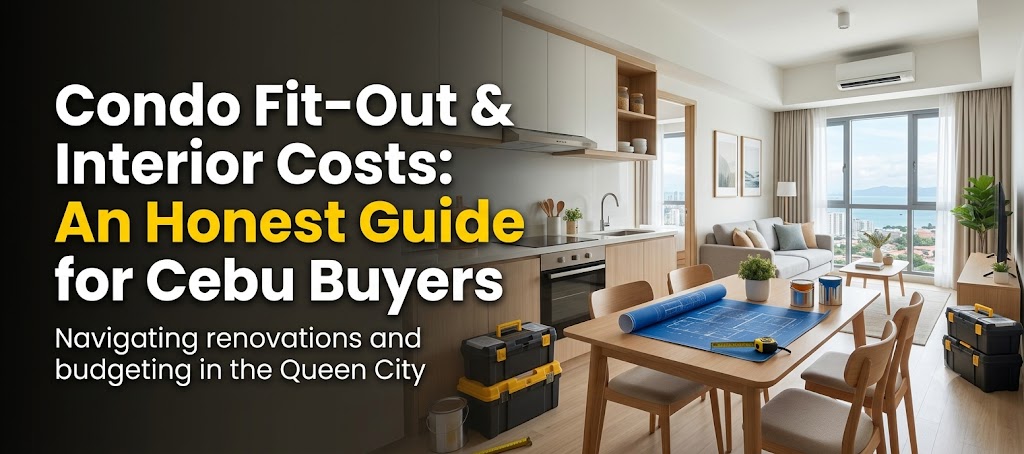
                  You’ve signed the papers. The keys are in your hand. You walk into your bare Cebu condo—concrete floors, unpainted walls, bare lightbulbs hanging from the ceiling. It’s a blank canvas. And now you’re staring at it, wondering: how much is this actually going to cost?

                  Here’s the honest answer: anywhere from PHP 300,000 to over PHP 1.5 million for a typical 30 to 50 square meter unit. That’s a massive range, and the difference comes down to one question: what are you trying to do with this space?

                  This guide breaks down what things actually cost, where your money goes, and most importantly—where it shouldn’t.

                  Part 1: The Big Picture—What You’re Actually Paying For

                  Before we talk numbers, let’s clarify what a “fit-out” means. A fit-out transforms a bare condo unit into a livable or rental-ready space. It includes design, construction, electrical work, finishes, and furniture. A renovation, by contrast, upgrades an existing unit.

                  For a 50-square-meter Cebu condo, a full interior fit-out typically ranges from PHP 550,000 to PHP 750,000 covering essential furnishings and finishes. But that’s just one data point. The real story is in the details.

                  The honest take: The cheapest option is rarely the best value, and the most expensive option rarely delivers the best return. The sweet spot for most buyers sits between PHP 25,000 and PHP 30,000 per square meter.

                  Part 2: The Cost Tiers—What Your Money Actually Gets You

                  Basic—PHP 300,000 to PHP 600,000 (PHP 15,000 to PHP 20,000 per sqm)

                  At this level, you’re getting functional. Standard paint and finishes, off-the-shelf fixtures, minimal layout planning. You’ll cover essentials—lighting, basic furniture, a bed, a table, maybe a sofa. This works for long-term rentals where tenants prioritize affordability over aesthetics.

                  But here’s the catch: units in this range often show problems within the first year. Cabinet swelling, poor lighting placement, inefficient storage. You save money upfront, but you pay for it later in maintenance and lost rental appeal.

                  Mid-Range—PHP 600,000 to PHP 1.2 million (PHP 25,000 to PHP 30,000 per sqm)

                  This is where most smart money goes. Cohesive design, better space planning, durable finishes, furniture selected for both comfort and aesthetics. Units in this range perform significantly better in the rental market because they create a strong first impression—and in the world of online bookings, that first impression directly impacts your bottom line.

                  A 40-square-meter Airbnb unit with a PHP 900,000 budget might break down like this: PHP 500,000 for construction and finishes, PHP 250,000 for furniture and styling, PHP 100,000 for design and planning, and PHP 50,000 for permits and logistics.

                  Premium—PHP 1.2 million and above (PHP 35,000 to PHP 60,000+ per sqm)

                  Custom cabinetry, built-in storage, designer lighting, layered interiors. This only makes sense if your building and location can command higher rental rates. Otherwise, you’re spending money you’ll never recover.

                  The honest take: A PHP 900,000 unit can outperform a PHP 1.3 million unit if the design is more cohesive. ROI is driven by design decisions, not total budget.

                  Part 3: Where Your Money Actually Goes

                  Design Fees

                  This covers layout planning, space optimization, and material direction. Skipping proper design leads to wasted space or costly revisions later. For small units, this is even more critical because every square meter needs to work efficiently.

                  In Cebu, interior designer rates typically range from PHP 1,500 to PHP 2,000 per hour for mid-level designers, while established designers may charge around PHP 3,000 per hour. Some designers charge 10 to 30 percent of the total project cost.

                  Construction and Labor

                  This is usually the largest portion of your budget. It includes electrical work, carpentry, and installation. Poor execution here leads to the most expensive problems later—uneven finishes, faulty wiring, rework.

                  Residential condominiums in the Philippines have the highest average construction cost within the residential category at PHP 19,938.63 per square meter. Keep in mind this is construction cost alone, not including furniture or design fees.

                  Materials and Finishes

                  Flooring, tiles, paint, cabinetry. A common mistake is overspending on finishes without improving layout. Mid-range materials often outperform premium ones when the design is done properly.

                  Furniture and Styling

                  This is where rental units gain their advantage. Guests decide quickly based on visuals. A well-styled living room—sofa, coffee table, statement lighting, and decor—can cost between PHP 110,000 and PHP 150,000. A six-seater dining set starts at PHP 25,000. Kitchen enhancements vary from a simple cabinet refresh to a full overhaul priced between PHP 115,000 and PHP 250,000.

                  Permits and Fees

                  Condo approvals, deposits, and administrative requirements. These costs don’t add visual value, but they affect your timeline and budget. You’ll need approval from the building management before starting any major work. For significant renovations, you may need architectural and engineering drawings signed by licensed professionals.

                  Part 4: The Factors That Drive Costs Up

                  Unit Size

                  Smaller units often cost more per square meter. Tighter spaces require more detailed planning, especially for storage and layout. A 22-square-meter unit presents a design challenge that requires skillful blending of comfort, convenience, and efficient use of every square centimeter.

                  Scope of Work

                  A bare unit requires full setup—electrical planning, cabinetry, layout optimization. Semi-furnished units reduce some costs but may limit flexibility.

                  Material Selection

                  Even small upgrades can significantly affect total cost. Switching tile types or cabinet finishes across an entire unit can increase your budget by hundreds of thousands.

                  Condo Restrictions

                  Building rules play a major role. Limited work hours slow down progress. Delivery schedules affect workflow. Access restrictions increase labor time. Two similar units can differ by PHP 200,000 to PHP 300,000 based on planning alone.

                  Logistics

                  Material movement is controlled. Elevator booking is required. Delivery windows are limited. Additional handling fees may apply. Missed schedules can delay work and increase labor costs.

                  The honest take: These challenges don’t improve your unit, but if ignored, they increase your total project cost. A missed permit, delayed delivery, or restricted schedule can add days or even weeks to your timeline.

                  Part 5: The Hidden Costs Nobody Mentions

                  The “change order” trap. Changing materials mid-project can increase costs by 20 percent or more. Define your scope before starting and avoid changes during construction.

                  The approval delay. Each building has its own permit process that can take days or weeks. Start this early to avoid delays before construction even begins.

                  The furniture gap. Many buyers budget for construction but forget about furniture. A complete setup requires everything from beds and sofas to curtains and kitchenware. Those costs add up fast.

                  The maintenance reality. A common rule of thumb is to set aside 1 percent of the property’s value annually for maintenance and unexpected fixes. For a PHP 5 million condo, that’s PHP 50,000 a year.

                  The timeline reality. A typical condo fit-out takes 4 to 10 weeks. A 40-square-meter unit can be completed in 4 to 6 weeks if decisions are finalized early. Most delays occur during approvals and mid-project changes, not construction itself.

                  Part 6: How to Budget Based on Your Goal

                  For Airbnb units

                  Design directly affects income. Strong visuals improve click-through rates. Better layout improves guest experience. Good lighting enhances photos. Allocate around 20 to 40 percent of your property value to keep your unit competitive. Layout improvements, lighting, and furniture have the biggest impact on returns.

                  For long-term rentals

                  Durability matters more than design. Materials should last longer. Maintenance should be minimal. Layout should be practical. Spending too much on finishes rarely increases rental value in this segment.

                  For personal use

                  Usability becomes the priority. Storage solutions. Layout efficiency. Daily comfort. Spend on what makes the space work for your life, not what looks good in photos.

                  Part 7: The Bottom Line—What to Do Before You Start

                  Get multiple quotes. Request detailed, itemized quotes from at least three contractors. Compare not just prices but what’s included.

                  Check building rules before you plan. Find out what you can and can’t do. Structural changes are usually restricted. Know the work hours, delivery schedules, and approval process.

                  Visit similar units. See what other owners have done with the same floor plan. Learn from their successes and mistakes.

                  Budget 10 to 20 percent extra for surprises. There will be surprises.

                  Define your scope before spending a peso. Clear decisions early lead to better control over your budget.

                  Final Thoughts

                  Fitting out a Cebu condo isn’t cheap. But it doesn’t have to be a money pit either. The difference between a smart fit-out and a wasteful one isn’t the size of your budget—it’s how you allocate it.

                  A PHP 600,000 fit-out done right can outperform a PHP 1.2 million fit-out done wrong. The key is matching your spending to your goal. If you’re renting long-term, prioritize durability over design. If you’re doing Airbnb, invest in lighting and layout. If it’s for you, spend on what makes you happy to come home.

                  And whatever you do, plan before you build. Get the approvals first. Lock in your decisions early. And never—ever—start demolition without knowing exactly what you’re building and what it’s going to cost.

                  The blank canvas is exciting. Just make sure you’re not the one paying to repaint it.

                  Pro Tip: The 10% Cash Reserve

                  Never deplete your entire budget. Always keep at least 10 to 15 percent of your total fit-out budget in a “quick-access” cash account for the “Day 1” extras—curtains, cleaning supplies, kitchenware, and those final aesthetic touches that make a place feel like a home. Most investors forget these, and they are usually the items that turn a house into a rentable, high-performing property.

                  That emergency cash reserve isn’t just for the pretty things either. It’s your safety net for the unexpected—a fixture that doesn’t fit, a delivery that gets damaged, an approval that requires an extra fee. When you’ve accounted for both the visible finishes and the invisible expenses, you’re not just finishing a condo. You’re finishing a profitable asset.

                    Author
                    John Paul Ybañez Paquibot
                    Licensed Real Estate Broker | PRC No. 00014132 | DHSUD No. CVRFO-B-03/18-2672
                    Bachelors Realty and Brokerage, Inc. Cebu
                    G/F Cap Building, Brgy. Corner, Osmeña Blvd.
                    Arlington Pond St. Extension, Cebu City, 6000 Cebu
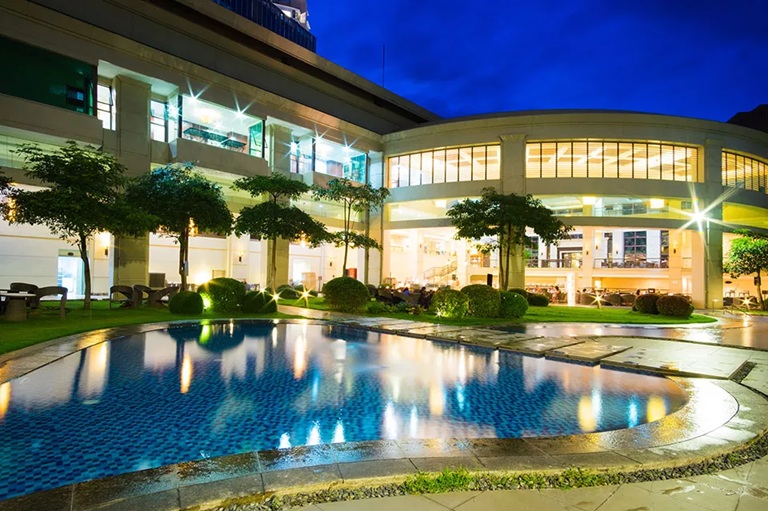
                  • Airport Expansion Value Impact: An Honest Guide for Cebu Property Buyers – SeekCebu

                    So you’ve heard the news. Mactan-Cebu International Airport just opened its second parallel runway. Passenger numbers are climbing toward 13 million. Aboitiz InfraCapital is talking about 16 million passengers by the end of 2025. And every real estate agent in Cebu is telling you the same thing: buy now, prices are going to explode.

                    The airport expansion is real. The impact on property values is real. But the way it works—and who actually benefits—is more complicated than the marketing brochures suggest.

                    This guide cuts through the hype. Here’s what airport expansion actually does to property values, where the real opportunities are, and where you’re most likely to get burned.

                    Part 1: The Numbers—What’s Actually Happening at MCIA

                    First, let’s get the facts straight.

                    Mactan-Cebu International Airport served 11.32 million passengers in 2024—a 13 percent jump from the previous year. In 2025, that climbed to 11.6 million. By 2026, the airport expects to hit 13 million. Aboitiz InfraCapital, which took over operations in October 2024, is targeting 16 million passengers by the end of 2025.

                    The big news came in January 2025 when President Marcos inaugurated the airport’s second parallel runway. This 2.56-kilometer runway was officially opened in July 2025, making MCIA the first airport in the Philippines to operate a parallel runway system. The airport’s capacity jumped from 4.5 million passengers per year (pre-Terminal 2) to a target of 12.5 million. Aircraft movements per hour increased from 30 to 40.

                    New routes followed. AirAsia now flies twice daily from Cebu to Kuala Lumpur. Jetstar launched direct flights to Brisbane. Firefly Airlines added Cebu to Kuala Lumpur five times a week. Sunlight Air started a new non-stop service to Siquijor. The airport is positioning itself as a primary transit hub for the archipelago, bypassing Manila’s congestion.

                    The honest take: This is genuine growth, not speculation. More runways mean more flights. More flights mean more tourists, business travelers, and expats. More people mean more demand for places to stay, live, and work. The connection between airport expansion and property values isn’t theoretical—it’s already happening.

                    Part 2: How Airport Expansion Actually Affects Property Values

                    Here’s the rule: connectivity raises prices. When more people can reach a place easily, more people want to live, work, and stay there. Hotels fill up. Businesses open. Infrastructure gets built. And land values follow.

                    But the impact isn’t uniform. It spreads outward in layers, and each layer behaves differently.

                    The immediate airport corridor—properties within walking distance or a short drive of MCIA—gets the most direct benefit. Mactan Island sits right next to the airport, making it one of the most exposed areas to this growth. Commercial land values in Mactan are shaped less by office demand and more by proximity to MCIA, resort corridor economics, and estate-controlled developments. Every new route adds tourists, expats, and business travelers who need accommodation. Many end up in Mactan and Lapu-Lapu.

                    The ripple zone—areas connected to the airport by new infrastructure—also benefits, but differently. The Cebu-Cordova Link Expressway (CCLEX) significantly reduces travel time to Cebu City, making Mactan even more desirable. Areas along these transport corridors see appreciation as accessibility improves.

                    The broader Cebu market benefits from the sheer volume of people flowing through the airport. Tourism is the lifeblood of the island. More tourists mean more demand across hospitality, retail, and residential sectors. Infrastructure upgrades like road expansions and additional flights continue to boost property values and attract more investments.

                    Studies on airport expansion elsewhere show that property appreciation in airport corridors can range between 70 percent and 120 percent—significantly higher than city-wide averages. In Cebu, one developer reported that property prices at a tower near MCIA increased by 71 percent since the project’s launch in 2018, with the developer linking foreign demand directly to airport development.

                    The honest take: The airport expansion is a genuine value driver. But not every property near the airport appreciates equally, and not every buyer should assume they’re getting the same opportunity.

                    Part 3: The Winners—Where the Real Value Is

                    Not all airport-adjacent properties are created equal. Here’s where the smart money is actually going.

                    Short-term rentals are among the biggest winners. Short-term rentals in Mactan earn PHP 3,000 to PHP 6,000 per night—among the best in Cebu. More flights mean more tourists who need places to stay. Hotels fill up, and vacation rentals capture the overflow. If you’re buying a condo with the intention of renting it out, airport proximity is a powerful advantage.

                    Luxury residences are another strong play. Mactan is increasingly synonymous with high-end living. Condominiums and exclusive residential developments with ocean views, private beach access, and resort-style amenities are in demand from affluent locals and international buyers. Developers are creating resort-style living experiences with infinity pools, spas, and gourmet restaurants. These properties cater to people who want a relaxed lifestyle without sacrificing modern conveniences.

                    Commercial and hospitality properties benefit from the MICE (Meetings, Incentives, Conferences, Exhibitions) tourism segment, which is growing in Mactan. Facilities that cater to corporate events attract travelers willing to spend more on accommodation.

                    The honest take: If you’re buying a residential property primarily for personal use, the airport expansion is a nice bonus but shouldn’t be your main reason. If you’re buying for investment income, the rental economics in Mactan are genuinely strong. If you’re buying commercial land, proximity to MCIA is one of the primary value drivers.

                    Part 4: The Traps—What Nobody Tells You

                    Now for the part the brochures leave out.

                    Noise is a real problem. Properties closest to the airport—particularly those directly under flight paths—often experience lower values due to noise pollution. More flights mean more noise. The second runway means more planes taking off and landing. If you’re buying a property that’s too close, you’re not buying peace and quiet—you’re buying the sound of jet engines at 3 AM. Even if a property meets zoning regulations, noise from aircraft can be a major issue. And zoning laws in airport areas manage noise pollution through building restrictions and noise buffers.

                    The supply glut is real. More than 4,000 new rooms across 14 to 15 properties are set to enter the Cebu-Mactan market within the next two years. Hotel occupancy is already struggling. “Room rates are depressed, and new supply is coming in faster than demand can catch up,” one analyst warned. Without stronger demand drivers, Cebu risks intensifying price competition and eroding profitability. If you’re buying a hotel or resort property, you’re entering a crowded market.

                    Not all “airport-adjacent” properties are equal. Some properties marketed as “near the airport” are actually a 30-minute drive away. Others are in areas with poor road access. The airport expansion benefits Mactan Island most directly. Areas further out see less impact. Don’t pay airport-premium prices for a property that isn’t actually airport-adjacent.

                    Zoning restrictions limit what you can build. Philippine airport zoning laws control land use, establish noise buffers, and prevent objects from entering airspace. Properties within high-noise zones may face building restrictions to minimize noise pollution. If you’re buying land with the intention of developing it, check the zoning first. What you want to build and what you’re allowed to build may be two different things.

                    The honest take: The airport expansion is a tailwind, not a guarantee. Properties that are too close suffer from noise. Properties that are too far don’t benefit. And the hospitality market is already showing signs of oversupply. Buy with your eyes open.

                    Part 5: What to Check Before You Buy

                    If you’re serious about buying property near Cebu’s airport, here’s what you need to investigate.

                    Spend time in the neighborhood at different times. Visit on a weekday morning. Visit on a Friday night. Visit when planes are taking off and landing. The airport’s flight schedule changes—what’s quiet at noon might be loud at midnight. Don’t buy based on a single visit.

                    Check the flight path. Properties directly under the approach or departure paths get the most noise. Properties off to the side get less. Maps showing flight paths are available from the airport authority. Use them.

                    Verify the zoning. What’s the property classified as? What can you build? What are the height restrictions? What are the noise buffers? The answers to these questions determine what you can actually do with the property.

                    Research the developer’s track record. If you’re buying pre-construction, look at the developer’s past projects. Did they deliver on time? Did they deliver what they promised? Are their existing properties well-maintained? The airport expansion has attracted new developers to the area. Not all of them are reputable.

                    Check the competition. If you’re buying a rental property, find out how many other units are coming online in the same area. The supply glut is real. More rooms mean more competition for guests. More competition means pressure on rates. Make sure your numbers work even with downward pressure on rental income.

                    Part 6: The Bottom Line—Who Should Buy and Who Shouldn’t

                    You should consider buying if:

                    • You understand that airport proximity is a value driver but not a guarantee
                    • You’ve visited the property at different times and confirmed the noise level is acceptable
                    • You’re buying a residential property for personal use with the airport as a convenience factor
                    • You’re buying an investment property with realistic rental projections that account for competition
                    • You’ve verified the zoning and know what you’re actually allowed to build
                    • You’re working with a broker who knows the Mactan market specifically

                    You should not buy if:

                    • You think the airport expansion guarantees automatic appreciation—it doesn’t
                    • You’re buying a property directly under the flight path expecting peace and quiet
                    • You’re buying a hospitality property without checking the supply pipeline
                    • You haven’t verified the zoning or flight path
                    • You’re buying based solely on a developer’s marketing materials
                    • You’re counting on the airport expansion to bail out a marginal investment

                    Final Thoughts

                    The Mactan-Cebu International Airport expansion is one of the most significant infrastructure developments in the Philippines. A second runway. More flights. More passengers. Better connectivity. These are real changes with real impacts on property values.

                    But the impacts aren’t evenly distributed. Some properties benefit enormously. Others suffer from noise and overcrowding. Some areas see genuine appreciation. Others see oversupply and falling rents.

                    The airport expansion is a powerful force in Cebu’s property market. But like any force, it works differently depending on where you stand. Buy in the right place and you’ll ride the wave. Buy in the wrong place and you’ll wonder why everyone else got rich while you’re listening to jet engines at sunrise.

                    Do your homework. Visit the property at different times. Check the flight path. Verify the zoning. Research the competition. And never assume that airport expansion means every property near the airport is a winner.

                    The opportunity is real. But so are the traps. Buy wisely.

                      Author
                      John Paul Ybañez Paquibot
                      Licensed Real Estate Broker | PRC No. 00014132 | DHSUD No. CVRFO-B-03/18-2672
                      Bachelors Realty and Brokerage, Inc. Cebu
                      G/F Cap Building, Brgy. Corner, Osmeña Blvd.
                      Arlington Pond St. Extension, Cebu City, 6000 Cebu

                    • Cebu Beachfront Property Buying Guide: An Honest Look at Paradise – SeekCebu

                      Beachfront Property Buying Guide

                      So you’re dreaming of owning a slice of Cebu’s coastline. Turquoise waters, white sand, and the sound of waves lulling you to sleep—it’s a powerful fantasy. And Cebu, with its blend of urban convenience and natural beauty, has become the Philippines’ hottest property destination.

                      But here’s the truth: buying beachfront property in Cebu is not the same as buying a condo in Manila or a house in the suburbs. The rules are different, the costs are different, and the risks are very real.

                      This guide will give you the unvarnished truth—what works, what doesn’t, and what nobody tells you until it’s too late.


                      Part 1: The Legal Reality—What You Can Actually Own

                      Let’s get this out of the way immediately: foreigners cannot directly own land in the Philippines. This isn’t a loophole you can work around. It’s in the 1987 Constitution (Article XII, Section 7). Land ownership is strictly reserved for Filipino citizens and corporations that are at least 60% Filipino-owned. There’s no grey area here.

                      So if you’re a foreigner, what are your actual options?

                      Option 1: Long-term lease (the most practical route). As of September 2025, Republic Act 12252 allows foreign investors to lease private land for up to 99 years. Previously, the limit was 50 years renewable for another 25. This is a significant improvement for anyone serious about building a long-term life in Cebu. There’s a catch though—for tourism projects, the lease requires an investment of at least USD 5 million, with 70% infused within three years. If you’re not an “investor” under this definition, you’re still limited to 25 years renewable for another 25.

                      Option 2: Condominium ownership. This is the cleanest path for most foreigners. You can legally own a condo unit outright—100% of that specific unit. The catch? Foreign ownership in any single condo project cannot exceed 40% of total units. You own the “air space,” not the land beneath it, but for most practical purposes, it’s ownership.

                      Option 3: Corporate ownership. You can set up a Philippine corporation with at least 60% Filipino ownership, and that corporation can own land. But be careful—the Supreme Court enforces “anti-dummy” rules strictly. You can’t just put a Filipino on paper and call it a day; actual control must genuinely rest with Filipinos.

                      Option 4: Filipino spouse. If you’re married to a Filipino, the property can be titled in their name. You can even inherit it through succession if your spouse passes away. But if you’re not married, this isn’t an option.

                      What about beachfront foreshore land? This is where it gets even trickier. Areas right next to the sea are part of the public domain, regulated by the Department of Environment and Natural Resources. They cannot be privately titled at all—whether you’re Filipino or foreigner. Many “beachfront” properties actually sit on foreshore land, and what you’re really buying is access rights, not ownership.

                      The bottom line: If you’re a foreigner who wants to build a house on the beach, you’ll be leasing the land. If you want to own something outright, buy a condo. There’s no third way.


                      Part 2: Where to Buy—The Real Cebu Beachfront Market

                      Cebu’s beachfront property isn’t one market—it’s several, and they’re very different.

                      Mactan Island is the crown jewel. It’s connected to mainland Cebu by bridges, and the international airport is just 15–30 minutes from most beachfront areas. This is where the big money goes. Punta Engaño, home to resorts like Shangri-La and Dusit Thani, commands premium prices. Beachfront villas here typically range from PHP 15 million to over PHP 150 million. Land prices in Mactan average around PHP 19,812 per square meter, while beachfront condos range from PHP 84,000 to PHP 250,000 per square meter.

                      Moalboal and the south offer a different vibe. These are emerging tourism hotspots, attracting investors looking to cash in on eco-tourism and diving. Prices are lower than Mactan, and there’s strong appreciation potential. But infrastructure is less developed, and access can be challenging.

                      Bantayan Island is further out—more remote, more affordable. A titled beach lot in Santa Fe can go for as low as PHP 1,500 per square meter. But read that carefully: “titled” doesn’t mean “developed.” Utilities, roads, and services are basic at best.

                      The emerging corridors like Cordova, Liloan, and Consolacion are seeing 18–25% annual land value jumps thanks to new infrastructure like the Cebu-Cordova Link Expressway. These areas offer more affordable entry points with strong growth potential, but you’re buying into areas that are still developing.

                      The honest take: Mactan is where you pay for certainty—good infrastructure, steady rental demand, and established communities. The south and the outer islands are where you take a bet on future growth. Neither is right or wrong, but know which one you’re doing.


                      Part 3: What It Actually Costs (Beyond the Sticker Price)

                      Here’s where most buyers get blindsided.

                      Transaction costs typically run 7% to 12% of the property value. That includes:

                      • Capital Gains Tax: 6% (usually paid by the seller, but negotiable)
                      • Documentary Stamp Tax: 1.5%
                      • Transfer Tax: 0.5% to 0.75%
                      • Registration and notarial fees

                      On a PHP 20 million property, that’s PHP 1.4 to 2.4 million in transaction costs alone.

                      Ongoing costs add up fast. Real property tax is annual. Maintenance on a beachfront property is brutal—salt air corrodes everything faster than you’d believe. And here’s a specific piece of advice from people who’ve learned the hard way: if you are building or renovating, insist on marine-grade 316 stainless steel for all fixtures and railings. Standard metals will begin to pit and rust within months of being 50 meters from the surf. If you’re not living there full-time, you’ll need property management. If you’re renting it out, factor in marketing, cleaning, and repairs between guests.

                      Hidden costs are the real killer. Many beachfront locations lack reliable access to electricity, water, and internet. Bringing in utilities can cost hundreds of thousands of pesos. Building materials cost more in remote areas because of transport. And if the property needs renovations—which older beachfront properties almost always do—budget for plumbing, electrical, and roof work.

                      The honest take: Whatever you think it’s going to cost, add 30%. Then add another 10% for things you haven’t thought of. If that number still works for you, proceed.


                      Part 4: The Process—How Buying Actually Works

                      The steps are straightforward, but each one requires care.

                      Step 1: Verify the title. Get a certified true copy of the title from the Registry of Deeds. Don’t trust photocopies from the seller. Check for liens, encumbrances, unpaid taxes, and pending litigation. A tax declaration is not ownership—only a title is.

                      Step 2: Check land classification. Only land classified as “alienable and disposable” can be privately titled. Forest, protected, and foreshore lands cannot. The DENR handles this classification. If the land isn’t alienable and disposable, you cannot legally own it—period.

                      Step 3: Do a relocation survey. This confirms that the physical property matches what’s on the title. Boundaries get disputed. Neighbors encroach. Surveys reveal problems before you pay money.

                      Step 4: Get zoning certification. This tells you what you can actually build on the property. Some areas have height restrictions, easement requirements (20 meters from the shoreline is legally required in many areas), or use limitations. Don’t assume you can build your dream villa until you’ve checked.

                      Beyond the formal regulations, dig into the local community culture. Check for local “noise” ordinances. In some beachfront areas, the local tradition of videoke can be deafening on weekends. Do not buy without spending a Friday and Saturday night in the neighborhood. A serene Tuesday morning doesn’t guarantee a quiet weekend.

                      Step 5: Sign a notarized Deed of Absolute Sale and register it. The sale must be in writing, notarized, and registered with the Registry of Deeds to be legally binding. Then register with the Bureau of Internal Revenue for the Certificate Authorizing Registration.

                      Step 6: Pay all taxes and fees. This includes the transfer tax with the local government and the documentary stamp tax with the BIR.

                      The honest take: This is not DIY territory. Hire a licensed real estate broker and a real estate lawyer who specialize in foreign transactions. The money you spend on professionals is nothing compared to what you’ll lose if something goes wrong.


                      Part 5: The Risks Nobody Wants to Talk About

                      Typhoons are real. The Philippines gets hit by several typhoons every year. Beachfront properties are ground zero for storm surges and wind damage. After Typhoon Haiyan, many beachfront homeowners faced devastating losses—and some insurance policies didn’t fully cover the damage.

                      Coastal erosion is relentless. The sea doesn’t stay where it is. Beachfront properties are susceptible to erosion that gradually eats away at your land. What’s a 20-meter beach today might be a 10-meter beach in a decade. What’s beachfront now might be underwater eventually.

                      Environmental regulations are getting stricter. Projects on Bantayan Island have been halted over environmental violations. The DENR is increasingly proactive about enforcing shoreline easements and protected area rules. Buying a property that’s out of compliance is buying a headache.

                      Developer risk is significant. Not all developers are created equal. Some overpromise and underdeliver. Some cut corners. Some don’t get the proper permits. If you’re buying pre-construction, research the developer’s track record thoroughly.

                      The “beachfront” illusion. Some properties marketed as “beachfront” are actually across a road from the beach. Others are on foreshore land that can’t be owned. Others have public access easements that mean anyone can walk past your front door. Always verify what “beachfront” actually means.

                      The honest take: Every beachfront property in Cebu carries environmental risk. The question isn’t whether there’s risk—it’s whether you understand it and can afford to manage it. Buy insurance that actually covers typhoon damage. Build with resilient materials. Maintain a buffer. And never assume the beach will stay where it is today.


                      Part 6: The Bottom Line—Who Should Buy and Who Shouldn’t

                      You should consider buying if:

                      • You understand that you’re leasing land, not owning it (unless it’s a condo)
                      • You have budgeted at least 30% above the purchase price for transaction costs, maintenance, and contingencies
                      • You plan to use the property regularly or have a solid rental management plan
                      • You’ve done your due diligence on title, zoning, and environmental compliance
                      • You’re working with licensed professionals who know Cebu’s market
                      • You’ve actually spent a weekend in the neighborhood to test the real soundscape

                      You should not buy if:

                      • You think you’ve found a legal loophole to own land directly—you haven’t
                      • You’re stretching your budget to make the purchase work—you’ll be stretched further by ongoing costs
                      • You haven’t visited the property in person, during both dry and rainy seasons
                      • You’re buying based on “sure thing” appreciation promises—property values go up and down
                      • You haven’t checked whether the land is actually alienable and disposable

                      Final Thoughts

                      Cebu’s beachfront property market is genuinely exciting. Tourism is booming—4.8 million visitors in the first ten months of 2025 alone. Infrastructure is transforming the island. Prices are appreciating faster than Metro Manila’s. The dream is real.

                      But the dream comes with fine print. You can’t own land outright. You’ll pay more than you expect. The sea is beautiful but indifferent to your investment. The regulations are complex and getting stricter. And sometimes, the biggest threat to your peaceful paradise isn’t the tide—it’s the neighbor’s karaoke machine at 2 AM on a Saturday.

                      Buying beachfront property in Cebu isn’t for everyone. But for those who go in with eyes open, realistic budgets, professional guidance, and a genuine love for island life—it can be one of the best decisions you ever make.

                      Just don’t say nobody warned you.

                        Author
                        John Paul Ybañez Paquibot
                        Licensed Real Estate Broker | PRC No. 00014132 | DHSUD No. CVRFO-B-03/18-2672
                        Bachelors Realty and Brokerage, Inc. Cebu
                        G/F Cap Building, Brgy. Corner, Osmeña Blvd.
                        Arlington Pond St. Extension, Cebu City, 6000 Cebu